Aeneas, China, and Odysseus
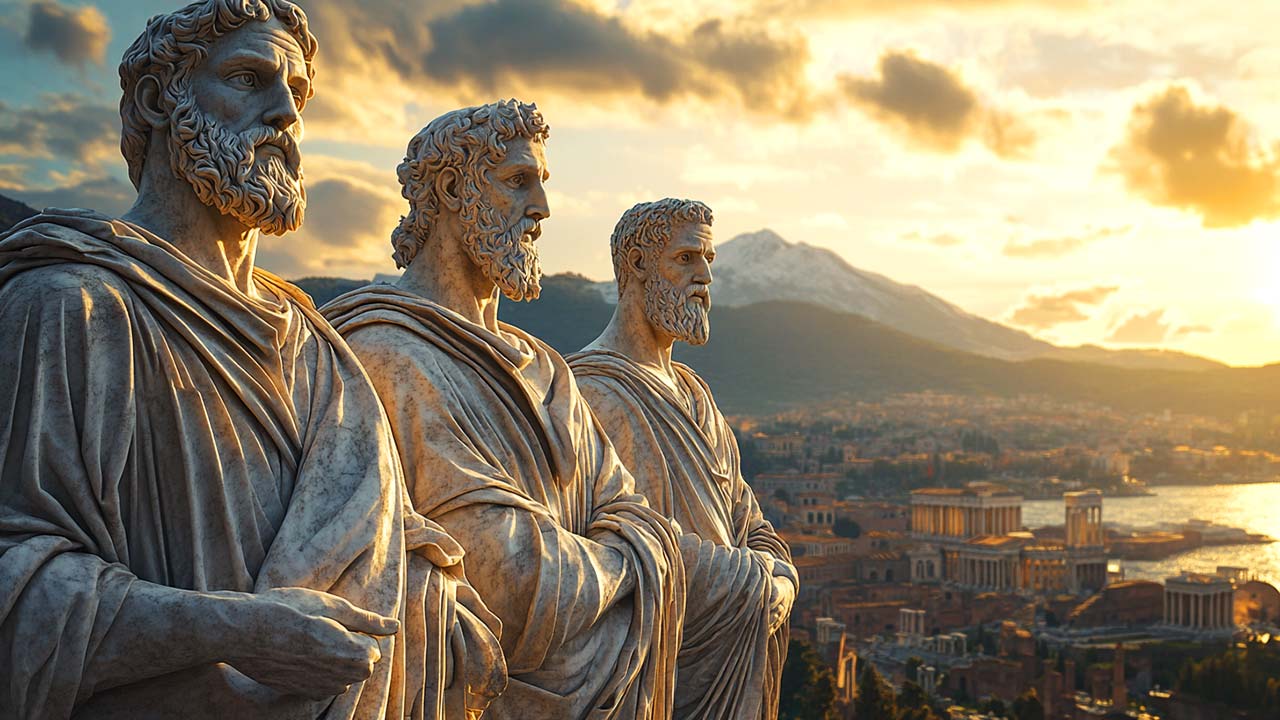
The last time that you looked at a truly beautiful piece of Roman statuary, did you remember to read the plaque? If you haven’t, I’ll spare you the trouble of going to the antiquity Museum of your nearest metropolis. Nearly every piece of beautiful naturalistic Roman statuary has inscribed on the plaque beneath it the words: copy of a Greek original. It is only through these Roman copies that we even know of the existence of some of the most important art in the history of humanity. The Romans had unchallenged military supremacy for hundreds of years, but the soul of their empire was always Greek. While they appreciated the beauty of Greek achievement, they simply did more of it, and did it more efficiently. Even as the Greeks were descending into practical philosophies and turning their back on their intellectual lineage, the Romans were emulating the golden age of Greece and attempting to inculcate those values in their leaders, while rejecting the individualistic tendencies that led Athens into weakness. The relationship between the US and China has so many parallels that it would be difficult to ignore, and if we pay attention, we may be able to avoid the same fate that Greece received at the hands of Rome.
The core founding myths of China and Rome begin with a visionary leader disillusioned with their current world. Aeneas had just been driven out of Troy, and seen the damage wrought when titans compete for spoils. Karl Marx perceived the negative impact of industrial giants competing for profit at the expense of their workers. Aeneas, seeing Troy go up in smoke, turned his back on the old world and was led by a vision to create something new, a land defined by strength through collectivism rather than the efforts of powerful actors. He did not control his own destiny, but rather he followed what had already been written in stone. Marx saw, through the smoke stacks of the Industrial Revolution, a prophecy of a rewriting of society through the use of his version of the Hegelian dialectic. Marx did not seek to create reality, but rather to recognize what was already inevitable, calling on the gods of reason.
The class of warrior kings in the Iliad so meaningfully dominates the action that only once does a named common man speak in the Iliad. Thersites, the low class discontent, gives voice to the same angst that drives Marx’s work, and he is promptly beaten on the head into submission by Odysseus. The same Odysseus shows incredible compassion and care to other commoners in the Odyssey. While the ruling class is very much in control, each member of it and the lower class is recognized in their humanity. There are deeply different roles in the world, yet they are all portrayed by Homer as fully human. The central figure of the Aeneid loses his homeland, his identity, and his humanity in service of the creation of Rome. While each individual is elevated through their connection to the destiny of Rome, they are also stripped of their identity for the sake of the collective. The contrast between these two frameworks for understanding humanity carry through to American and Chinese culture. America is often characterized as a land of vast agency, and vast disparity. At China’s founding, individuals were often used as puzzle pieces in the grand story of the Marxist prophecy, mirroring Virgil’s obsession with the collective.
Even as the Romans held fundamentally different beliefs about humanity and virtue than the Greeks, they held the Iliad and Odyssey in the highest regard, constantly quoting them. This deep respect for Greek texts prompted Hadrian to order his scholars to write works to surpass and mimic Homer. Rome learned from the Greeks, but replaced their individualism with self sacrifice. China has taken much of the best of the western world in education, the arts, and business, but they see the same individualism that led to the downfall of classical Greece as the unique ailment of American individualism and an emphasis on humanity can only be successful nationally when paired with virtue. Even while prioritizing the freedom of the individual, we must recognize that individual freedom can only resist being overtaken by Rome when we do not become ἴδιος (to one’s own). An emphasis on individual humanity, untethered from virtue, will always collapse inward, and it is not barbarians that we should be prepared to confront, but rather our own excesses of individuality and the strength of a virtuous and collectivist nation.

 Live Chat
 Email:
  Phone: 1-888-465-3160