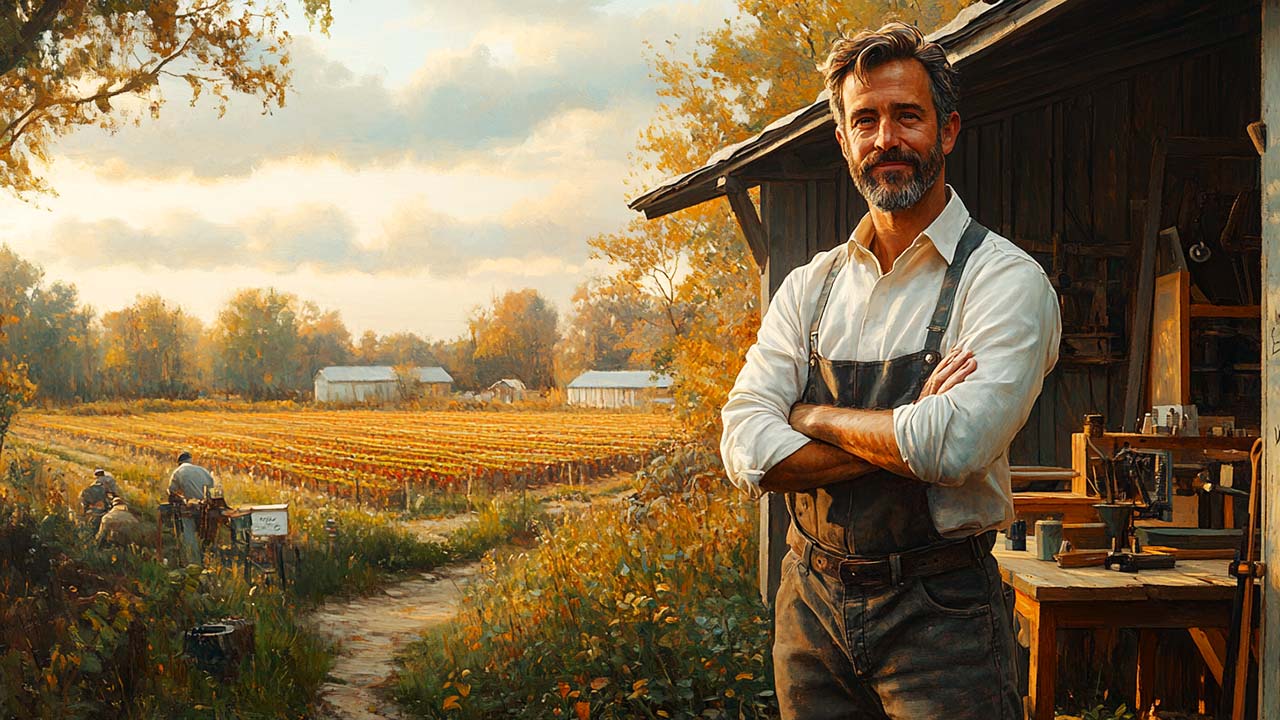
The Crisis of Ownership
In 1775 roughly 80% of Americans owned their own businesses. Most of these were farmers, and their responsibility to the nation became deeply intertwined with their own livelihoods as they owned a bit of earth and let their love of self turn into love of country. They planted the seeds of survival and reaped the rewards of a rich community. Because they each were fully responsible for the outcome of their ventures they naturally became much more responsible than they would have been otherwise. Today only 10% of Americans own their own business. Although many Americans have owned a business at some point in their lives, the fact that it is no longer the predominant way of life provides a huge gap between the people today and the citizens that the founders envisioned being able to govern themselves. Ownership of land and business naturally creates a sort of care that is difficult to teach. Our nation was designed for a people that owned their own means of sustenance, and it is vital that we close the gap between ourselves and what once was, or we risk abusing the freedom that we were given.
Ownership of a business creates a sense responsibility to one’s community and the nation. The farmers at the beginning of our nation could not afford to be lazy or take days off. Hard work was vital, and the effects of poor farming practices were felt directly. If a small business owner stopped taking the steps necessary for their business to succeed they would no longer be able to support their family or play the vital role in their community that they were. To so tangibly see the frontier turned into towns and places habitable for humans made farmers feel connected to the fate of their nation. Rather than solely being a purely individual exercise, it was impossible for early American farmers to separate their work from the strength of their community and nation. Even if an individual is entirely motivated by selfishness, they must at least continue the exterior act of responsibility. This will naturally lead to growth in interior responsibility no matter the starting point.
When someone owns a business, they are forced to consider the world in all its mystery far more than an employee must. They must look at all the risks and opportunities in their sphere of life while understanding how to manage the people around them. The step from employee to business owner naturally allows for the creation of wisdom. If a business owner does not learn from their mistakes, their business will simply not survive. If an employee does not learn from their mistakes in an inattentive environment, they may be able to keep their job indefinitely. There is no safety net between the forces of reality and the business owner and good judgment is rewarded far more than anything else as human favor and specific knowledge become subordinated to the growth and exercise of judgment. Any employee can develop judgment, but entrepreneurs require a great amount of luck to survive without it. Even with little education, the American frontiersmen and farmers that built the foundation of our nation, developed wisdom through ownership.
In our society where at any given time 90% of us are unemployed or employed by others, we face a dangerous situation where an ever diminishing few benefit from the growth and self governance found in owning a business. The opinions and attitudes of the few who do own businesses have an outsized effect on the formation of others while those who remain in the employee class continue to let their judgment diminish. While still expected to govern themselves, the vast majority of Americans work for others. If people were thoughtful and devoted to the development of their own wisdom in any circumstance, being employees would be no problem for the citizens. However, when people are not forced to exercise judgment, they rarely do. Entrepreneurship is a pedagogical tool, and the nation that makes it easy to start a business will create a people that are more fit to rule themselves. Complicated regulations make it easier for large businesses to thrive while making it harder for individuals to start small businesses. It is crucially important that additional barriers to small business are not constructed and that future policy action recognizes the need for manifold entrepreneurs as vital to national stability. The type of freedom that is worth sustaining in capable of sustaining itself, must create people of high character rather than create a generational regression to dependence.

 Live Chat
 Email:
  Phone: 1-888-465-3160