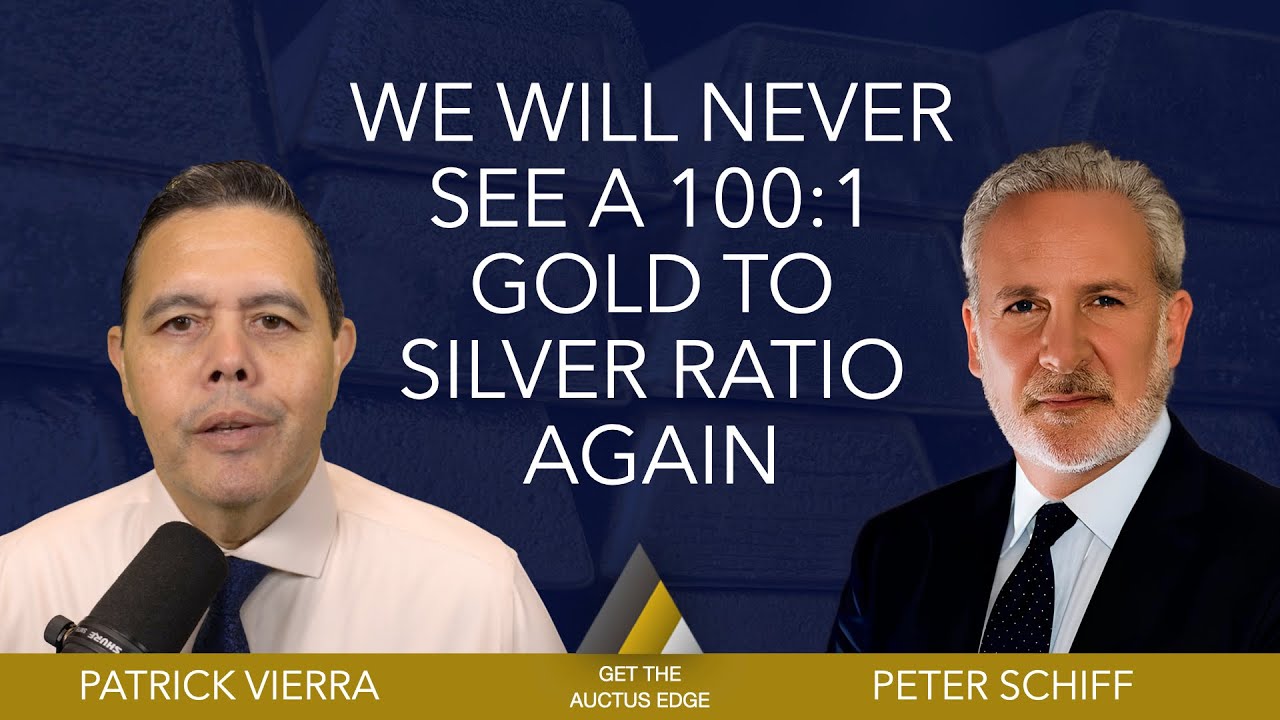
Schiff on Auctus Edge: The Dollar’s End Means a Gold Rush
Last week, Peter joined Patrick Vierra on The Auctus Edge to lay out how the era of cheap credit and easy living is ending and why that shift is driving gold and silver. He connects rising global yields, renewed quantitative easing (QE), and the political risks that follow a collapsing dollar to explain why sound money looks more attractive than ever.
He starts by summing up how America got into its economic predicament:
You know, we had a good thing going, although it was unsustainable, but we had a ride on the global gravy train. And, you know, that enabled Americans to live beyond our means. We had higher asset prices and lower consumer prices. We didn’t have to save, yet we still had low interest rates. And all that’s coming to an end.
Peter frames that ride as fundamentally unsustainable: cheap imports, low rates, and rising asset prices masked the real cost of living and undercut incentives to save. With that myth unraveling, he says, people begin to rethink the safety of holding dollars and start looking for real stores of value:
I think there’s, you know, now a rush to get out of dollars and therefore into precious metals. And so you have a lot more people now that are waking up to what people like me were aware of for years. And so it’s kind of been a slow migration for a small percentage of the population out of dollars into gold and silver.
He points to tangible market mechanics that are already changing the landscape. One notable driver is the shift in Japanese yields and the unwind of the carry trade — where investors borrowed in low-yielding yen to buy higher-yielding assets elsewhere. As Japanese yields climb and the yen potentially strengthens, those flows can reverse and pressure U.S. markets:
The U.S.-Japanese bond market yields are rising and now they’re about two, almost two point four percent on the 10-year. You know, they were this time last year, they were probably still under 50 basis points. It’s going to put a lot of upward pressure on Treasury yields, and it’s also going to put downward pressure on other risk assets in the U.S. that benefited from the Japanese carry trade because a lot of that margin debt is going to be repaid, especially if the yen starts to rise.
That dynamic, Peter warns, will raise borrowing costs in the U.S. and pry loose some of the liquidity that has propped up stocks and other risk assets. At the same time, policymakers already respond by expanding central bank balance sheets which he says is happening now and will accelerate:
We’ve already got QE. I mean, remember, we already have it. The Fed is—or they’re just not calling it QE—but they’re printing money, they’re expanding their balance sheet, they’re buying Treasuries. So it’s already started; it’s going to be expanded. They’ll be doing a lot more QE later in the year than they’re doing now.
Peter sees QE as a familiar tool with predictable consequences: it pretends to solve solvency problems by diluting the currency, which transfers real wealth away from savers. He argues that full repayment of the national debt is out of reach, and the only practical option left to politicians is to inflate away the obligations — a policy that savages purchasing power:
No, paying off the debt is impossible. Inflating it away is something they could do. But of course, when they inflate it away, they destroy the value of everybody’s savings. You know, everybody gets wiped out if you have dollars. So it’s not like it’s a get out of jail free card.
Beyond market mechanics and monetary policy, Peter warns of a political reaction to whoever escapes the fallout. If the dollar collapses and prices spike, he expects demagogues to seek scapegoats, and that could include people who hold gold and silver — the very individuals who acted prudently to protect their wealth:
It’s possible that they could try to target us with a windfall profit tax by trying to vilify us and blaming the gold speculators for the collapse of the dollar. And we should have to pay a huge tax. Why should we profit when everybody else suffers? I can see that kind of demagoguery and scapegoating of the people who don’t go broke because most people will go broke. And they will be looking to point the finger at somebody. And the politicians never accept responsibility.

 Live Chat
 Email:
  Phone: 1-888-465-3160