Peter's Blog
Get the latest headlines, market analysis, and original content from SchiffGold.
Posts Tagged: “Austrian Economics“
Search Peter's Blog

Data Needs Theory to Make Sense
Most analysts treat economic data as the starting point for understanding the economy: if GDP rises, things are good; if it falls, things are bad. What they fail to appreciate is that data without theory is meaningless, and that any interpretation of economic data already presupposes a theoretical framework, whether the analyst knows it or […]
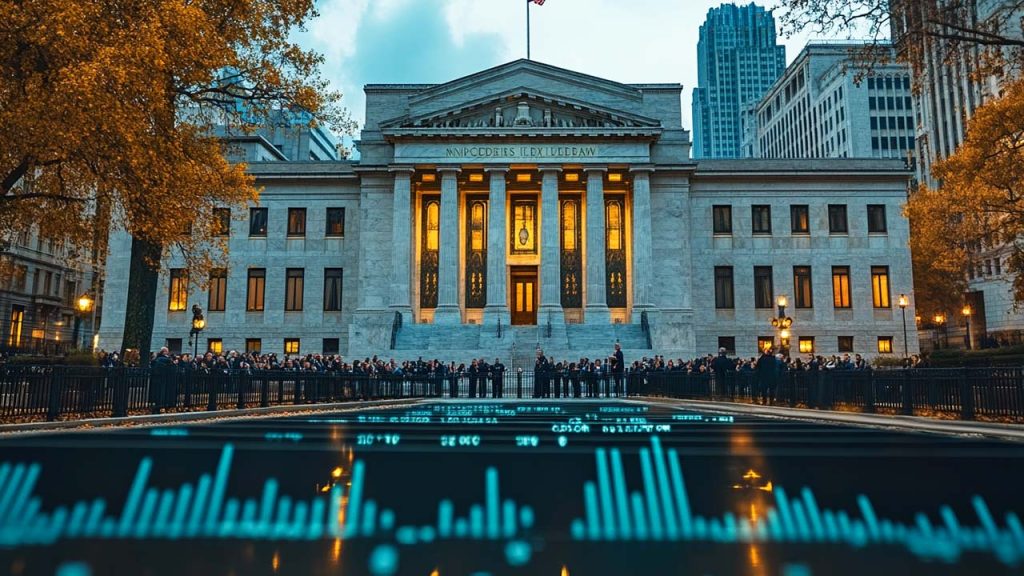
Why Warsh Wants to Ignore Inflation’s Real Cost
As Kevin Warsh takes over as Fed chair, his stated preference for narrower, trimmed inflation measures is drawing scrutiny, and for good reason. Though it is technically correct that government-driven price hikes from wars, lockdowns, and years of interventionist policy are not “inflation” in the strict monetary sense, Warsh’s push to exclude them from the […]

Are Entrepreneurship and Speculation Different?
In popular culture, entrepreneurs are often praised and speculators are to be shamed. They are seen as fundamentally different classes of individuals. An entrepreneur is described as someone who creates something and actually cares about their mission. A speculator seen as someone who shifts around between different industries for only the goal of financial reward. […]

The Inherent Incentives Against Economic Localism
One of the central ideas of Austrian economics is that local knowledge cannot be encapsulated and transported into a different situation; however, relevant information can be transported within the price system. This insight suggests that only individuals will have the best information regarding their lives, and that only towns will have the best information regarding […]

Can Consumption Create Wealth?
Most Americans are familiar with the Keynesian idea that government spending and money creation can stimulate a sluggish economy by boosting demand. What those not versed in Austrian economics may not appreciate is that this framework gets the causal order exactly backwards: production must come before consumption, and genuine demand can only arise from prior […]

Why Transparent Monetary Policy Still Creates Instability
Some economists argue that the key to economic stability lies not in reforming the monetary system but simply in making the Fed more predictable and transparent in its policies. But as Austrian economists have long argued, it is not a lack of transparency that triggers boom-and-bust cycles. It is the Fed’s fundamental tampering with financial […]

How Regulation Protects Monopolies and Weakens Competition
Most Americans understand the visible harm that excessive regulation causes – higher costs and fewer choices in the marketplace. Those less familiar with Austrian economic theory may not appreciate that government regulations also actively create monopolies by shielding politically connected industries from the competitive pressures that drive innovation and spread knowledge. The following article was […]

Inflation Is Noise in the Price Signal
Americans are well-acquainted with the primary effect of inflation– higher prices across the economy. Those not versed in Austrian Business Cycle Theory may not realize that inflation also disrupts and confuses economic calculation, the critical process by which capital is directed toward its best use. The following article was originally published by the Mises Institute. […]

Trust the Market, Not Government Stimulus
Some commentators are of the view that one cannot trust the market economy, which is seen as inherently unstable. If left free, the market economy could lead to self-destruction. Hence, there is the need for the government and the central bank to manage the economy. It is held, in this framework, that successful management could be achieved […]

TSA Breakdown in Atlanta – The Cost of Government Non-Delivery
Central planning– be it of regulation, banking, or security– never produces the correct incentives for efficient economic activity. When economic analysis is applied to the latest debacle with TSA, it’s obvious that such a failure of service would never occur in a free market. The following article was originally published by the Mises Institute. The […]
 Live Chat
 Email:
  Phone: 1-888-465-3160