Bitcoin Is Supposed to Be Digital Gold. So Why Does It Crash With Tech Stocks?
Bitcoin is supposed to be digital gold. A scarce asset that governments can’t print, banks can’t inflate away, and investors can hold when confidence in the financial system deteriorates.
So why does it sometimes trade like a leveraged bet on Silicon Valley?
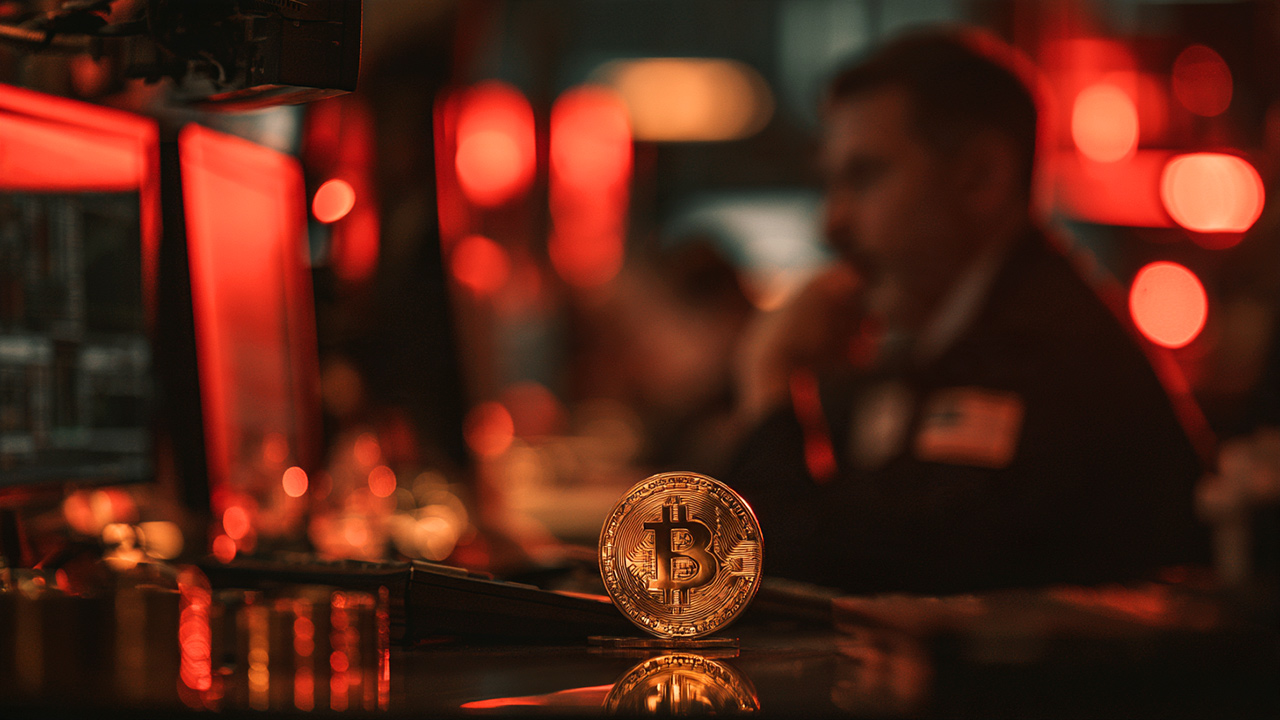
Bitcoin’s latest selloff arrived alongside a broader retreat from technology stocks, particularly companies tied to the AI boom. Bitcoin (BTC) fell below $80,000 according to Binance Research’s November market report as investors reconsidered AI spending, tech valuations, and potentially higher interest rates.
Doesn’t sound like a great hedge on the market, nor a traditional safehaven.
before declaring the digital-gold experiment a failure, it’s worth understanding what investors actually mean when they call something a store of value.
Scarcity Doesn’t Guarantee Stability
Bitcoin’s most compelling characteristic is its predetermined supply. Its protocol limits eventual issuance to approximately 21 million coins, unlike the US Dollar, which can be printed in infinite supply.
Nobody at the Federal Reserve can authorize another trillion Bitcoin. Nobody in Congress can vote to double its supply.
Gold has a similar appeal, although its supply isn’t fixed. Mining increases the world’s stock of gold gradually, and extracting additional metal requires capital, labor, and energy. Both assets offer alternatives to currencies whose supply governments and central banks can expand. But scarcity alone doesn’t determine price.
Imagine owning one of only ten surviving baseball cards. It’s unquestionably scarce. That doesn’t mean someone will pay $1 million for it tomorrow, or even $100. Its value depends on what buyers are willing to pay.
Bitcoin is no different in that respect. Its price depends on demand, and that demand can change dramatically when investors become nervous.
In a discussion of Bitcoin as a risk asset Schiff and Chasse discuss how an asset marketed as protection against monetary instability can still behave like a speculative investment when markets turn.
Bitcoin Has Joined the Financial System
Here’s another irony, Bitcoin was originally conceived as an alternative to traditional financial intermediaries. Today, much of its trading activity is closely connected to those intermediaries.
Investors can buy Bitcoin through exchange-traded funds, trade derivatives, and borrow money against cryptocurrency holdings.
The CME Group’s Bitcoin futures market illustrates just how thoroughly the asset has entered institutional finance. That access has advantages. It makes Bitcoin easier to trade and potentially attracts more investors, but it also exposes Bitcoin to familiar market forces.
When investors face margin calls or need to reduce risk, they may sell whatever assets are liquid enough to sell. Bitcoin can become a source of cash rather than a refuge from financial turmoil.
Schiff has warned about precisely this vulnerability in his discussion of Bitcoin-backed borrowing and leverage. When the same investors own technology stocks and cryptocurrency, a retreat from speculative investments can affect both markets simultaneously. Bitcoin’s fixed supply doesn’t prevent that.
Gold Has a Different Kind of Buyer
Gold isn’t immune to speculation or forced selling. Its price fluctuates, sometimes violently, but it has something Bitcoin doesn’t yet possess on a comparable scale: an established role in official monetary reserves.
Central banks hold gold alongside foreign currencies and government securities. The World Gold Council’s central-bank reserve data documents that institutional role. Those purchases aren’t necessarily driven by expectations that gold will appreciate next Tuesday.
Central banks may hold bullion to diversify reserves, reduce dependence on foreign governments, or maintain an asset without another institution’s credit obligation. In a SchiffGold debate over gold and Bitcoin as reserve assets, Schiff argued that this established monetary demand is central to gold’s advantage.
Bitcoin supporters have a counterargument; Bitcoin is younger. Its institutional adoption is still developing, and its portability and verifiable supply may eventually make it more attractive as a reserve asset.
That’s possible. But an investment thesis about what an asset might become isn’t the same as evidence about how it behaves today.
What Are You Actually Hedging?
The distinction matters because investors use the word safe to describe several different things.
Are you trying to protect against inflation? A stock-market crash? Government interference? A banking crisis? Or simply a bad year for your portfolio? Those are different risks.
The World Gold Council’s historical gold-price data makes clear that gold itself experiences substantial drawdowns. It is not a substitute for cash needed next month.
Bitcoin may offer valuable exposure to a new monetary technology, but its price history doesn’t establish it as dependable short-term portfolio insurance. That distinction is made in a discussion of gold, cryptocurrency, and financial-market stress.
None of this proves Bitcoin will disappear or that gold will always outperform it.It simply reveals a problem with the nickname. Calling Bitcoin digital gold doesn’t make it behave like gold, and when markets start selling everything that looks risky, the difference becomes difficult to ignore.

Receive SchiffGold’s key news stories in your inbox every week – click here – for a free subscription to his exclusive weekly email updates. Interested in learning how to buy gold and buy silver? Call 1-888-GOLD-160 and speak with a Precious Metals Specialist today!
 Live Chat
 Email:
 Phone: 1-888-465-3160