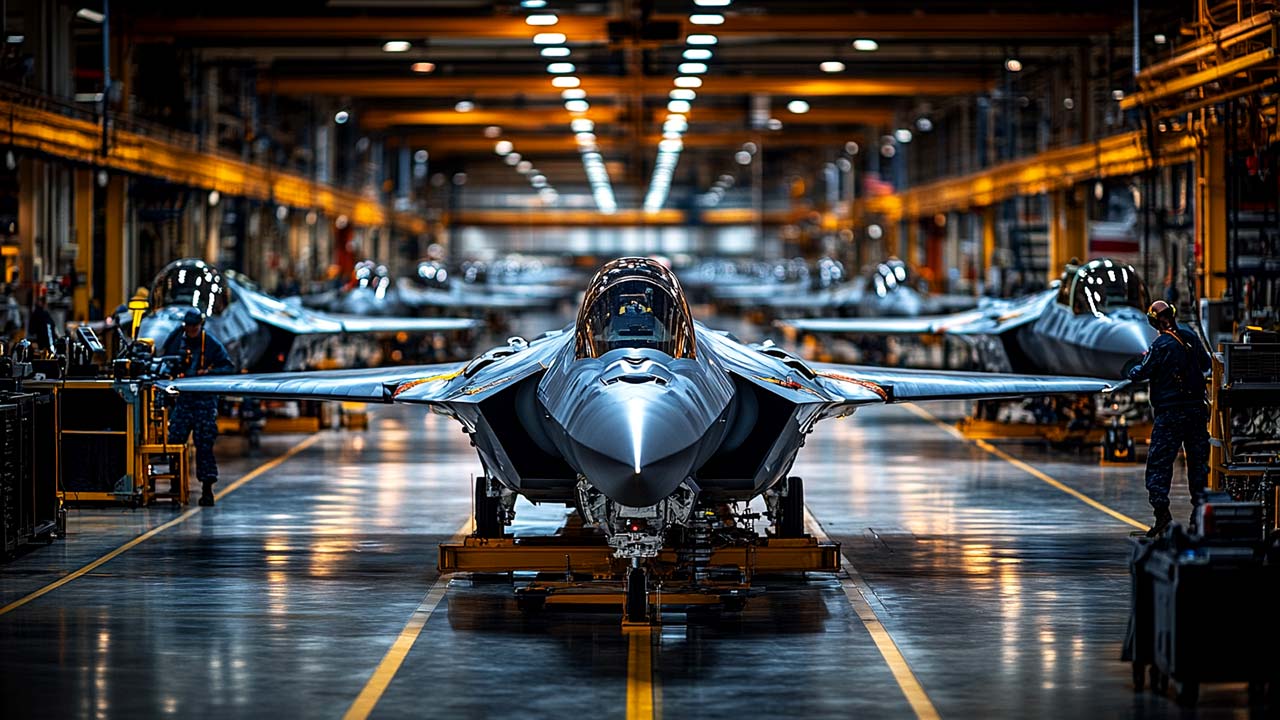
The Unique Relationship Between the Defense Industry and Innovation
For decades, the military and industrial complex has stood as a reminder of Federal power and waste, with a system of contracts and research methods that seem almost inherently expensive and slow. While the defense industry increased spending, and used funding inefficiently, most people in the latter half of the 20th century still accepted the cost as necessary to protect from the Russian threat. The whole industry has primarily only the government for a customer, and thus has countless negative incentives. National defense is simultaneously two things: a necessary defender of liberty, and a tool that could always be used against it. While at its best, the United States military protects the people against the intrusion of foreign interests and allows a safe and stable existence, it also allows the Federal government to have technological and military supremacy over the people and the states. This article aims to examine the simultaneously necessary and dangerous nature of national defense, and how the best can be brought out and risk and waste can be avoided.
While far from the most serious potential problem with the current military industrial complex, the technological stagnation and government contracting process are broken beyond repair. Although the proper level of national defense expenditure is up for debate, no one would happily accept a far more expensive rate for the exact same level of protection. The defense contract business is slow and inefficient, because a government oligopoly favors a few firms. It is very difficult for outsiders to break in, and a few groups of firms typically take all of the business. Trying to break into the defense!industry is difficult, as pivots for highly specialized and expensive machinery are not always easy. This problem is inherent to the defense industry, but speeding up the contract process could allow new entrants to more quickly see whether they should keep trying to enter the defense space. Additionally, fewer firms competing for one customer with a slow permitting process means that technological innovation is typically slower and more expensive than it would be in private industry. Certain firms like Anduril and Palantir have been able to innovate rapidly even while producing in the defense space, and they have set a new precedent for how the industry should be approached. They have been able to reach high levels of success in innovation, even by private company standards all while navigating the archaic defense product lifecycle. More companies taking inspiration from them, and a renewed permitting process could rapidly increase our military development at a far lower price.
A more contentious topic is the level to which defense should be pursued. Almost everyone agrees that some defense is necessary, yet it is increasingly popular to argue that our military’s size has outgrown our nation’s real need for it. In time of peace, the massive expenditure of the defense industry looks like one of the clearest signs of our government overreach. We spend well over 3% of our GDP on defense each year. If we live in a peaceful world, no defense spending would be necessary, but in the world that we live in, we must choose the best of many suboptimal options. Defense spending is only worth doing at all if we can spend enough to reasonably compete against our most likely enemy. As free and wholesome as America could be with only a fraction of our current defense spending, that only matters if we have defense capabilities powerful enough to defeat our largest enemy. The world will always have nations and people seeking to take resources away from anyone that will not resist them. The moment that the United States military is not stronger than our strongest enemy, we have endangered the greatest hope for the preservation of liberty in the world.
The defense industry increases taxes, is often a part of stagnant institutional structures, and always presents a risk to the American people, yet it is necessary if we wish to maintain national stability. There’s a point at which or national defense spending will just mean a higher probability of tyranny with little greater ability to resist our enemies. Before we can understand what that point is, we must reform our contract, processes and disrupt the stable defense industry to allow for cheaper and better results to emerge and reduce the tax burden on normal Americans while still protecting their freedom.

 Live Chat
 Email:
  Phone: 1-888-465-3160