We Need More Government… Clarifying Property Right
Many forms of regulation have an origin story rooted in a historical example of a business damaging everyone around for quick gain. These examples of negative externalities show something that can apparently only be fixed by regulation. If a business is allowed freedom and they used it to damage the common good, the government that allows this in some way violates the social contract. Even if there is no theoretical justification for government regulation of a specific industry, angry citizens are good at making their voices heard. While regulation is an inefficient solution to these issues, in many other cases, the real culprit for these negative externalities is actually a form of government inaction. The failure to properly define property rights makes coordination and optimal outcomes extremely difficult among even generally beneficient people. The origin stories for environmental, banking, and public utilities regulation could all have found a resolution in clearer ownership boundaries rather than preemptive establishment of a state monopoly.
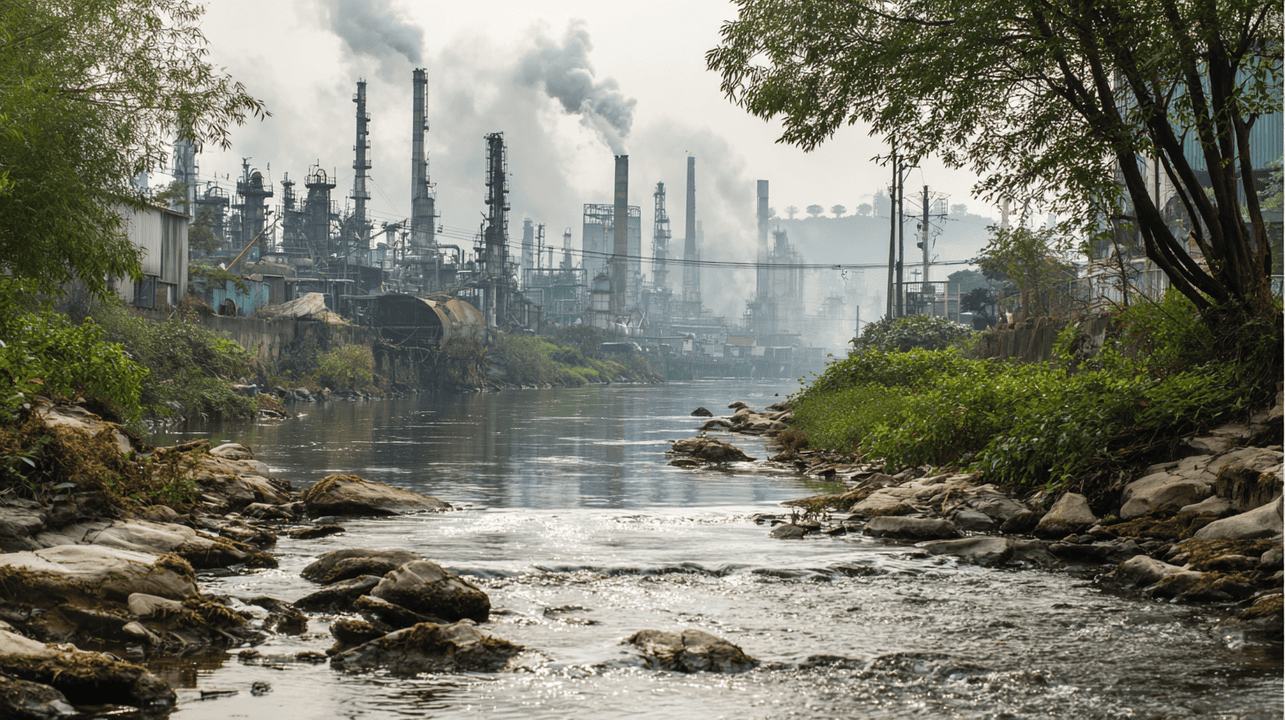
One common story used to explain the necessity of environmental regulation is that of a factory spewing waste into a nearby river. While the lives of everyone around the river became noticeably worse off, they did not have any way to fight back against the businesses’ pollution. At this point in the story, the valiant regulator steps in. The business is told that they can no longer pollute, the river clears up, and the people are happy. However, a question conveniently avoided in the first story is, “who owns the river?” If the state owns the river and provides it as a public good, then the people were damaged by misaligned ownership rather than just the factory. The bureaucrat hundreds or thousands of miles away has no incentive to clear the papers of his desk and take on the case of the murky river. However, as most rivers in real life are, there is a more complex web of ownership that bridges, local government, state, private, and federal ownership. It is not strictly wrong for the government to own land in all situations, but it certainly makes the coordination of concerned owners far more difficult. However, at the very least, the government has a responsibility to list some form of contact information for the owner of every piece of land, and make their rights over their land far stronger. If someone else can be shown to be damaging the quality of the water they drink or the air they breathe, they have a right to seek settlement. While a government wishing to provide public benefits is admirable, it is just extremely difficult to believe they will be motivated to advocate for the people as strongly as they will advocate for themselves. If people cannot hold those who devalue their land accountable, how strong can their ownership of that land be said to be?
In 1913 after a serious bank crisis, the Federal Reserve Act established a network to help the banking system become more resilient in times of crisis. Although JP Morgan stabilized the 1907 crisis without any need for government intervention, the government stepped in because they were worried that a bigger crisis could destabilize the banking system for an extended period of time. The US was emerging as a global power and felt that an increase in stability would be worth the associated increase in control. They were worried about banks shifting their risks onto those who chose to deposit with them, and then allowing people to lose all of their money. This hypothesis betrayed the fact that they thought banking was a risk free right. All of life is full of risks, and those who engage in them must own them. The state regulation of the banking industry removed the significance of depositors and banks actions, and those who enter the market must bear ownership for their own risks to avoid jeopardizing the stability of the economy
Public utilities became annexxed by the government because it was assumed that the high startup cost meant that they would become natural monopolies. Putting up parallel pipes and sets of electrical wiring would be inefficient, so the government took over. The government failed to recognize that innovation and the threat of Monopoly would keep price gouging at bay far more than they thought. Natural monopolies were actually not common, even before the government overtook the field of utilities. The government guaranteed a monopoly through their ownership of various industries. Sometimes it appeared to be a monopoly, was only a very effective business, who had no competitors because it was not possible with the given technology to do what they did at a lower price point. Through the creation of an actual monopoly, the government allowed a slower rate of innovation than if they let private businesses own utilities. In seeking to avoid a price gouging, they guaranteed a slowed price deflation trajectory.

 Live Chat
 Email:
  Phone: 1-888-465-3160