Peter Schiff: More Tariffs Mean Less Affordability
In his Wednesday podcast, Peter walks listeners through the frantic moves in precious metals, the unraveling Bitcoin narrative, and recent weak jobs data. He argues the gold and silver sell-off was a technical flush rather than a change in fundamentals, warns that Bitcoin’s long-promised outperformance has failed, and calls out tariffs and government spin for masking real economic weakness.
He opens by describing the shock sell-off in precious metals and why the panic was overblown:
Man, I remember when gold was less than $500 an ounce, let alone dropping by $500 an ounce; silver dropped $30 in a single day. Both hit all-time record highs the prior day: gold was close to 5,600 and silver had topped $121 an ounce. And it wasn’t a shortage of people on the financial media saying, “You see, we told you gold was a bubble, we told you silver was a bubble,” right, they thought it had popped. They don’t understand that nothing changed.
He tells listeners why the recent pullback should be greeted as a buying opportunity rather than a reason to sell:
I’m very happy with a slower, steadier increase. It was getting difficult, you know, for people to buy silver when it was rising so fast; it was a little scary. It’s not nearly as scary now, now that you know where the top was and that you’re clearly not buying it; you’re buying a very substantial pullback. Yes, you’re still having to pay $90, which may seem like a high price, but it’s not $120 some people paid; $120, so you’re getting a good buy at 90. And the same thing with gold.
He turns to crypto and makes the point that Bitcoin has failed to live up to its promise as the best returning asset:
Look, this is obviously not a surprise to my audience. I have been saying this, I’ve been warning about this, I’ve been telling you crypto guys that, you know, the game is over and you got to get out while you can. Well, Bitcoin right now is at seventy-two thousand five hundred. Now it’s down, if you want to compare it to gold, Bitcoin right now is fourteen and a half ounces of gold. In 2021 at its peak it was thirty-six point three ounces of gold. Bitcoin is now down sixty percent priced in gold since its November 2021 high.
He digs into MicroStrategy as an example of the wider crypto leverage and how that business model is breaking down:
The reason it [Microstrategy] was able to do that, to accumulate all this Bitcoin, was because the people who were buying Strategy stock wanted exposure to Bitcoin; they wanted the upside of Bitcoin with less downside risk, and they thought they were getting that, especially the convertible preferreds. But what the last five years have proven is that the people who wanted exposure to Bitcoin were wrong. There was no reason to have exposure to Bitcoin because Bitcoin was a lousy investment over the last five years.
He then shifts to the real economy, noting that private payrolls show weakness despite political spin about strength:
We did get the ADP numbers because that’s not coming from the government, and these are bad numbers. I mean, first of all it was a very low bar that was set, so the consensus was for 45,000 jobs — that’s a pretty low bar; you figure you’re gonna clear a bar that low. Nope: 22,000 jobs, that’s it. That was actually below the low estimate because the range went from 30,000 jobs on the low end to 65,000 jobs on the high end, and we came out at 22,000. That’s below the low end; that’s less than half of what was forecast.
Finally, he calls out tariffs as a policy that raises prices and reduces affordability, even if not technically part of monetary inflation:
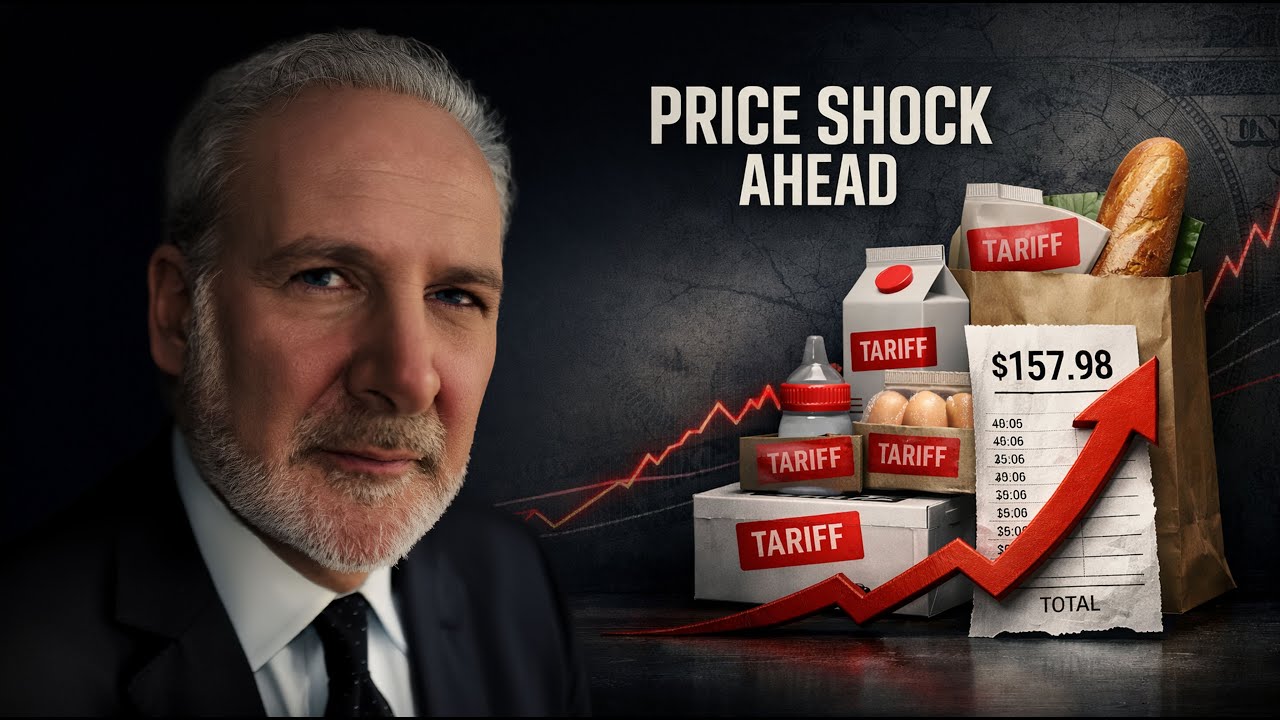
Bessent wants to cling to the idea that tariffs by definition are not inflationary, which they’re not, right, because inflation is an expansion of the money supply or the credit supply — we’re doing that separately — but the tariffs increase some prices and decrease others. But yes, they’re not technically inflation. But they do make a lot of things more expensive, and so if the issue is affordability more so than inflation, tariffs make a lot of products a lot less affordable. That is a reality; you can’t get around that fact.
If you missed Peter’s initial response to the metals sell-off, check it out here!

 Live Chat
 Email:
  Phone: 1-888-465-3160