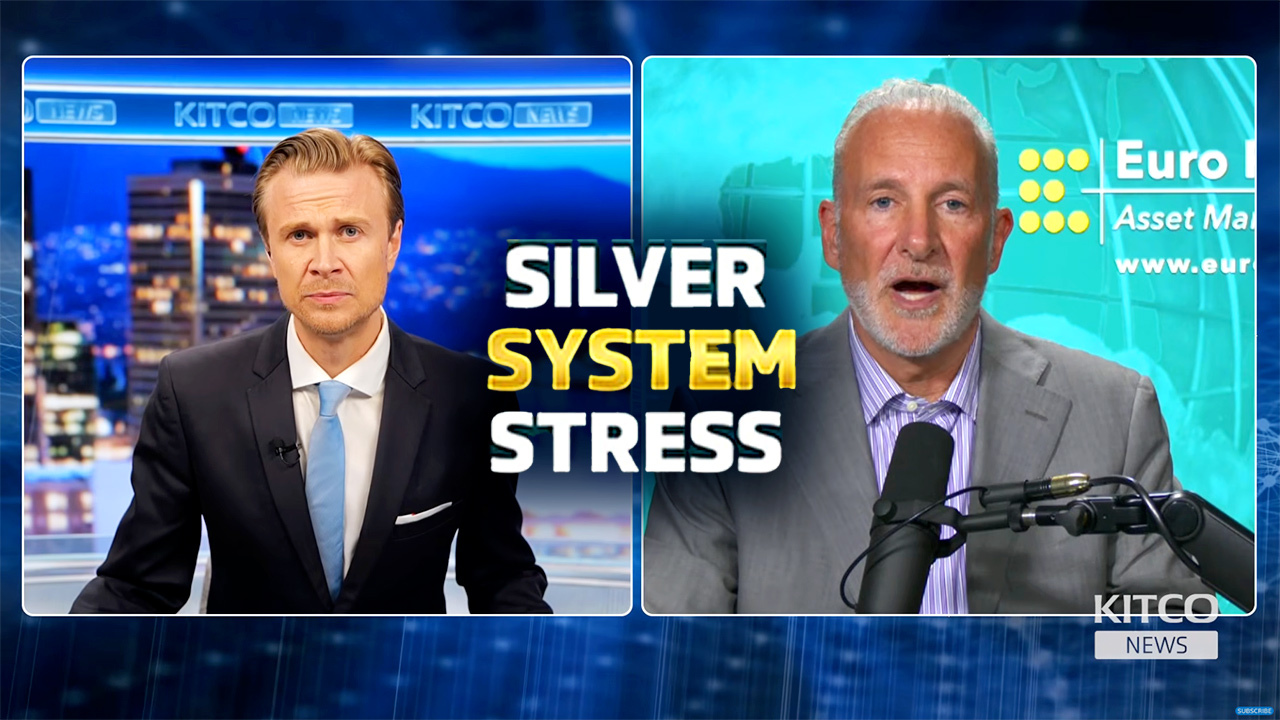
Schiff on Kitco News: Tokenization Signals a New Era for Gold
Last Thursday, Peter joined Jeremy Szafron on Kitco News to lay out why he thinks gold is entering a new phase driven by central-bank demand and the tokenization of physical metal. He frames tokenized gold as a practical escape from fiat and traditional banking, and warns that unfunded entitlement programs plus sovereign debt risk make safe-haven assets more important than ever.
He opens by reminding listeners that the current gold rally is the continuation of a long bull market, and that the striking new element is the return of official buyers:
You go back to when I first started buying gold for my clients and recommending gold and buying it for myself, gold was under 300 and silver was under $5. So from that respect, it’s not the beginning of the bull market. It’s been going on for 25 years. But I think what’s early is central banks buying gold, which really just started a couple of years ago. And I think this trend is only going to grow.
Peter sees tokenized gold as the likely bridge between bullion and modern payments systems — a way to make real money usable without surrendering value to banks or fiat-based tokens:
To the extent that we’re going to have crypto, it’s going to be tokenized gold. That’s going to be the main type of token, not tokenized nothing, which Bitcoin is fiat token, but a token backed by real money, which is tokenized gold. I mean, I’m doing that myself with TGold. … I’m building the framework for my customers to use gold as a medium of exchange, not just to hold it as a store of value, but to use it in commerce.
He explains why tokenized gold is more than a fad: it can recreate the practical conveniences of banks without creating creditor claims on an institution that can fail or inflate away your balance:
It’s a way to get out of the fiat system. It’s a way to get out of the banking system. Because you can get all the functionality of a bank without having a bank. Because when you deposit your money with a bank in order to gain access to the liquidity that they provide, ATM, you know, debit cards, checking, stuff like that, you become a creditor of that bank. What if the bank fails?
Peter also links monetary and fiscal policy problems to the case for owning hard assets. He warns that political unwillingness to reform entitlements makes inflation an even more likely outcome if deficits balloon:
But I do believe him that he won’t touch social security or Medicare or Medicaid, and that is a problem because we need to touch those programs. We need to cut those programs. We can’t afford those programs. And if we’re going to take them off the table, then the deficits are going to get bigger and there’s going to be more inflation. And all that means is that your benefits are going to lose value.
The broader fiscal picture, he says, creates a vulnerability the private sector can’t easily patch. The 2008 crisis was about bad mortgages; the next big crisis could be about the credit of the nation itself — a sovereign debt or dollar crisis where no external bailout can fix the problem:
This is going to be much worse than the 2008 financial crisis when the problem was the credit worthiness of mortgage borrowers. This is the credit worthiness of the United States, the biggest borrower of them all. And the United States government was able to provide bailout money during the Great Recession in the aftermath of the 2008 financial crisis. But when there’s a sovereign debt crisis and a dollar crisis, there is no government bailout that’s possible because the government can’t bail itself out.
Peter concludes that both private investors and central banks are looking for an alternative to dollar-denominated assets and debt that can be inflated away. This is a visible, market-driven shift:
But look, it’s obvious that demand for gold is rising. It’s rising from central banks as an alternative to the dollar. It’s rising from private investors as an alternative to a lot of things, including U.S. treasuries and other dollar denominated debt. And so all of this demand is going to be growing for years and years to come.
Did you miss the Comex chaos this week? Check out our analysis here.

Receive SchiffGold’s key news stories in your inbox every week – click here – for a free subscription to his exclusive weekly email updates.
Interested in learning how to buy gold and buy silver?
Call 1-888-GOLD-160 and speak with a Precious Metals Specialist today!
 Live Chat
 Email:
  Phone: 1-888-465-3160