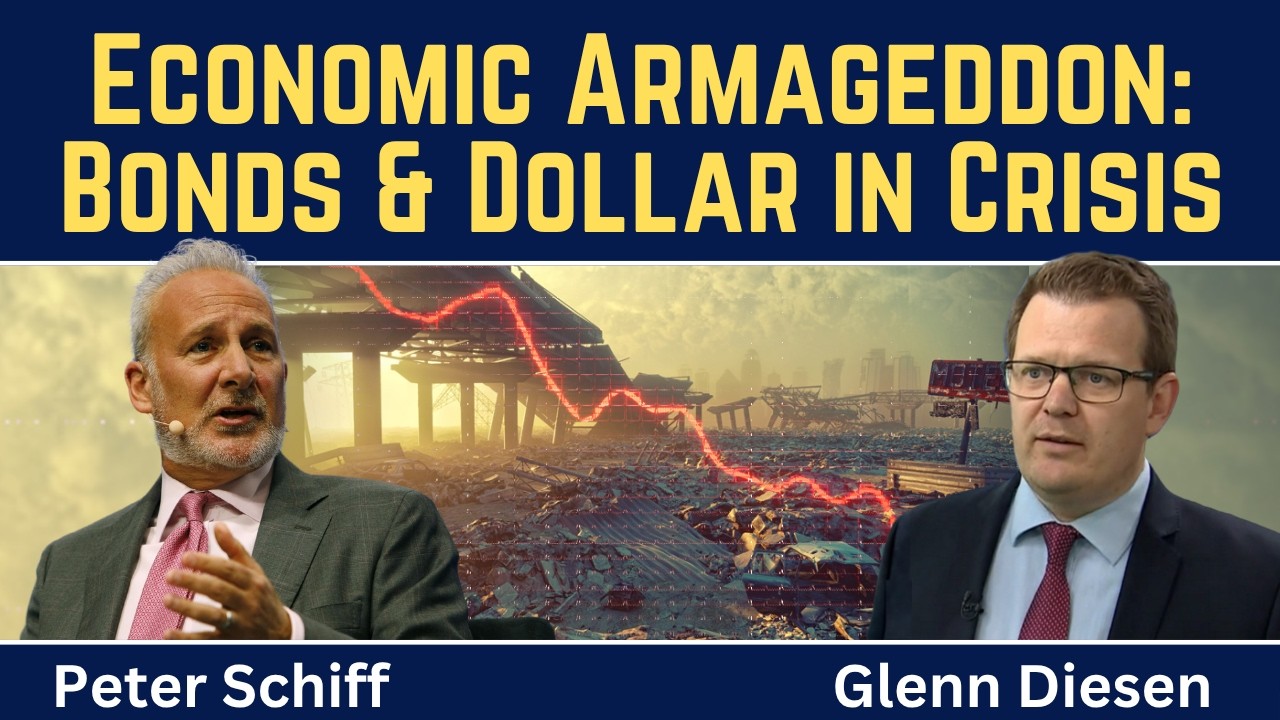
Schiff w/ Diesen: Doubling Down on Tariffs is a Mistake
In his latest interview with Glenn Diesen, Peter tackles a wide range of policy failures unfolding under the current administration, from the stalled war in Ukraine to the growing pile of unfunded government promises. He also explains why central banks are quietly turning to gold instead of US treasuries, and why Trump’s tariff war is enriching China rather than hurting it.
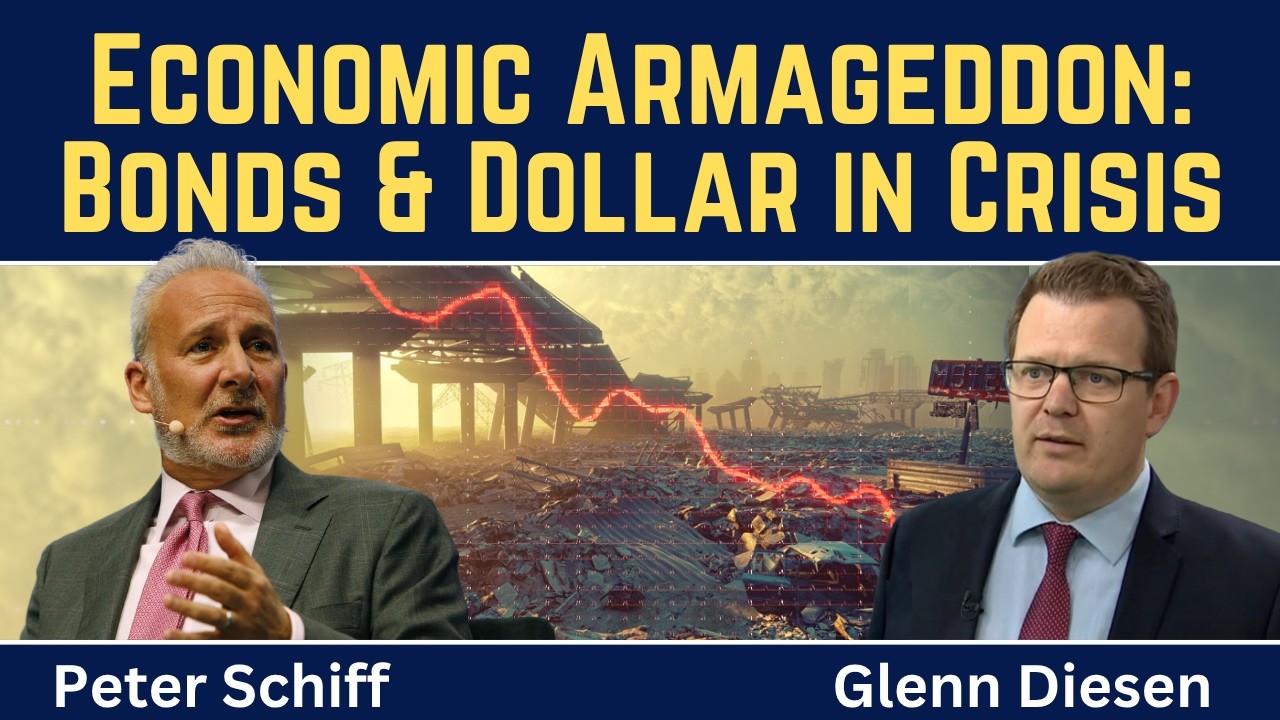

Peter opens by addressing the war in Ukraine, a conflict he says was doomed from the very beginning:
So this is a huge problem. And the war, we’ve lost this war. There’s no question that that’s the case. In fact, I was predicting that we were going to lose it the day we started it. And it’s probably further away from ending now, maybe than it was when we did start it. Even Trump now concedes that the war is not going to end until after the midterms.
Shifting to monetary policy, Peter explains why central banks around the world are increasingly favoring gold over US treasuries. It’s not just about returns, he says, but about sovereignty and independence from Washington’s political leverage:
I think central banks are deciding that gold is better to hold than treasuries. And not only is it better economically, but better politically, because when you hold treasuries, you’re still beholden to the US government. The US government has the ability to sanction you and weaponize your own treasury reserves. But if you have gold safely within your own border that you defend, the US government has no ability to do anything. I mean, we would have to actually invade you and take your gold by force.
Peter then turns to the staggering scale of America’s fiscal problems and troubling economic outlook, arguing that the widely cited $40 trillion national debt figure barely scratches the surface of what the government truly owes:
Remember the $40 trillion is the tip of the dead iceberg. The iceberg itself is the unfunded liabilities, which are a lot higher than that, over $100 trillion higher. So there’s an enormous amount of commitments that the US government has made that it’s not funded and it can’t possibly meet these commitments. And so either it has to default on those commitments or it has to inflate in order to meet them, but it’s going to meet them with money of substantially diminished value.
From there, Peter takes aim at Treasury Secretary Scott Bessent, criticizing him for cheerleading policies that don’t add up. He points to Bessent’s applause for Trump’s proposed $5,000 dividend checks as a glaring example of dishonesty from someone who should know better:
I don’t believe anything that Scott Bessent says. I think he’s just a yes man. He’s there to put positive spin on Trump and try to portray Trump in the best possible light. In fact, even yesterday, when Trump promised to send everybody in America a $5,000 dividend check, he’s up there applauding that. He’s the secretary of the treasury. He knows that we don’t have the money in the treasury to send everybody 5,000.
Peter then pivots to trade policy, arguing that Trump’s tariffs have failed to achieve their stated goal of curbing China’s economic dominance. Instead, he says the numbers show China coming out ahead while ordinary Americans foot the bill:
The country that’s winning the most from our tariffs is China. China had a record surplus last year, and they’re going to beat it with an even bigger surplus this year. Yes, their trade surplus with America did go down, but their surplus with everybody else went up. Our deficit with China went down, but our deficits with everybody else went up. So we didn’t achieve anything, but Americans got the bill, that’s all, from the failure of the tariffs to work.
Finally, Peter dismantles Trump’s repeated claim that America holds the upper hand in global trade. He argues the president has the entire relationship backwards, describing the US as a net beneficiary of foreign lending rather than a victim of unfair trade practices:
Trump’s got it backwards when he thinks we hold the cards because we have all the people who borrow money that they don’t earn to buy things that they don’t produce. We’re living off the global gravy train. We’re the ones that are taking advantage of everybody else. We’re ripping off the world. It’s not the other way around. Trump doesn’t understand how this works.

 Live Chat
 Email:
  Phone: 1-888-465-3160