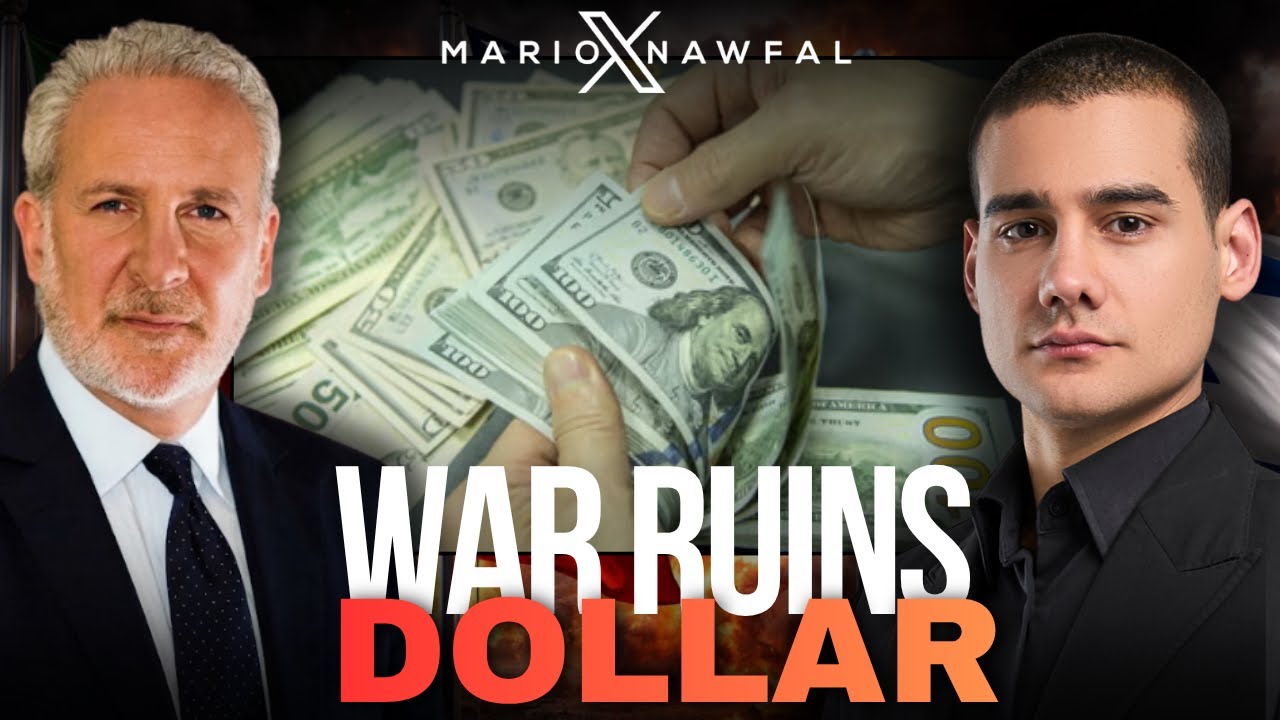
Schiff w/ Nawfal: The Empire is in Decline
On Friday, Peter joined Mario Nawfal for another interview on the Iran War and its economic fallout. He takes Nawfal through the forces he sees shaping markets today: an ongoing war that keeps oil elevated, political corruption that corrodes trust, and policy mistakes that have left the federal balance sheet vulnerable. He ties these themes together with warnings about market complacency, bailouts, and the long-run fate of overextended powers — all reasons he gives for favoring sound money and skepticism toward central-bank fixes.

He starts by challenging the market’s optimism that war and high energy prices will soon resolve themselves, and argues that investors are pricing in a return to normalcy that he doesn’t expect:
And in fact, if you look at the stock market making new highs, investors are obviously assuming that the war is going to end and the oil price is going to come crashing back down. And I don’t think either of those is going to happen. I mean, I think that they can certainly try to dial back the hostilities, but I don’t think we’re going to achieve the objectives that we set out to achieve. And I don’t think the price of oil is coming down.
He notes how modern trading amplifies headlines, suggesting algorithms and herd behavior make markets hypersensitive to presidential posts and breaking news:
I think the way traders are or the way they maybe have algorithms programmed, they’re looking for these news items because they know they spark volatility. And a lot of times it’s self-fulfilling because the news item hits and then everybody reacts to it the exact same way at the pretty much exact same time. But I think at some point, the markets will get used to this and maybe the impact will be smaller and smaller, especially with Donald Trump, when you really can’t believe what he posts and he can go from one extreme to the other.
Peter doesn’t spare either party when it comes to corruption and self-dealing; he frames political graft as a systemic problem that influences economic outcomes and public trust:
I think there’s a lot of corruption in the administration. I think there’s a lot of self-dealing. I think a lot of people are getting rich off of their connections to the president, including the president’s family and the president himself. So, yeah, I mean, I was very critical when I thought the Bidens were abusing the presidency for personal gain. And, you know, the Republicans went after Biden and Hunter Biden and all of the shell companies and all the money laundering.
He returns to the concrete economic consequences of conflict, pointing out how easily infrastructure can be wiped out and how slow and costly recovery can be — a dynamic that keeps energy prices elevated:
If a lot of these threats are carried out and a lot of this infrastructure is destroyed, and of course you can destroy it in a matter of minutes, but it could take years to rebuild it. But if we lose a lot of capacity, you know, refining capacity, then the supply goes up and the demand is still there. And so that means that prices have to keep rising. And yeah, I mean, obviously some countries are going to be more impacted than others, depending on how important oil is or imported oil from that part of the world.
He criticizes the old playbook of bailouts and easy money which was recently articulated by former Treasury Secretary Hank Paulson, reminding listeners that some of today’s architects of policy were behind past rescues and quantitative easing (QE), and he flags the federal debt as an accelerating danger. TARP refers to the Troubled Asset Relief Program that helped fund bank rescues in 2008:
He didn’t offer a plan. He just said we need one, which is interesting, of course, because he started a lot of this because it was while he was Secretary of the Treasury that we did the TARP bailouts and, you know, started QE under the Fed. So that’s basically the playbook they’ve been played off of, you know, for a long time.
Finally, Peter places the current fiscal trajectory in historical perspective: empires end when they borrow too much, debase their currency, and overreach — a cautionary frame for anyone worried about currency risk and long-term purchasing power:
And there is no empire that didn’t come to an end. And they all come to an end for the same reasons. They overextend themselves and they go broke. They borrow too much money. They debase the currency. They make a lot of political promises that they can’t keep. And obviously, you can see that America is the declining power.

 Live Chat
 Email:
  Phone: 1-888-465-3160