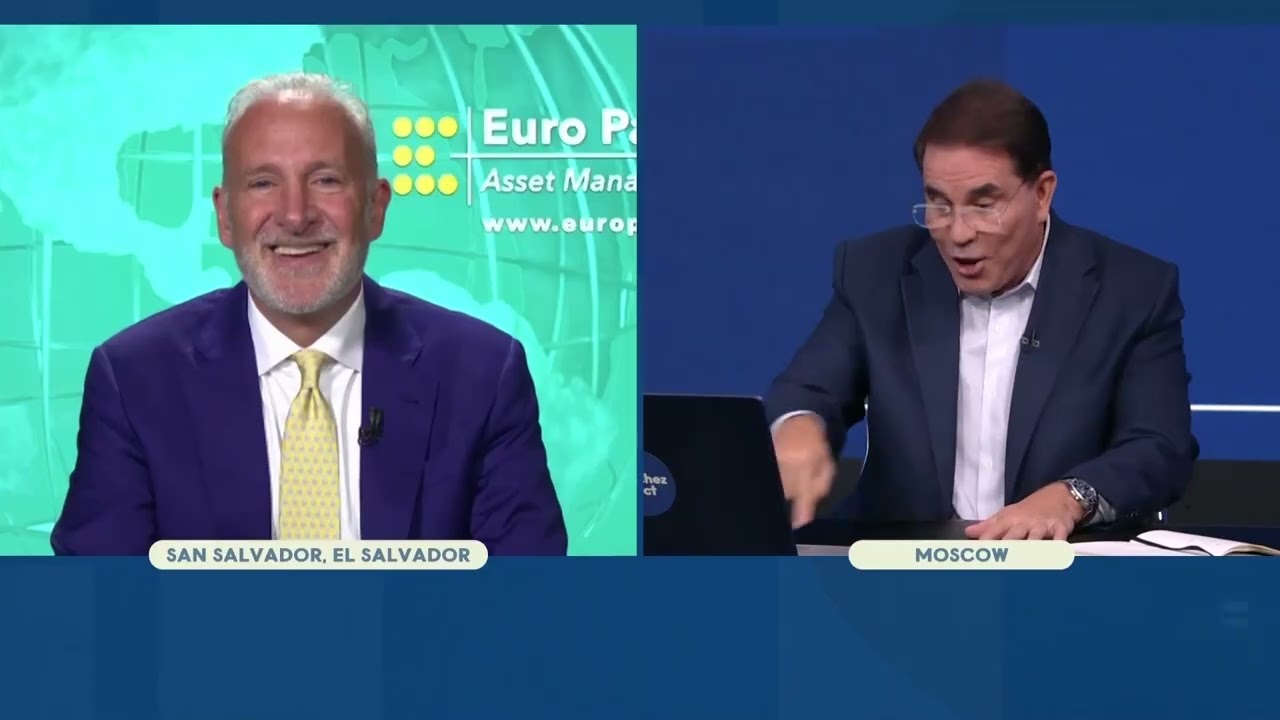
Schiff w/ Sanchez: Blockchain is a Digital Ponzi Scheme
Earlier this week, Peter appeared on the Sanchez Effect for an interview with Rick Sanchez. Together they sift through the international fallout from America’s fiscal and monetary choices and explains why other countries are actively trying to reduce their exposure to the dollar. Peter connects that trend to production, trade balances, the enormous off-balance-sheet liabilities of the U.S. government, and why gold — not promises or digital tokens — remains the only credible anchor left in a world awash with fiat.
He opens by explaining why nations are eager to divest dollar holdings and the political pressures that accelerate the trend:
It makes perfect sense that China would do this. China has had plenty of reasons to do it in the past, but Biden and now Trump have given it even more reason and not just China. There are countries all around the world that really want to divest of dollars, not just because the dollar is a flawed currency to hold, that we’re going to keep printing dollars because of our massive debts. And so the holders of dollars are going to lose purchasing power the longer they hold them.
He frames the shift away from dollar dominance as ultimately about who produces real goods and services, not who merely consumes them:
It’s the producers that are in control. They make all the stuff. Consuming it is just the benefit that you get after you produce stuff. The Chinese and the rest of the world are perfectly capable of consuming what they produce without us. But we cannot consume what is not produced. So the Chinese win, the rest of the world wins, particularly the emerging market wins, and the US loses because the ride on the global gravy train comes to an end.
Given that dynamic, Peter says countries that want monetary independence should do what sound-money advocates have long recommended: back their currencies with something tangible. He maps out a concrete play China could make to displace the dollar’s privilege:
What China should do is what we did initially: back the RMB with gold. They should say that the RMB is better than the dollar because the dollar is backed by nothing and our currency is backed by gold. And they should do that and make it convertible. And then what they should do is they should sever the tie between the Hong Kong dollar and the U.S. dollar and they should peg the Hong Kong dollar to the RMB and peg the RMB to gold. I mean, that’s checkmate.
He also calls out political intervention in markets when it suits an administration’s narrative, suggesting coordinated moves can influence prices and public perception. In this case, Peter sees a targeted effort to knock down gold’s price to support a talking point about monetary tightening and the credibility of an administration pick:
In fact, I think the recent sharp decline in gold, I think that was orchestrated by the White House. I think that they were scared of what was happening. And so they coordinated this short-selling raid to coincide with a false narrative that is perpetuated by the media based probably off of talking points fed to them by the Trump administration that Warsh is some kind of unexpected pick, that is an inflation hawk, that is going to be tougher than Powell, less likely to cut rates.
Finally, Peter turns to cryptocurrencies and repeats a persistent critique: Bitcoin’s economics make it a poor medium for everyday transactions, and its price gains look like the classic outcome of a winner-take-most scheme where early holders profit from later entrants. That dynamic, he argues, mirrors a Ponzi-like structure even if it runs on decentralized code:
If a lot of people actually tried to use it, the transaction costs are prohibitively high for everyday transactions. It’s just not viable, but there is a big group of people who have a vested interest in pumping up the price because they’ve got a lot of Bitcoin that they want to sell. It’s like another Ponzi. It’s a decentralized Ponzi scheme, a pyramid, a digital blockchain, but it’s really the same dynamic. The people who made money in Bitcoin are the ones that bought it a long time ago.

 Live Chat
 Email:
  Phone: 1-888-465-3160