CPI Stubbornly Resists 2% Goal; Gold Brushes $5,180
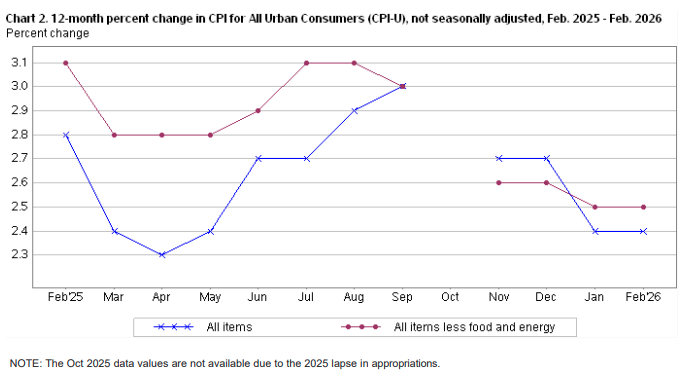
Inflation’s embers refused to cool in February, with the Consumer Price Index for All Urban Consumers edging 0.3 percent higher after January’s 0.2 percent bump. Headline prices now stand 2.4 percent above year-ago levels, still north of the Federal Reserve’s vaunted 2 percent target. Core inflation, which strips out the volatile food and energy categories policymakers like to ignore, advanced 0.2 percent and is running even hotter at 2.5 percent. Against this backdrop, gold briefly touched an intraday record of $5,183 on Wednesday, a move that speaks volumes about lingering worries over the dollar’s purchasing power.
Source: BLS
Digging into the details offers little comfort to households. Shelter—the index’s heaviest weight— rose another 0.2 percent and is up 3.0 percent year-over-year, even as the rent component logged its smallest monthly gain since January 2021. Food costs climbed 0.4 percent, propelled by a 1.4 percent surge in fruits and vegetables and a 0.8 percent rise in “other food at home.” Energy prices, volatile or not, tacked on 0.6 percent for the month, thanks chiefly to gasoline’s 0.8 percent rise and a 3.1 percent spike in natural-gas service.
While a dramatic 42.1 percent annual plunge in egg prices helped cap grocery bills elsewhere, other necessities marched higher. Apparel jumped 1.3 percent, airline fares 1.4 percent, and medical care 0.5 percent. Even with gasoline still 5.6 percent cheaper than a year ago, the broader energy index sits 0.5 percent higher, undercutting hopes that cheaper fuel alone will tame overall inflation. The CPI-W, used for many cost-of-living adjustments, is up 2.2 percent year-over-year and now reads 319 —an unwelcome reality for retirees on fixed benefits.
Adding to the unease, the Bureau of Labor Statistics acknowledged missing data for October and November 2025 because of last year’s funding lapse, a reminder that Washington budget battles can cloud the very indicators the Fed relies on. With the next CPI report due April 10th, markets are left to guess whether policymakers will declare “mission accomplished” or keep rates elevated. For now, gold’s narrow $15.8 trading range near record highs suggests investors expect price pressures to linger; natural gas is already 10.9 percent pricier than a year ago, and electricity 4.8 percent higher.
From an Austrian-minded vantage point, February’s numbers underscore the simple math: a dollar that buys 2.4 percent less than it did twelve months ago is losing altitude, even if officials celebrate the “progress” from last year’s peaks. Savers, unable to count on sub-inflation bank yields, are voting with their wallets by turning to tangible assets. Until monetary policy embraces genuine restraint—or, better yet, sound money—Americans should brace for the quiet tax of persistent price creep.

 Live Chat
 Email:
  Phone: 1-888-465-3160