Labor Day’s History of Violence
Every first Monday in September, Americans get a three-day weekend. Barbecues fire up, stores run sales, and politicians give speeches about “the dignity of work.” Labor Day is sold as a straightforward tribute to the American worker. But, as with most official retellings of historical turning points, the real history of Labor Day is a messy and violent one that blended a genuine desire to improve working standards with plenty of exploitative and self-serving activists, agitators, and politicians.
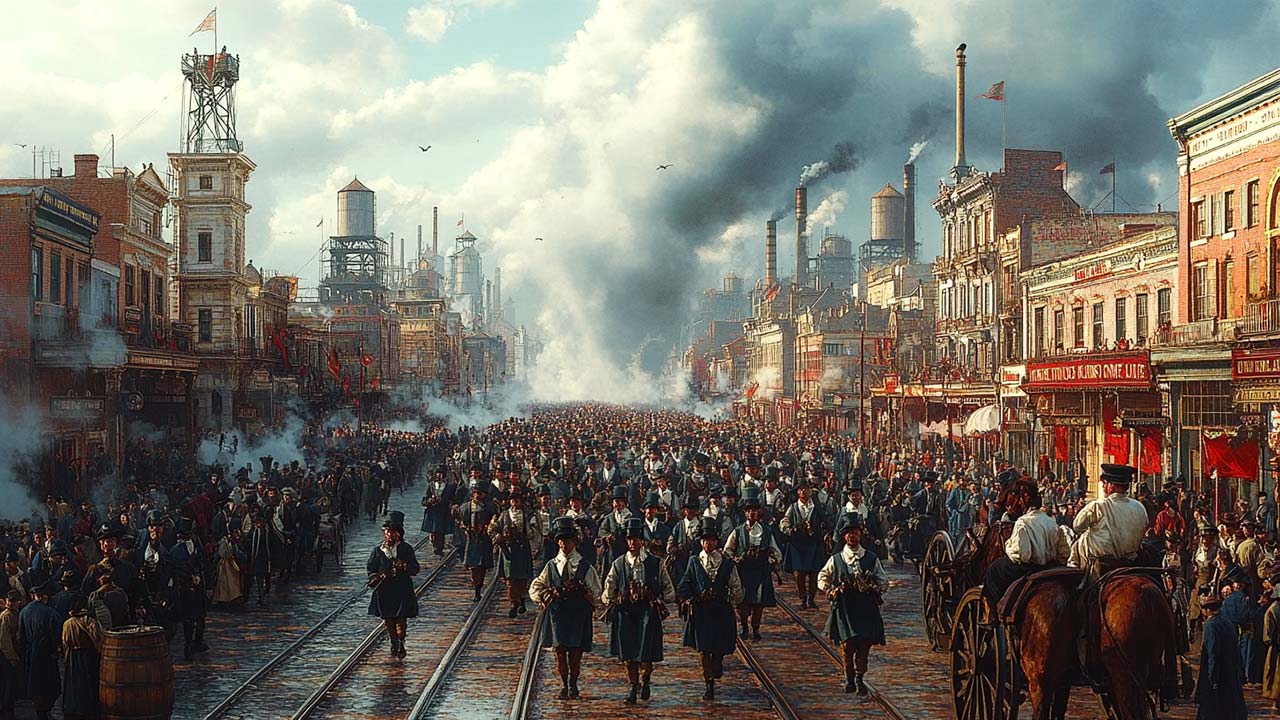
In the late 1800s, American workers faced long hours, dangerous conditions, and low pay in factories, mills, and railroads. Unions were growing, and they wanted recognition. On September 5, 1882, the Central Labor Union organized the first big Labor Day parade in New York City. About 10,000 workers marched from City Hall carrying signs and making speeches demanding better working conditions.
Noble enough, and a logical counter-movement to an American economy that was rapidly growing and industrializing, and was willing to squeeze workers to the brink to provide fuel for the engines of American progress.
Two men get competing credit for the idea. Peter J. McGuire, a carpenter and co-founder of the American Federation of Labor, claimed he proposed a special day for workers in 1882. Matthew Maguire, a machinist and secretary of the Central Labor Union, is also strongly credited, and some contemporary accounts give him the edge. Either way, the parade was a union event, and the idea caught on. Several states passed Labor Day laws in 1887.
By 1894, many more states had added official observances, usually on the first Monday in September. But federal recognition of Labor Day as a worker’s holiday would come later, and with a questionable impetus. That same year, workers at the Pullman Palace Car Company near Chicago went on strike. The company had cut wages during a depression, but kept rents high in its company town. The American Railway Union joined in by refusing to handle Pullman cars. Rail traffic across much of the Midwest ground to a halt.
President Grover Cleveland’s administration responded with a federal injunction and troops. Violence followed, claiming dozens of lives.
At the same time, Congress rushed a Labor Day bill making the first Monday in September a federal holiday. Cleveland signed it on June 28, 1894. Federal recognition of Labor Day had an obvious political dimension: Cleveland and congressional Democrats could present a concession to organized labor at a moment of intense labor unrest, even as the administration was preparing to suppress the Pullman boycott, with violent results.
September was also politically safer than May, which had acquired international and radical associations. May Day had become the international workers’ holiday after the 1886 Haymarket Affair in Chicago, where a bomb and subsequent gunfire killed police and civilians during an eight-hour-day protest. The radical associations made May Day unattractive to mainstream politicians.
Meanwhile, Labor Day’s sanitized and rose-tinted origin story often overstates what unions actually achieved. Real wages and living standards for American workers rose dramatically over the long run because of capital investment, better technology, entrepreneurship, and productivity growth. The historical contribution of unions is more difficult to isolate: unions clearly affected wages and working conditions in many industries, but the more ethically-sound market factors are more powerful and lasting factors than government dictates or coercion by union mafias.
Real Gross Domestic Product, US, 1950-Present
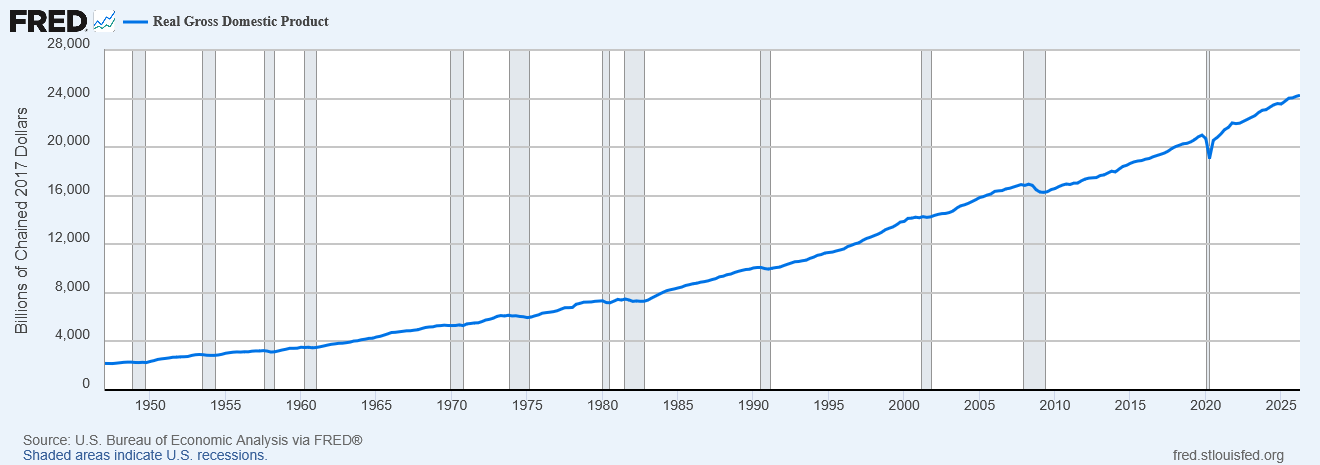
Source: U.S. Bureau of Economic Analysis, Real Gross Domestic Product [GDPC1], retrieved from FRED, Federal Reserve Bank of St. Louis; https://fred.stlouisfed.org/series/GDPC1, September 7, 2026.
Even if unions increased prosperity, it would be unethical to generate those improvements through coercion. With violence against non-union workers, secondary boycotts that harmed third parties, and political pressure for special legal privileges, the ends do not justify the means. Employers and, of course, the government itself were involved in violence against workers as well, so a violent response is to be expected.
But if unions succeed in pushing wages above free-market levels, the gains often come at the expense of other workers who lose job opportunities and of consumers who pay higher prices. Robbing Peter to pay Paul doesn’t increase real prosperity. It just disincentivizes labor, innovation, and investment by making everyone equally poor in the name of forced equality.
The embedded political narrative is that organized labor, rather than voluntary cooperation and free markets, is the main reason workers prospered, but this is a fiction, much like the story of Labor Day itself. The same government that sent troops to break a strike also created a symbolic holiday to soothe public anger.
Taking pride in building, inventing, serving customers, and raising living standards is healthy. The problem is the official packaging. Labor Day has long been used to push a story in which unions are the heroes and free markets are the villains, or at best a background condition. The evidence points the other way. Rising real wages tracked productivity growth far more closely than they tracked union density. Countries and periods with freer markets and stronger capital formation can deliver better results for ordinary workers, in a more ethical way, than those that relied heavily on political power and class conflict rhetoric.
If the goal is genuinely to honor labor, the free-market answer is straightforward. Protect the right of people to associate and to quit jobs they dislike. Protect the right of employers and workers to make voluntary contracts. Stop tilting the legal playing field with special privileges for favored groups. Let capital form freely so that workers have better tools and more opportunities. Celebrate the results of higher living standards, safer workplaces, and shorter hours as productivity rises.
Labor Day began as a union parade and became a national holiday through a mix of organizing and political expediency. But the greatest and most ethical gains for American workers and prosperity come from the messy, decentralized, voluntary process of people investing, inventing, innovating, and trading under relatively free conditions.
That process still deserves more credit than it usually gets on the first Monday in September.

 Live Chat
 Email:
  Phone: 1-888-465-3160