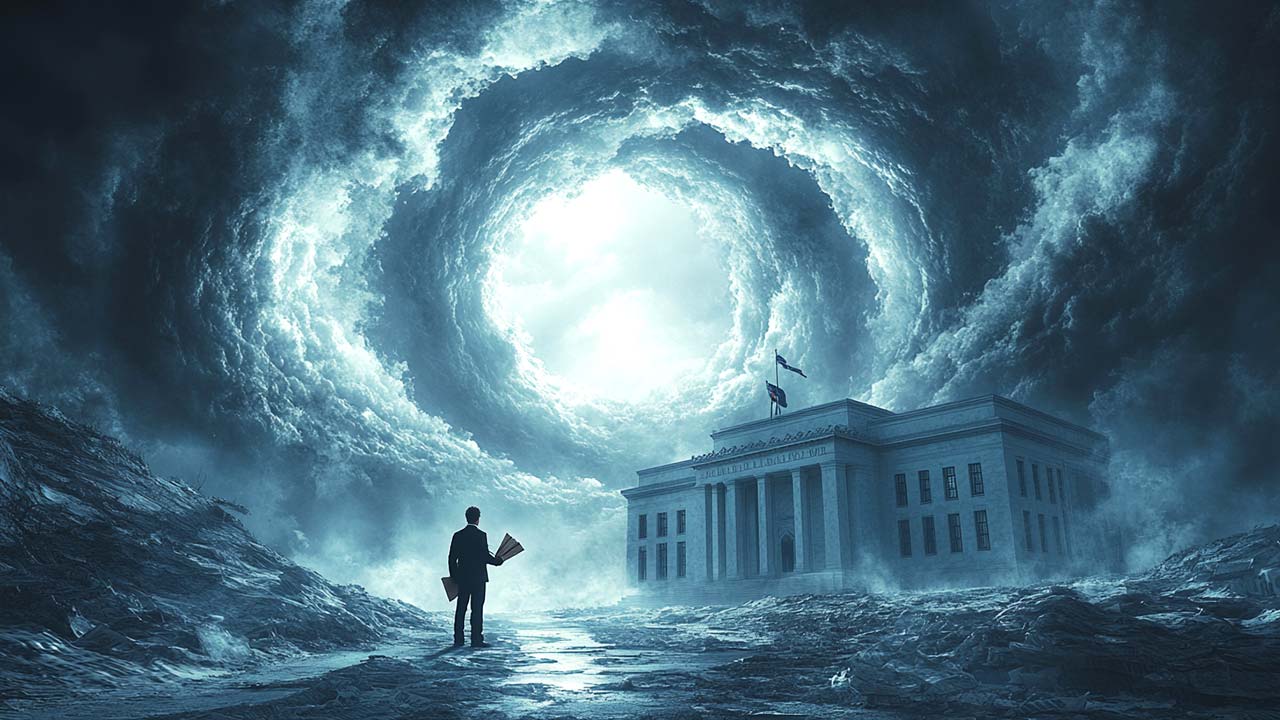
Stakes Higher Than Finance: Shylock and the Central Bank
The dramatic heart of the play, Merchant of Venice, centers around a deal that turns a bad financial decision into a matter much more serious than money. In a situation where the titular merchant, Antonio, seeks to help out a friend in a time of social need, Shylock the moneylender gives him a loan of three thousand Ducats with no interest. While it helps Antonio fulfill the bond of obligation to his dear friend Bassanio, it comes at great cost. Shylock is entitled to one pound of Antonio’s flesh if he fails to repay the loan within three months. Antonio is certain that the ship that bears his money will come back shortly, and that he has no need to worry about the life-ending risk. His ship does not come in on time, and what seemed to be a normal and beneficial risk ends up having the potential to kill him. The fundamental problem with the central bank is that we are convinced we are being offered a reasonable financial return, but the risk is far more than financial. Just as Antonio bears an existential risk for financial stability, America has forfeited her very survival for the “stability” provided by the Central Bank.
The contract with Shylock and our contract with the Central Bank were both entered into under the assumption that there would be no cost on top of repayment. Antonio agrees to the terms with a massive downside risk to avoid present payments, a classic example of selling the future for the present. Antonio saw the certainty of his friend not benefiting from the money as greater than the risk-weighted potential of his own death. We myopically valued the risk of bank runs as far greater than the decline and institutional stability that we would receive from having a Central Bank. We both merely saw the risk in front of us and assumed that the objectively far greater risk in the future would not matter given its apparently low probability. However, if we had thought more deeply about the incentives behind a Central Bank, it would have been much easier for us to recognize the vast institutional damage that we were risking for some short-term comfort.
When Antonio is brought to court as a debtor and tried for avoiding payment of what he rightfully agreed to, his life is all but lost. Losing a pound of flesh meant sure death, and borrowing three thousand Ducats without understanding the risks had come back to bite him. Whether we recognize it or not, we are currently in this sort of dire situation. Our trade-off for safety many years ago has created an unstable financial system, driven by discretion and the desire for signiorage. We consented nationally to something that now makes our descent into debt and artificial financialization easy. Dramatically increasing M2, instability in inflation rate, and ever-increasing financial regulations damage the monetary stability and productivity that could even allow us to pay off our debt. The question now is one far greater than financial responsibility; it is a question of the persistence of the nation itself. Shylock had all but won and the State has all but regulated us into disaster.
However, the courtroom was not the end for Antonio. Through a legal loophole, Antonio was barely able to escape his seemingly inevitable fate. Shylock was not able to extract any flesh from Antonio without extracting blood(not explicitly allowed in the contract) thus making his demands impossible. It will require some solution against all odds to simultaneously bring the Nation back to financial stability and monetary freedom. America is at the mercy of the State, and the stakes have never been higher, but last minute and miraculous changes have happened both in fiction and real life. A time of difficult financial readjustment or a radical change in American financial and monetary regulation could bring us back to a world without ever-increasing taxes and an ever-destabilizing nation. Inflation and economic stagnation are not external mysterious forces that cannot be mitigated. They can be diminished by the right regulation and lack thereof. In order to assess the question objectively, we must somehow escape from this survivalistic situation we walked into with little understanding of the very possible risks. Before we find some other “common sense” reason to hand over control to the Government, we should ask whether the risks are even on the same dimension as the reward. Protection against back runs should never have been seen as reason to give the Federal Government a monopoly on the issuance of currency.

 Live Chat
 Email:
  Phone: 1-888-465-3160