Tech and the Vote to Intent Ratio
The vote to intent ratio is the proportion of total intentional government action that is driven by any voter filling their proportionate share of total government action. If the government can be crassly compared to a corporation, each citizen within that government would be a shareholder with an equal share of equity in the state. While the state is operated from revenue derived from citizens in their role as customers, their separate role as voters connotes some level of directional control. Each citizen is allocated an equal share of government action that they are ideally allotted, and appointed officials within agencies are generously assumed to be downstream of candidates that citizens voted for. If every government action could be clearly linked back to some form of citizen consent given in vote, there would be an extremely high vote to intent ratio. Interestingly, a direct democracy governed by majority vote would not have the highest vote to intent ratio. If 51% of the population wanted something and could erase the effective power of the other 49% of the vote, then at maximum the vote to intent ratio could be 51%. A dictatorship would fail even more dramatically, as only the intent of one citizen would be represented in governmental action. The dictator would maximize their rightful share as one of many millions of citizens, but no other citizen would exercise any of their share leading to an abysmally low vote to intent ratio. Some form of mediated democratic government would get the highest vote to intent ratio in most situations, as it still allows for some amount of the people’s vote while not letting 51% maximize their share to the detriment of the other 49%. Although unorthodox, the vote to intent ratio gets to the heart of an important question: how much of government action is being directed by the people that the government is supposed to serve.
Whenever a politician is elected, the people believe that they at least have a better chance of serving their interests than the alternative candidate. The politician implicitly has some vision of the world that the people value. This vision is ideally supposed to lead to actions that the person who voted would generally approve of. While this is an imperfect system, every person believes that the politician they know will in some way intentionally guide government action in a way they agree with. Although each representative does not perfectly represent the voice of the people that elected them, the vote to intent ratio increases if the representative faithfully follows the wishes of those who elected them.
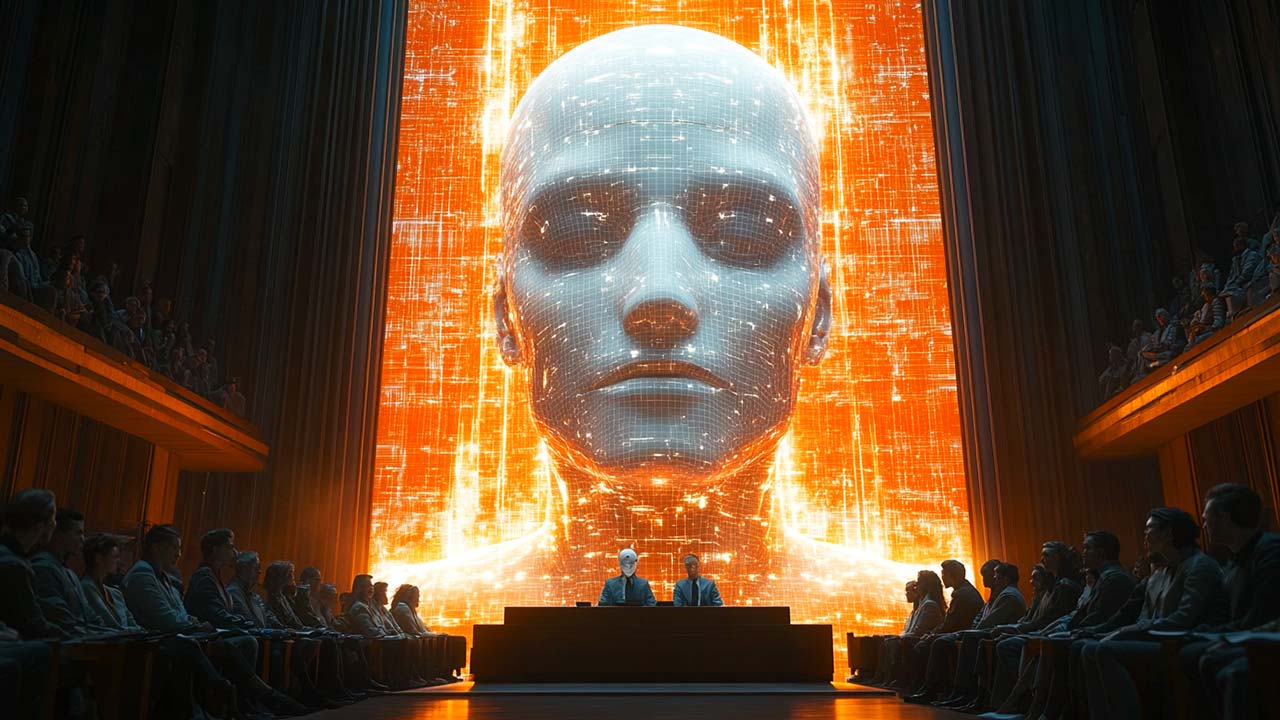
The increase in use of technologies in government means that the vote to intent ratio will automatically decrease unless it is managed carefully. Each choice that an elected representative hands-off to an artificial intelligence system means that the intent they were elected to enact will have less chance of being put into practice. Although they are often able to complete much more, they will do so with a vision that becomes increasingly general. The people will not be able to maintain control over technological systems in the same way that they are able to exert partial control over their elected officials through opinion pressure. While they may benefit from the increase in task completion. There will be many choices taken that the people will eventually come to recognize as something entirely foreign to what they or even their representative might want.
As governments increase their technology use, particularly with technologies that allow a reduction in human thought, there must be a way for the people to more directly exert control, or we risk falling into a technocracy. Holding even human representatives accountable is extremely difficult, and technology should reduce this difficulty rather than increase it. If the people are able to see more explicitly how technology is used and have the ability to govern it more directly through law, then the vote to intent ratio will not be sacrificed for larger amounts of task completion. Federal, state, and local governments have all released AI governance policies, but many of these focus more on the behaviours of the employees than actual model governance. When the technical capability for the people to more directly govern systems used in government with legislation, we will have the possibility for real oversight and transmission of the people’s intention. Although not human, AI presents the same risks that human bureaucrats do, of gradual drift from the intent of those that validate their power.

Receive SchiffGold’s key news stories in your inbox every week – click here – for a free subscription to his exclusive weekly email updates. Interested in learning how to buy gold and buy silver? Call 1-888-GOLD-160 and speak with a Precious Metals Specialist today!
 Live Chat
 Email:
  Phone: 1-888-465-3160