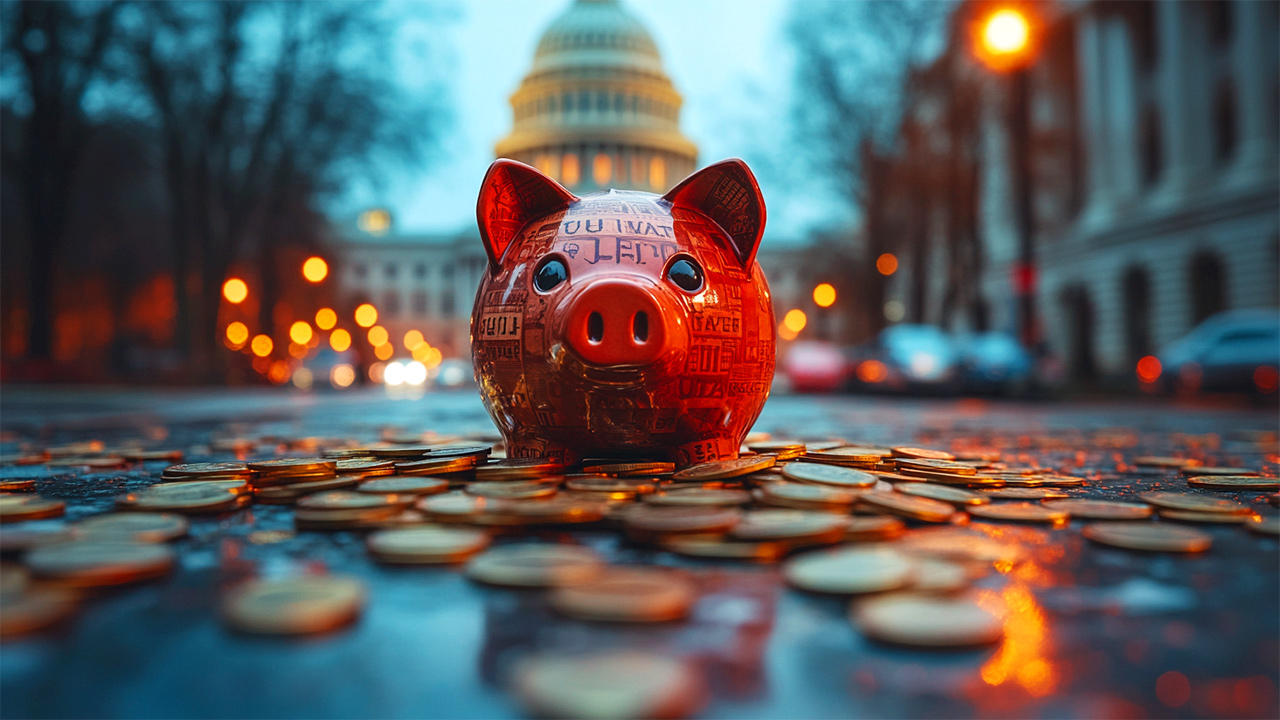
The Incentives Behind Our Perpetual Debt
It is no secret that the US Federal Government has great difficulty getting out of and staying out of debt. Whether the State even possesses the power or willpower to get out of debt is not even asked, as Keynesian principles have lionized debt and removed the historical stigma. Things that would not be seen as wise within the bounds of a family are actively supported in budgeting and monetary policy. The hypothesis that debt will usually create more wealth than the cost it creates in risk allows politicians to take the exact same path that they would have but further. Elected officials have a unique set of incentives that consistently drives them to take out debt for temporary present goods. They are rewarded for making the people happy, and withholding benefits while also increasing taxation are both very damaging to this goal. The ability to give out benefits with no associated increase in taxes makes debt necessary for those who wish to stay elected. Those who repeatedly sell the future of their country for short-term gain are those who will continue to be elected.
People elect politicians who promise short-term benefits, and reelect those who deliver them. Particularly in our urgent political climate, people are yearning for radical short-term solutions. Those who promise prosperity 100 or even 30 years into the future are given far less credence than those who blabber about the greatness of their own potential four years. In their voting patterns, people are recognizing a core truth that they have limited life to live, and would rather vote for progress now and flourish while they can still enjoy it. Although wishing a better life for oneself is understandable, it damages both self and posterity. The outcomes voted for rarely come to pass, and when they do, they are often at the expense of the Nation’s stability in the future. If the American People in 1996 had been intensely concerned with the good of Americans in 2026, many of our problems would have been diminished. However, unless something fundamental changes in the human psyche, the present will always greatly overpower the concerns of the future, however consistently the feedback loop punishes short-term gratification.
The reduction of debt and a return to stability of the Nation, along with its currency, will often not be pleasant in the short term. It will create a much more enduring and free sort of flourishing. While it is best for people in the long-term, it is very difficult to get support for something that people must rightly know will damage their lives for a few years. Higher taxes and reduced government benefits are a promise that will get no one elected. Businesses and the poor alike would be better off when they could spend less of their time worrying about changing prices and the fate of their nation. Even just the increase in systemic stability would be enough to spur people towards greater investment, but with less inflationary signals. The incentives of debt reduction are soundly against it ever gaining mainstream popularity, unless a new group of people, both strong and caring arise. The descent into anarchy or tyranny can only be restrained by an intensely unpleasant time of reform. Those who elect and those who are elected both willingly sell the future for some present benefit.
Alexander Hamilton wrote that that should only be accrued along with the ability to pay it off. He did not require that the debt be frequently paid off, but he required proportionality. Even a return to this standard would be difficult for our current day, as we have reduced our credit rating as a nation in recent years. Keynes effectively did away with even Hamilton’s moderately pro-debt stance. Keynes unleashed a dangerous thing upon the world when we he paired the natural inclinations of politicians with a powerful theoretical tool in their favor. Even when theory indicated against the utilization of debt, most states still abused credit. We cannot wonder about the current state of debt when the incentives towards it and a lack of theoretical opposition strip stable institutions of protection. A society full of elites that legalize and encourage theft should not be surprised when they themselves are robbed. The Ivy leagues and power centers that fell head over heels for the Keynesian hypothesis bear a great responsibility for unconstraining the state which needs so desperately to be restrained. The incentives are all clearly aligned to promote an endless debt spiral, and those who understand must fight to slow and reverse the course that seems all but inevitable.

 Live Chat
 Email:
  Phone: 1-888-465-3160