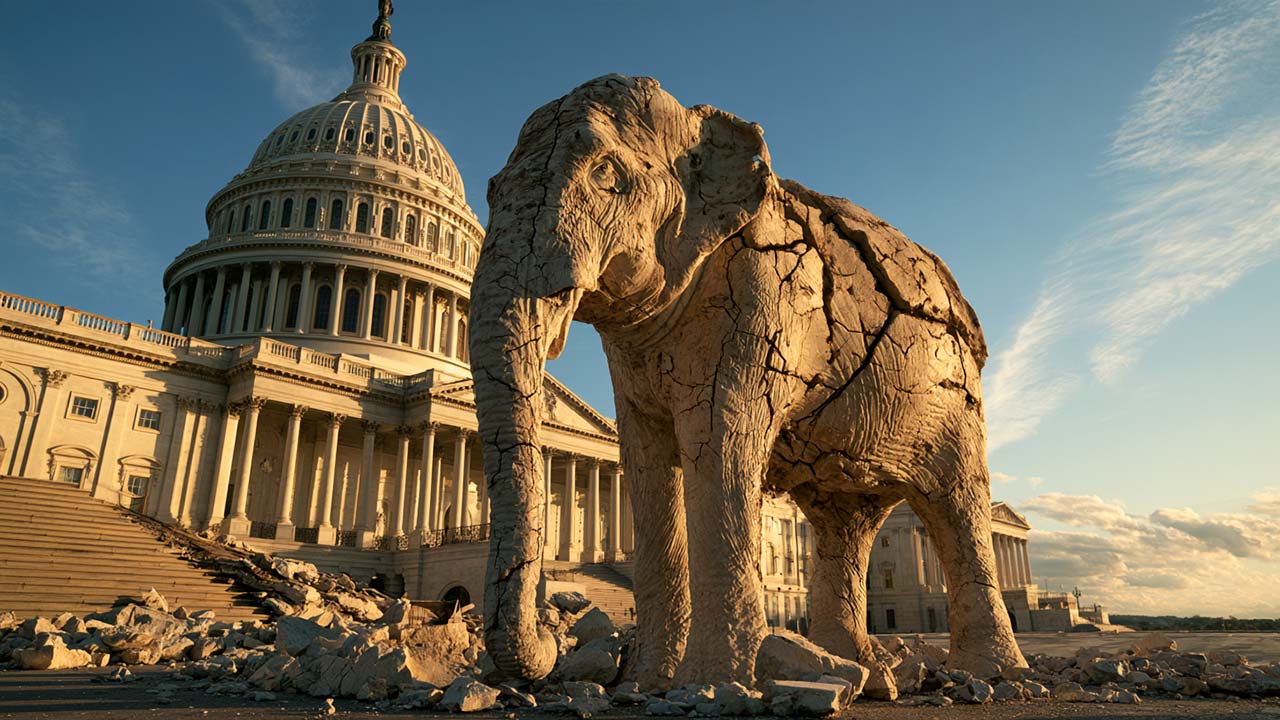
Who Will Defend Free Markets in 2028?
After the blue wave in the recent midterms, it seems obvious that there will be some sort of re-ordering of the right. While there are some signals that the left could use to re-order the type of candidates that they run, their success will most likely blind them to the need for change. However, the Trumpism that has dominated Republican politics over the last 10 years was resoundingly unpopular. The Iran war, corruption, and cronyism all played a role in bringing down the coalition that created Trump 2.0. Although the Republican Party was unpopular for both social and economic reasons, it is difficult to determine just precisely what the average Republican voter would want next time. There’ is no clear split about whether the Republican party that showed so little interest in Trump‘s people this cycle would prefer free market economic policy, or an even more intense regimen of tariffs and industrial controls. The battle between those two ideas will be crucial over the next two years, and the left will have an important role to play.
The first coalition that should be considered is the one that is already in power. The potential of a JD Vance run, or another Trump acolyte, would present a great risk for economic freedom. They would be willing to essentially control anything that they thought would be popular to centrally control. While the odds of this coalition becoming electable again are not as high as they once were, they still deserve discussion as they are credible nonetheless. This group simultaneously balances many different instincts, so it is difficult to say whether they will take the same methods of economic control that Trump did, or will try something else. While this coalition is nominally pro business, they often seem to make choices based on the specific businesses that have earned their favor. This administration has created a large amount of cronyism that is so unpopular as to make the next iteration of Trumpism avoid it. It may be difficult to predict which candidates will remain loyal to Trump’s economic policies even as he loses power, but it is likely that many will continue down the same path of economic control.
On the left, there are two main strains: the Democratic Socialists of America and the establishment Democrats. Although Zohran has shown a more establishment streak once he gained power, most Democratic Socialists promise strong economic controls on big businesses in particular, and an increase in welfare spending. Their fiscal results would likely be someone worse than the Trump administration, but not too different. They would slow down the development of AI and most other technologies, one of the few bright spots in an over-regulated economy. The more establishment branch of the Democratic Party seems to be comfortable with the tech billionaires building AI. Gavin Newsom and Hakeem Jeffries both balance progressive goals with support for technology businesses in particular. This support could help them fund a wider range of initiatives, but the increase to spending and other forms of regulation would accelerate the national debt. The balance between both of these factions of the party is shifting, but the Democratic candidates that won most convincingly in formerly Republican areas were mostly more moderate candidates, giving Jefferies and Newsom an edge.
While they’re unlikely to win, the America First right would most likely create an even more extreme set of economic controls. They hold a fundamental distrust towards global capitalism that even the Trump administration would be unlikely to agree with. They would be willing to do almost any form of economic regulation if it served their social goals. They believe that liberalism itself is a failed project and that their strong man government would finish what the Trump administration set out to do in 2016. They have no compelling challengers with a more economically free perspective, and they seem to have a stronghold over the youth on the right. Young people resent the difficulty of buying a home and getting a job that they face. While the problems are certainly present, they are amplified by social media to be much worse than they are. This chronic unhappiness channels itself into evermore radical forms of policy. The Trump administration captured some of this energy, but the America First nationalists are able to capture it even more effectively. Older generations do not feel the same sort of economic pressure, but their lack of approval for the Iran war may lead them towards this faction of the party as well.

 Live Chat
 Email:
 Phone: 1-888-465-3160