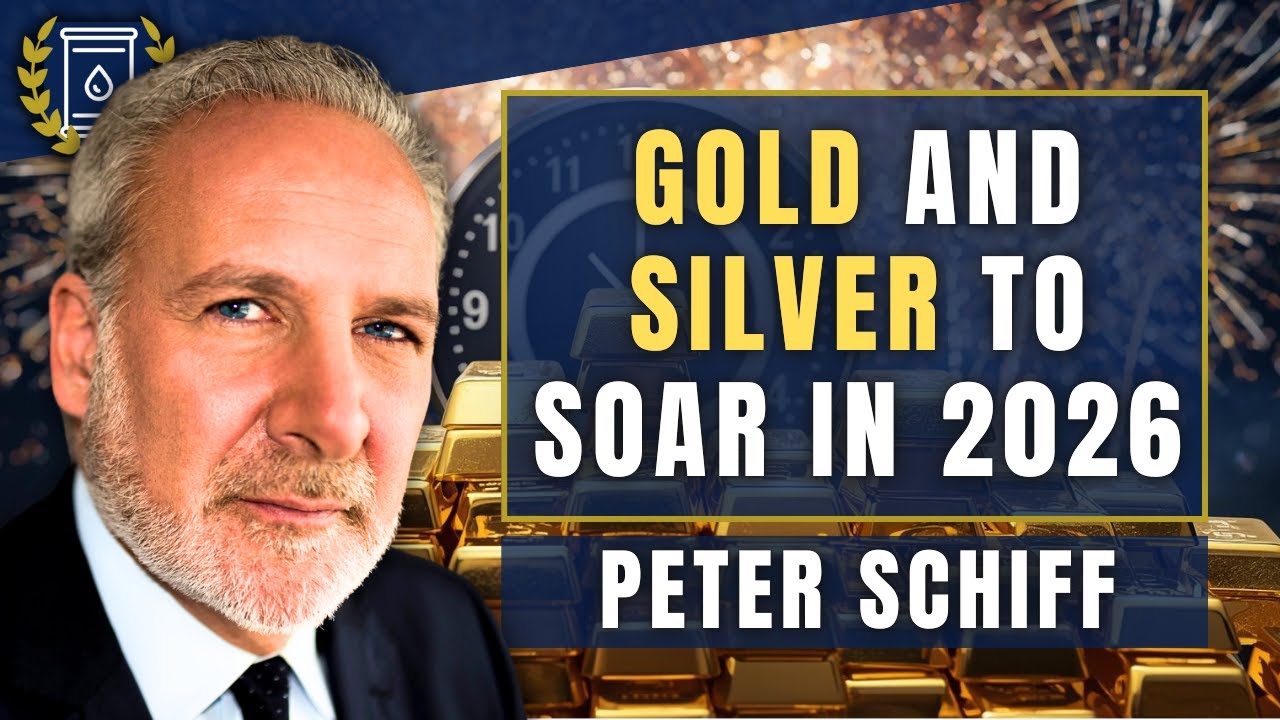
Schiff on Commodity Culture: Silver and Gold Are Poised to Soar
Peter joined the Commodity Culture podcast on Friday to walk through recent moves in precious metals and explain why he thinks inflationary pressure is returning to the market. He ties silver and gold action to what he calls a de facto return to quantitative easing, warns that politicized central banking will make matters worse, and even offers a glimpse of how AI and robotics could reshape labor and production.
He starts with silver’s technical breakout and why that matters for price floors and the next leg up in metals markets:
But once we broke above that $50 double top, I think that set a new floor for silver. I doubt silver is going to go even back down to $50. I think that we’re headed significantly higher. We’re trying to maybe find a new trading range in here before we have another leg up. But I think the catalyst for the recent move was not only the Fed rate cut, but basically what amounts to the return to quantitative easing, even though the Fed is not admitting it.
Peter sees the Fed’s recent moves as effectively adding liquidity again, and he warns that the inflationary consequences will be real even if officials avoid the label. He explains why past QE boosted spending and asset prices, but argues this time foreign demand for U.S. debt may not be there to cushion the fallout:
Well, you know, it’s just going to add more inflation into the economy. I mean, you know, I think the last few times the Fed did quantitative easing, they got a bigger boost to consumer spending and to asset prices. I don’t think they’re going to have the same type of luck this time. I think that when you’re cutting rates and creating more inflation, when your inflation that you already have is well above your so-called 2% target, I don’t think the markets are going to react as favorably in the short run this time.
With inflation and dollar risk on his mind, Peter offers price targets that reflect a larger macrostory: a future U.S. dollar and sovereign debt crisis that would lift hard assets dramatically:
Maybe more likely if you’re looking for round numbers, we should get $6,000 gold sometime in 2026. You know, that would obviously go along with $100 silver. I think both of those are reasonable targets. But ultimately, you know, both metals are going a lot higher because I do think that we’re going to have a US dollar and a sovereign debt crisis. And obviously if that crisis hits next year, gold and silver prices can go a lot higher than that.
The conversation shifts to media and politics when Peter recounts a recent exchange involving President Trump’s reaction to Peter’s criticism. He notes the irony of how Trump’s platform’s name clashes with public truthfulness and how political sensitivity often lines up with media audience:
And the irony of it is he said all this on Truth Social. So clearly the truth has got nothing to do with what you post on Truth Social. They may as well rename it lies social because I told the truth and that, you know, caused the president to have a meltdown. And you know, I think what he really didn’t like was that I was telling the truth on Fox News. He probably wouldn’t have cared if it was on, you know, CNN or MSNBC or CBS or something because Trump supporters don’t watch those networks.
That anecdote gives way to a deeper concern about the Fed’s independence. Peter argues the institution’s supposed political distance was always more of a pretense, and he worries about the lasting consequences if Fed leadership is subordinated to a president’s agenda:
I’ve often said that it was just a pretense that the Fed was independent, that it was very much political. But we’re going to be dropping that pretense. And of course, if the Fed chairmen are there to do the bidding of the president, well, then that applies to future presidents, too.
If you missed it, check out the latest episode of the SchiffGold Friday Gold Wrap!

 Live Chat
 Email:
  Phone: 1-888-465-3160