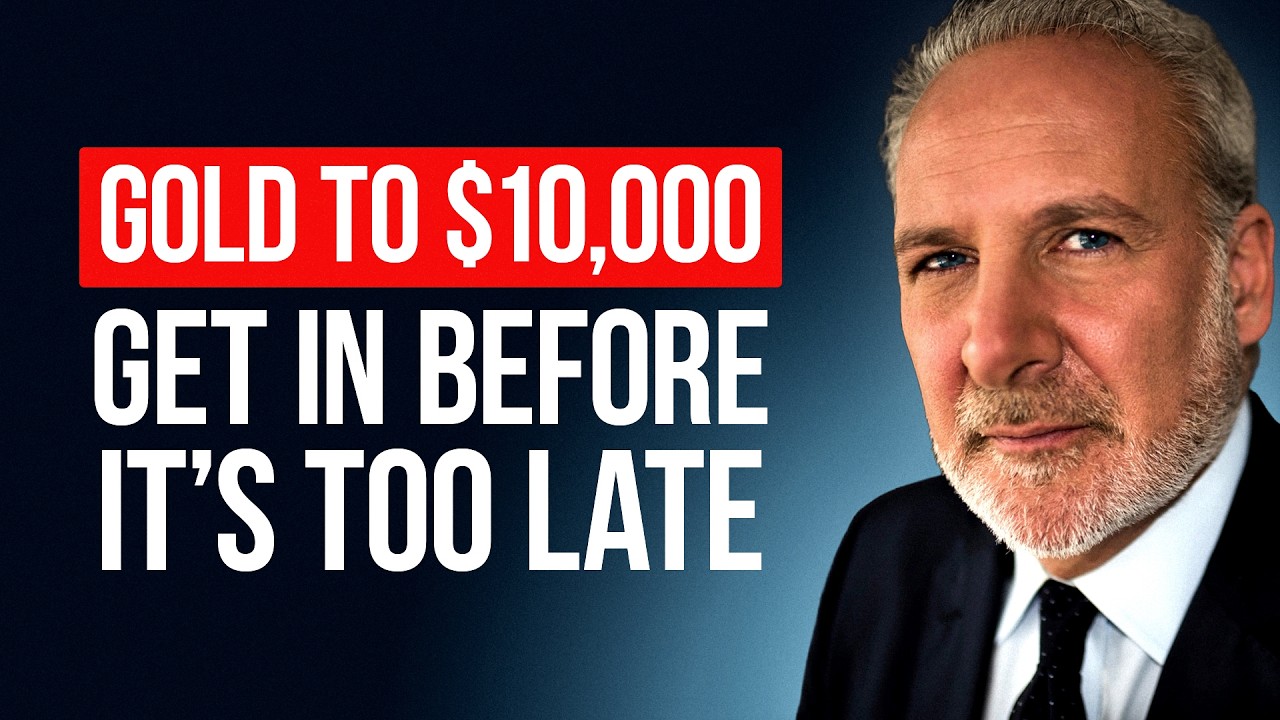
Schiff on VRIC Media: Gold is the Tip of an Economic Iceberg
On Wednesday, Peter appeared on VRIC Media for an interview with Darrell Thomas. Together they walk through why headline stock indexes give a false picture of economic health and why sound money matters more than ever. Peter also critiques political uses of market performance, lays out the real cost of tariffs and bad policy, and reminds listeners that gold and silver are warning signals for a coming dollar and sovereign debt problem.
He begins by dismissing the idea that a single Dow milestone proves presidential economic success, and he explains why price inflation distorts stock gains when measured in dollars:
So [Trump’s] using the stock market as kind of a report card on the efficacy of his policies, and he’s making a big deal about 50,000. Well, first of all, when he was inaugurated, the Dow was 44,000. So it’s not that much higher. It’s been over a year, and it’s only up 6,000, I mean, but 12%. You know, the stock market was going up pretty much every year that Biden was president. We kept hitting record highs under Biden. You know, we got to 40,000 under Biden, and Trump said we had the worst economy in the world back then. So if the stock market wasn’t a good indicator of the economy under Biden, why is it all of a sudden the most important thing under Trump?
Peter follows that by cutting through political spin: the real story is an economy that is weak and inflation that remains persistent, not a boast about market milestones:
So it’s completely meaningless… The fact of the matter is the economy is weak, inflation is strong. None of the promises that Trump kept with respect to the economy are being kept. And, you know, the tariffs are not making us rich. We’re paying the tariffs ourselves, so we don’t get rich by paying taxes.
He then turns to electoral dynamics and why voters react to obvious economic pain, not talking points about record highs:
For the last 12 years, we’ve had a very bad economy. And what you have is the incumbent party trying to lie to the voters that the economy is great, that they’ve got a great job and we should get four more years. Then you have the opposition that says, no, that’s BS. The economy sucks. I feel your pain. Elect me. I’m going to fix it. Now, of course, that’s a lie too. But that’s a more believable lie.
Peter pushes back hard on the idea that the president has free rein to impose tariffs without Congress, and he frames it as a constitutional and liberty issue — tariffs are taxes that must originate in the House:
I mean, I wish the Supreme Court would come out already and strike this stuff down. Hopefully they do because clearly the president does not have the authority to just unilaterally tax Americans. I mean, that’s not what the framers had in mind. Donald Trump is not a king, right? And he doesn’t live in a palace, although he seems to be turning the White House into a palace because he kind of fancies himself as being the king of America.
After making the policy case, Peter returns to the practical investing lesson he’s long pushed: gold is a necessary hedge, and critics who ridiculed his targets have been proven wrong:
You know, when I was making five thousand dollar gold predictions, you know, back in 2011, 2012, 2013, when gold was twelve hundred, fifteen hundred. Not only were they making fun of me, but they were accusing me of, you know, just trying to scare people into buying gold, that I was just a gold salesman. … And as it happens, [gold] has done better than the stock market.
He closes by calling the current precious-metals move a canary in the coal mine — a signal that monetary excess and sovereign debt weakness will come home to roost — and he urges listeners to act before a dollar crisis arrives:
They completely dismiss what’s happening in gold and silver. They think it’s just a speculative mania or it’s a bubble or it’s irrelevant. It’s not. You know, it reminds me of the blow up in subprime where everybody just ignored that. And they said it’s contained. Don’t worry about it. It wasn’t contained. It was indicative of a much bigger crisis. It was a tip of a huge iceberg. And that’s what’s happening with precious metals. It’s the tip of an iceberg. There is a much bigger problem beneath the surface that people are oblivious to.

 Live Chat
 Email:
  Phone: 1-888-465-3160