Schiff w/ Hipper: Limit Government, Protect Property
Peter recently joined crypto advocate Randi Hipper on her podcast for a conversation about the merits of crypto and precious metals and the state of the economy. Peter lays out a compact, libertarian case for limiting government, defending private property, and sticking with sound money. He traces his worldview to early lessons in Austrian economics, argues that public institutions routinely bloat costs and shrink freedom, and warns that the Fed and Washington conspire to paper over consequences rather than solve problems.
He starts by reminding listeners where his economic view comes from and why it still guides him today:
My economic thinking, you know, all of that was formed when I was younger because I was taught economics by my dad, who was an economist by trade, but he understood economics. You know, he was in the insurance business, the investment business, but he really understood economics. And so he taught me Austrian economics and he was a fan of the Constitution and the founding fathers. And so he educated me to understand America and what it’s all about and to understand how the country is supposed to be governed and to understand capitalism and why it works.
From that foundation Peter makes no apology for opposing government-run schooling, which he says fails students while enriching administrators and unions:
We can get rid of, you know, government schools are a disaster, especially for the students. They’re a boondoggle for the administration and the teachers unions. You know, they make a bundle off of this government monopoly. But it’s bad. You got anything government’s going to do, it’s going to do it bad. It’s going to be expensive and it’s not going to be good, which is why you want to limit government so that it does as few things as possible.
He also pushes back on the idea that the “American dream” hinges on homeownership, suggesting instead that true opportunity is social and economic mobility:
I disagree that the American dream is owning a house. I think Realtors invented that to sell people propaganda. Look, the American dream is that anybody, no matter where they’re born, no matter what their station in life, you can be born to a plumber, a mailman, you don’t have to start from wealth. Anybody can rise to the top. Anybody can succeed in America.
That rejection of homeownership-as-myth bleeds into his critique of property tax, which he frames as an ongoing forfeiture of sovereignty—effectively renting citizens from the state:
In effect, you’re renting from the government, which is why I don’t believe there should be any property tax on non-income producing property. So if I had my druthers, the only property tax there would be, would be on office buildings, hotels, rental property, because if I own property and it’s throwing off rent, let’s say I’m making a hundred thousand year in rent and they want to have a $20,000 property tax, okay, I’ve got rental income. I can pay the tax. But if it’s my own home and I’m just living there and now I get a 20, $30,000 bill, what if I don’t have the money?
Peter’s hostility to coercive finance extends to central banking. He pins much of today’s instability on central banking while noting that politicians happily join in—together they hide consequences and inflate problems:
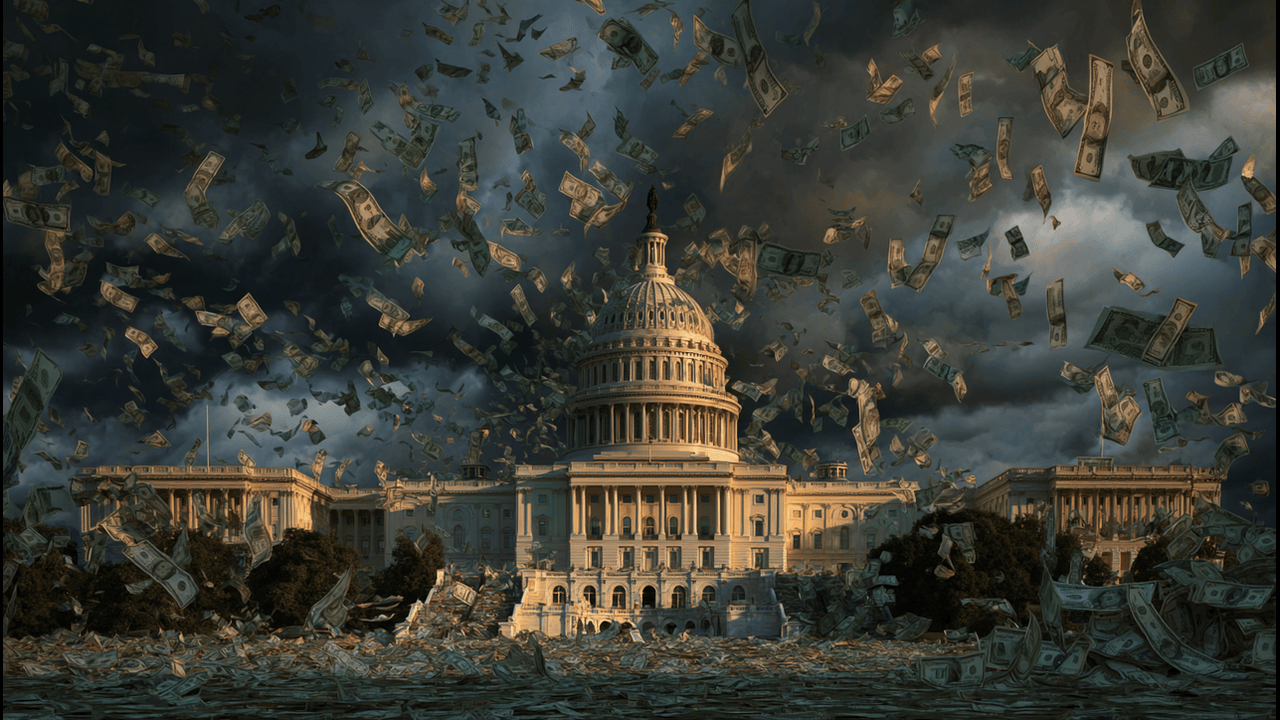
The Federal Reserve is the main architect of our problems. But, you know, it takes two to tango. Congress and the president, the U.S. government, has been working with the Fed to create these problems. And all they do, all their solutions do is make the problems worse. They’re just designed to postpone the consequences.
Finally, Peter touches on a practical point about gold and modern payment tech: ownership of bullion doesn’t require the metal to change hands physically if ownership can be represented digitally, but that doesn’t mean you should confuse token claims with speculative crypto:
The gold itself doesn’t move. What moves is the ownership. So when I own a token, right, that token signifies that I own that gold. If I send the token to you because I paid you for some services that you provided or some goods you sold me, or I just gave you a birthday present, I said here, here’s some gold, and I send you the token. Now you own the gold.
If you missed it, be sure to watch the latest Friday Gold Wrap, where Peter analyzes silver’s latest surge to $90.

SchiffGold’s key news stories in your inbox every week – click here – for a free
subscription to his exclusive weekly email updates.
Specialist today!
 Live Chat
 Email:
  Phone: 1-888-465-3160