
The Gold Dip: Macro vs Shorts and Retail
The bull market in gold is being driven by many forces, and it isn’t just speculative fervor that caused the latest drop. Macro factors like monetary expansion, interest rates that are still far too low, broad global uncertainty, and de-dollarization are going to push gold higher.
In the meantime, corrections will occur, but this isn’t the Hunt Brothers all over again. Short sellers are a major factor,and could have even coordinated with big banks and the Trump administration.
As Peter Schiff said on The Friday Gold Wrap:
“If you look at what happened, the huge drop in the price of gold and silver in just a few minutes is the result of a huge sell order hitting the futures market randomly. Now, if you had a lot of silver or gold that you wanted to sell, would you just dump it on the market all at once, or would you try to slowly get out without impacting the price?”
However, short sellers trying to move the market down won’t be able to make good on their bets, and won’t be able to keep prices down forever. While short sellers, retail fervor, leveraged trading, and paper metals markets are contributing to short-term volatility, the fundamentals haven’t changed. Gold and silver remain strong, and the floor is being set.
For every central bank that expands its long-term gold holdings, and for every dollar added to the economy by monetary and fiscal tinkering, a higher price for gold in the future is assured. Central bank gold buying remains at historic levels. Major monetary authorities across Eastern Europe, Asia, and the wider emerging world, led by the National Bank of Poland, the People’s Bank of China, and the Reserve Bank of India, among others, have been aggressively purchasing gold for reserve diversification and geopolitical insurance.
But all signs point to de-dollarization and central bank buying trends continuing. This will lead to a humbling moment for all those declaring the precious metals bull run dead due to the dramatic recent correction. Official gold purchases are exceeding historical norms and setting a structural price floor for bullion, underpinning a continuing formula for sustained upward pressure even as retail markets wax and wane.
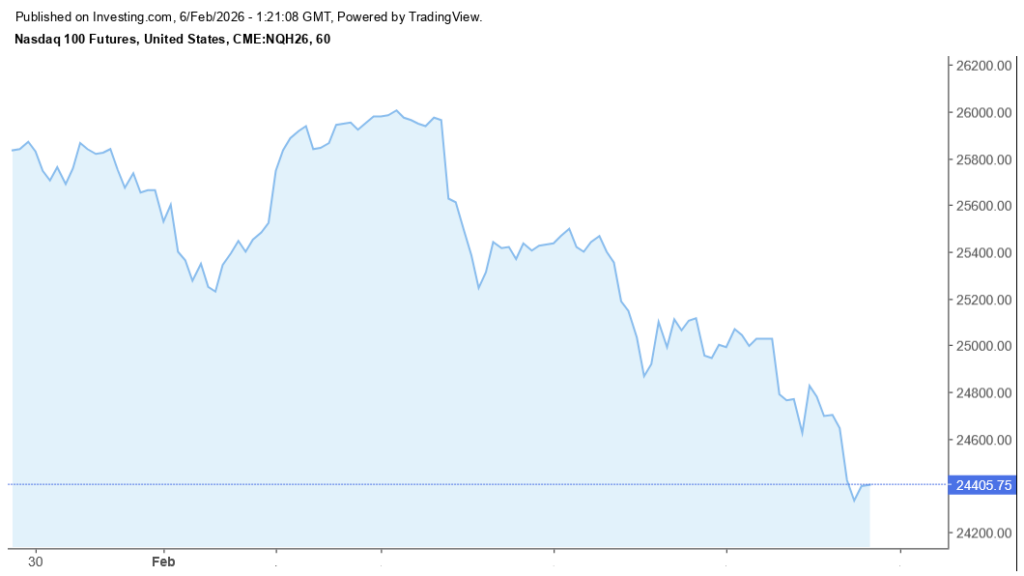
Assets in many other markets are currently taking hits as well—but because metals have just had a mind-boggling run, the flash crash correction becomes particularly tempting headline bait for pundits waiting for a chance to bask in schadenfreude.
NASDAQ 7-Day
By mid-2025, gold’s share of global foreign exchange reserves climbed significantly, approaching levels not seen since the late 20th century. Some explicitly framed their purchase strategies as hedges against both currency volatility and shifting geopolitical concerns.
Global gold demand as a whole hit record levels in 2025, reaching thousands of metric tons. Central bank purchases were down compared to 2024, but still remained elevated as hunger for the yellow metal remained strong among institutions. Investment demand (especially via gold-backed exchange-traded funds) and increased bar and coin holdings grew even more rapidly than official buying, with ETFs still seeing huge inflows. This exposes the price to factors that drive more volatile swings, but signals a broadening base of retail buyers who recognize gold’s safe haven appeal.
Even more silver and gold volatility comes from overleveraged speculators interacting with high-frequency trading and derivatives positions. Leveraged bets create sharp swings that are disconnected from the underlying macro outlook and supply and demand fundamentals. Speculators trading futures, options, ETFs, and leveraged products on the paper gold market play an outsized role in short-term volatility that isn’t representative of the long-term reality.
Speculative unwinding, capricious expectations about monetary policy, and headline-driven trading in the futures market can then spark larger dumps that spook retail as short-term sentiments shift. But the big picture remains.
The divergence between central bank steady accumulation and retail and speculative episodic trading helps shape market psychology. Institutional buyers maintain a low time preference and operate on multi-year horizons, viewing gold as a reserve asset and a hedge against systemic risks. Retail investors pursue shorter horizons, reacting quickly to price momentum or high-time preference technical indicators. This mismatch in horizons can create overheated conditions with exaggerated peaks followed by painful flash crashes when sentiment turns.
But during those dips, you only lose if you sell, because fundamentals and macro factors haven’t changed. In addition to everything else, investors are rushing to perceived safe havens amidst trade tensions, fiscal policy uncertainty in major economies, and perceived challenges to central bank independence in the US as Trump continues his rivalry with Jerome Powell. And with more market players, even noise-driven macro headlines can trigger outsized asset flows, further contributing to intraday and intra-week price swings.
A new floor is being set for gold. Sovereign debt denominated in major currencies will collapse in purchasing power. Everything from mortgages and rent to food and insurance skyrocketing in price; inflation is a demon that neither Trump, the Fed, or the Treasury can possibly control.
Not even the $3 gas price (the current feather in Trump’s cap) will be immune to a real currency crisis. In that case, gold will glitter even more, but only for those who see it coming.

 Live Chat
 Email:
  Phone: 1-888-465-3160