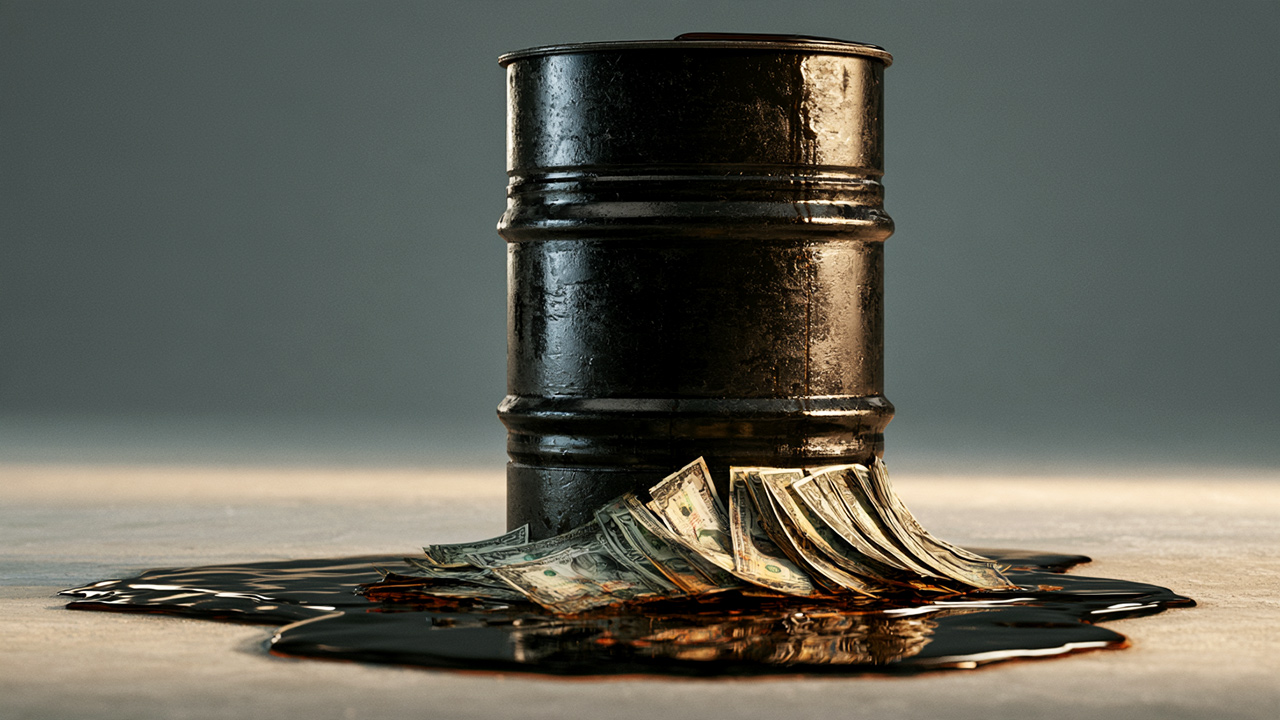
Black Gold, A Persistent Problem For the Fed
Oil above $100 is creating a new inflation problem for the Fed
Oil has earned its reputation as black gold, but unlike the precious metal, this liquid gold is consumed. It fuels the trucks delivering groceries. It fuels tractors harvesting crops. It moves people around the world. But when its price rises, the effects don’t stop at the gas pump.
Brent crude, the international oil benchmark, closed above $105 per barrel on October 13, as geopolitical tensions and supply disruptions continued to pressure global energy markets. According to Reuters, uncertainty surrounding global supply remains a significant factor supporting prices.
That’s of course a problem for consumers and businesses, but it’s particularly a problem for the Fed. Higher oil prices can simultaneously increase inflation and slow economic growth, leaving the Fed with two competing objectives and no good solutions.
Oil Is More Than Gasoline
When crude oil prices go up, it’s noticed first at the gas pump. There are news headlines. People complain about paying $100 to fill up their F-150. But the gas station is just the canary in the coal mine.
Diesel powers much of America’s freight transportation network. Higher diesel prices increase the cost of moving groceries, building materials, and manufactured goods, which increases prices in downstream products and industries: restaurants, home renovations, consumer products, and more. The U.S. Energy Information Administration recently highlighted how elevated crude prices and tight supplies have pushed diesel prices higher.
Not to mention that oil is also a significant input in plastics, chemicals, and packaging. Even businesses that never purchase a barrel of crude can find themselves paying more for materials, transportation, and distribution.
These costs don’t necessarily reach consumers immediately. Businesses may initially absorb higher expenses through reduced profit margins, renegotiate supplier contracts, or delay price increases until inventories are replenished.
Eventually, though, persistent energy inflation can trickle down to every crevice of the economy. Peter Schiff recently described how rising diesel costs ripple through supply chains, affecting businesses far removed from the oil industry.
This creates an important distinction between headline and core inflation. Core inflation excludes food and energy prices because they’re particularly volatile. But excluding energy from a statistical measure doesn’t eliminate its influence on the underlying economy.
A sustained increase in transportation and manufacturing costs can eventually raise prices in categories that core inflation does measure.
The Fed Can’t Drill for Oil
The Federal Reserve’s primary tool for fighting inflation is raising interest rates. Higher borrowing costs discourage consumer spending and business investment, reducing demand and ultimately slowing price increases.
That approach becomes more complicated when inflation is driven by supply constraints rather than excessive demand.
Consider what happens when global oil supplies tighten. Energy prices rise, increasing transportation and manufacturing costs throughout the economy. Businesses pass some of those costs to consumers, pushing inflation higher even as household purchasing power declines.
The Fed can respond by raising interest rates, but doing so doesn’t address the underlying shortage. Instead, it reduces demand across the broader economy to offset price increases originating in the energy market.
That distinction matters. Higher rates can discourage businesses from investing in new equipment, expanding production, or hiring additional workers. Consumers, meanwhile, face both higher energy bills and more expensive credit. Economic activity slows, but the original source of inflation remains.
There is, however, a reason the Fed might pursue this approach.
A 2026 Federal Reserve Bank of Kansas City study found that inflation expectations increased following recent oil shocks and stabilized only after monetary policy tightened.
The concern is that businesses and consumers begin anticipating continued inflation, adjusting prices, wages, and spending accordingly. What begins as an energy supply shock can eventually develop into broader, more persistent inflation.
Higher interest rates can help prevent that outcome. But the tradeoff is significant: the Fed may have to weaken economic demand to contain inflation it cannot directly control at its source.
The Stagflation Problem
This dilemma isn’t entirely new.
During the 1970s, oil supply disruptions contributed to an environment of high inflation and weak economic growth. As the Federal Reserve’s historical account explains, the resulting stagflation challenged the conventional assumption that inflation and unemployment generally move in opposite directions.
Today’s economy is different. The United States produces substantially more oil domestically, energy represents a smaller share of economic output, and monetary policy operates within a different institutional framework.
Still, the underlying economic problem remains relevant.
An oil shock reduces consumers’ purchasing power while raising operating costs for businesses. Households spend more on fuel and utilities, leaving less disposable income for restaurants, entertainment, and other discretionary purchases.
Economic growth can weaken even as inflation remains elevated.
For the Fed, lowering rates risks accommodating and perpetuating inflation, while raising them risks worsening an economic slowdown already underway. SchiffGold explored this same dilemma in War Is On, Oil Is Up, Inflation Is Coming.
Black Gold and Monetary Gold
There is an interesting relationship between black gold and actual gold.
Oil is a commodity consumed throughout the economy. Gold, by contrast, is a monetary asset whose value partly reflects investors’ expectations about inflation, real interest rates, and confidence in fiat currencies.
An oil shock can increase inflation expectations, potentially strengthening demand for bullion as a store of value.
But that relationship isn’t automatic.
If higher oil prices prompt the Fed to maintain elevated interest rates, rising real yields can increase the opportunity cost of holding gold, which pays no coupon or dividend.
SchiffGold has examined this tension in War, Oil, and Inflation Are Setting Up Gold’s Next Surge, discussing how higher oil prices and bond yields can weigh on gold in the short term even when investors expect longer-term inflation.
The longer-term question is whether policymakers can contain inflation without inflicting excessive economic damage.
Persistent energy inflation exposes the limitations of monetary policy and raises difficult questions about the Fed’s ability to preserve purchasing power.
The Problem Isn’t Going Away
Oil above $100 doesn’t guarantee another inflationary crisis. Supply conditions can improve, demand can weaken, and energy prices can reverse quickly.
But the latest increase illustrates a problem that interest-rate adjustments alone cannot solve.
The Fed can make money more expensive. It can discourage spending and influence inflation expectations. What it cannot do is manufacture the energy required to power the economy.
And when inflation originates from constraints on supply rather than excessive demand, raising rates to force economic contraction may be the only mechanism to right the ship.

 Live Chat
 Email:
 Phone: 1-888-465-3160