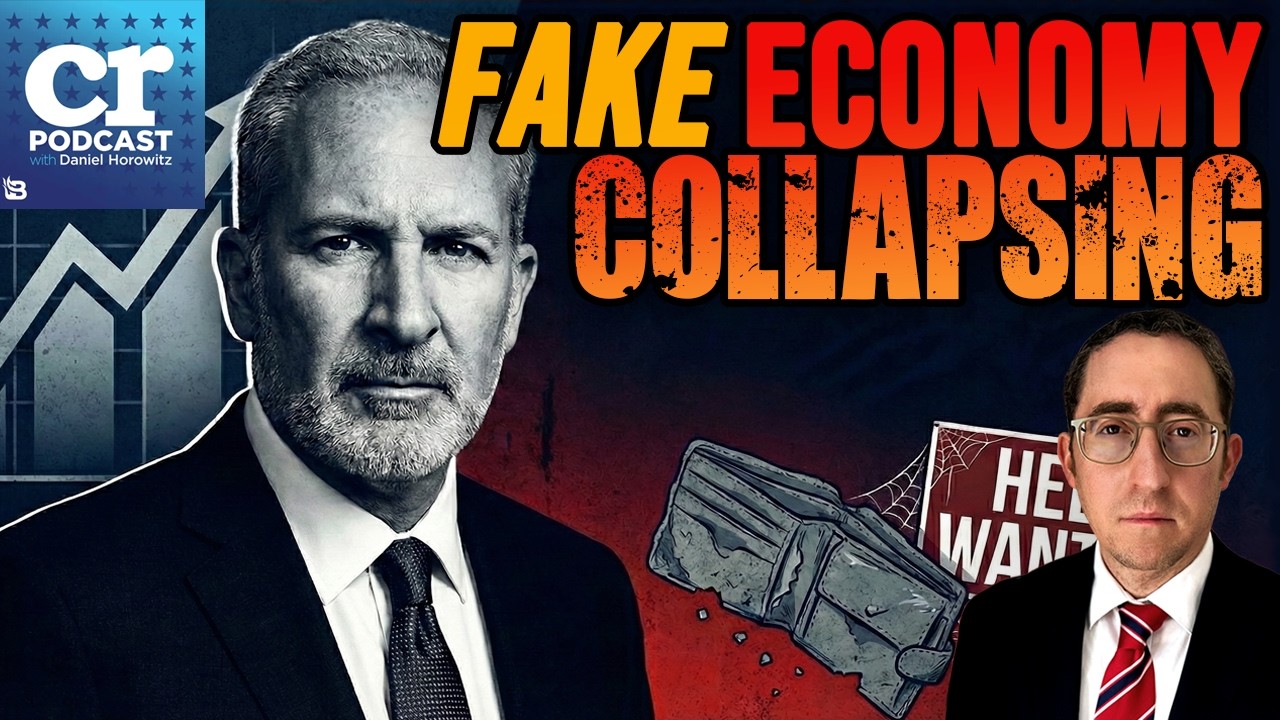
Schiff w/ Horowitz: Gold Is Being Targeted
Last week, in his second recent interview with Daniel Horowitz, Peter lays out a broad critique of today’s economic policy and market behavior. He centers the conversation on what he sees as a coordinated attempt to suppress precious metals, then ties that theme to the bigger-picture issues of stagflation, dollar debasement, tariffs, shifting debt strategy, and the overhyped crypto industry.
He opens by accusing policymakers of actively moving against gold and silver prices, and even points a finger at the Trump administration for getting nervous about a fast rise in metals prices:
I think there was a coordinated attack on the metals. And I think the Trump administration was involved. I think they were getting very nervous about the implications of gold and silver prices rising that rapidly, and what it might portend for the dollar, for the bond market. And I think they needed to do something. And I think that they recognized that one of the problems was the perception of a loss of independence of the Fed, and that the new Fed governor would really be a puppet of Trump.
Next he explains why rising prices can coexist with a weak economy — the classic stagflation scenario — and why production matters for price levels:
But as far as stagflation, a lot of people don’t understand that you can have rising prices in a weak economy. And in fact, economic weakness is more likely to cause higher prices than alleviate them. You know, if you have a strong economy that’s productive and producing a lot of goods, that can reduce prices because you have more productivity, more output, you have more abundance of things. But if the economy is weak and producing less output, then prices would be higher. Regardless of whether or not people have jobs and can afford to buy.
He ties the affordability crisis back to monetary debasement, saying Americans are poorer because the dollar buys less:
Well, it’s complete nonsense because obviously if the dollar goes down, Americans are poor. You know, what one of the things we’re all talking about now is affordability. And the Democrats and the Republicans are arguing over who’s at fault here, but they admit that things are unaffordable. We have an affordability crisis. Well, the reason that people can’t afford things is because the dollars that they earn and save don’t buy as much.
On trade policy, Peter warns that tariffs are a blunt instrument that help a few producers while raising costs across the supply chain, weakening overall competitiveness:
Well, the tariffs are making our manufacturers less competitive for the reasons that you mentioned, where their imported components are now more expensive. But also, you know, when tariffs drive up prices. So let’s say, okay, we have steel tariffs and that drives up steel prices. And that does favor some domestic steel producers, but it also ends up reducing demand for steel. It ends up hurting American car manufacturers who now have to buy more expensive steel.
Finally, Peter pulls no punches on Bitcoin and the broader crypto industry, calling it mostly speculative and suggesting that the U.S. government’s recent posture toward Bitcoin is politically driven rather than principled:
Well, I don’t think there’s any substance at all to Bitcoin and pretty much the entire crypto industry. There’s some stuff there, but it’s a fraction of what the current market value of the industry is and all the tokens. I think that the main driver of the speculative demand for Bitcoin and crypto has been driven by the US government. The government has gotten behind Bitcoin because it was paid by Bitcoin promoters. They helped elect Donald Trump.
If you missed it, check out Peter’s other latest interview on the Competent Investor!

 Live Chat
 Email:
  Phone: 1-888-465-3160