
Tokenized Gold Creates a 24/7 Metals Market
Accessing gold, for most traditional investors, means being constrained by the hours and limitations of traditional markets. You can meet anyone at any time to trade dollars for gold in person, or order from a broker in the middle of the night, but only by expending significant energy and effort for a transaction that is far from instant. And to trade futures, exchange traded funds (ETFs), or order bullion from brokers, you have to wait until business hours.
However, those facts are changing very quickly. Tokenized gold changes the dynamic by merging physical gold’s legacy with blockchain’s 24/7 trading infrastructure, creating markets that never sleep. Even futures markets that trade electronically have maintenance breaks and may not capture price changes on weekends or holidays, or due to geopolitical upheavals. No longer tied to the operating hours of exchanges and clearinghouses, tokenized gold represents the leap forward that gold needs to support a new global financial system.
For more context, tokenized gold refers to digital tokens built on a blockchain that represent ownership of specific amounts of physical gold stored in audited vaults. For every token issued, there is a corresponding reserve of real gold held securely by the issuer. Investors can buy, sell, and trade these gold tokens just like other blockchain-based assets, and they can redeem them for physical gold if they choose.
Unlike traditional gold products like bullion bars, coins, or ETFs, tokenized gold lives on digital ledgers where transactions happen at any hour of any day. This means that investors are no longer bound by exchange hours or settlement delays. A war, macroeconomic surprise, or market shock on a weekend can have an immediate pricing response in tokenized markets rather than waiting for Monday trading.
This structure bridges the centuries-old trust in gold with modern digital access and internet-powered efficiency. It also allows you to trade gold in miniscule increments, which is an incredibly important detail. In a dollar collapse scenario, gold will become very expensive relative to dollars, which means that even small amounts will hold tremendous purchasing power. This makes it important that people can transact in smaller amounts than would be practical for bullion.
As Peter Schiff recently said on The Peter Schiff Show:
“If gold is at $20,000, even a tenth-ounce gold coin is two grand. That’s a lot of purchasing power in a tenth-ounce coin. The best way to spend it will be if you can have a token and have a third party that you trust store your gold so that you can transact in your gold without actually having to hold it. Now, you don’t want to have all your gold with a third party, but the gold that you want to use in commerce as a medium of exchange, yes, makes it so much simpler.”
Beyond 24/7 trading, tokenized gold also introduces fractional ownership beyond what is possible with bullion. Instead of needing to buy whole bars or ounces, investors can acquire very small slices of gold. This lowers barriers to entry and broadens access to gold exposure for individuals and institutions alike. Fractionalization also makes it easier for these assets to be used in new financial applications, such as collateral for borrowing or yield strategies, which are capabilities that have no parallel in traditional precious metals markets.
If a major event occurs while traditional markets are offline, there is no need to wait to adjust positions. Tokenized gold markets allow instantaneous rebalancing, giving participants a more responsive pricing layer than conventional markets. In addition, tokenized gold settlement is near-instant. Where traditional gold settlement might take days (and involve complex custody arrangements), blockchain settlement typically completes in minutes, offering both speed and transparency.
For investors and risk managers, a 24/7 market changes everything. For smaller investors who want to be prepared for anything, diversification into tokenized gold gives them more options in a systemic dollar crisis. And for a world that is going to be forced to seek alternatives to the dollar, tokenized gold provides a path for a new gold standard to take shape and restore sanity to the global economy.
Gold vs USD, 6-Month
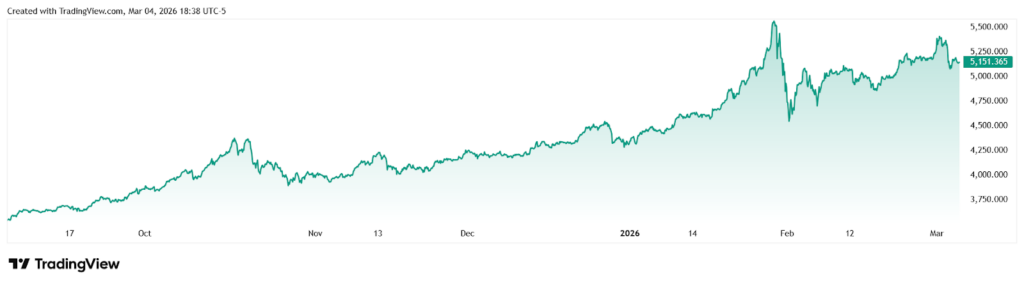
It’s important to note that tokenized gold is not a replacement for physical gold. Investors should primarily hold physical metal for its tangible nature, historical role in wealth preservation, self-sovereign custody, and personal security. Tokenized gold supplements this by providing digital access points and additional flexibility. Physical holdings and digital tokens can coexist in diversified portfolios, each serving distinct needs and goals, from protecting yourself from dollar debasement to buying a coffee. Different investors will choose physical bullion, ETFs, tokens, or combinations based on their goals, risk tolerance, and time horizon.
Tokenization brings gold’s value into the digital age and makes it more portable, more divisible, and more tradeable, without dispensing with its foundational strengths. Unlike bitcoin, tokenized gold is backed by real money and allows you to divest from fiat money with something of actual value.
It expands the ways that investors can engage with history’s most enduring asset, unlocking a 24/7 global marketplace and paving the way for a global gold standard when the music finally stops for the US dollar.

 Live Chat
 Email:
  Phone: 1-888-465-3160