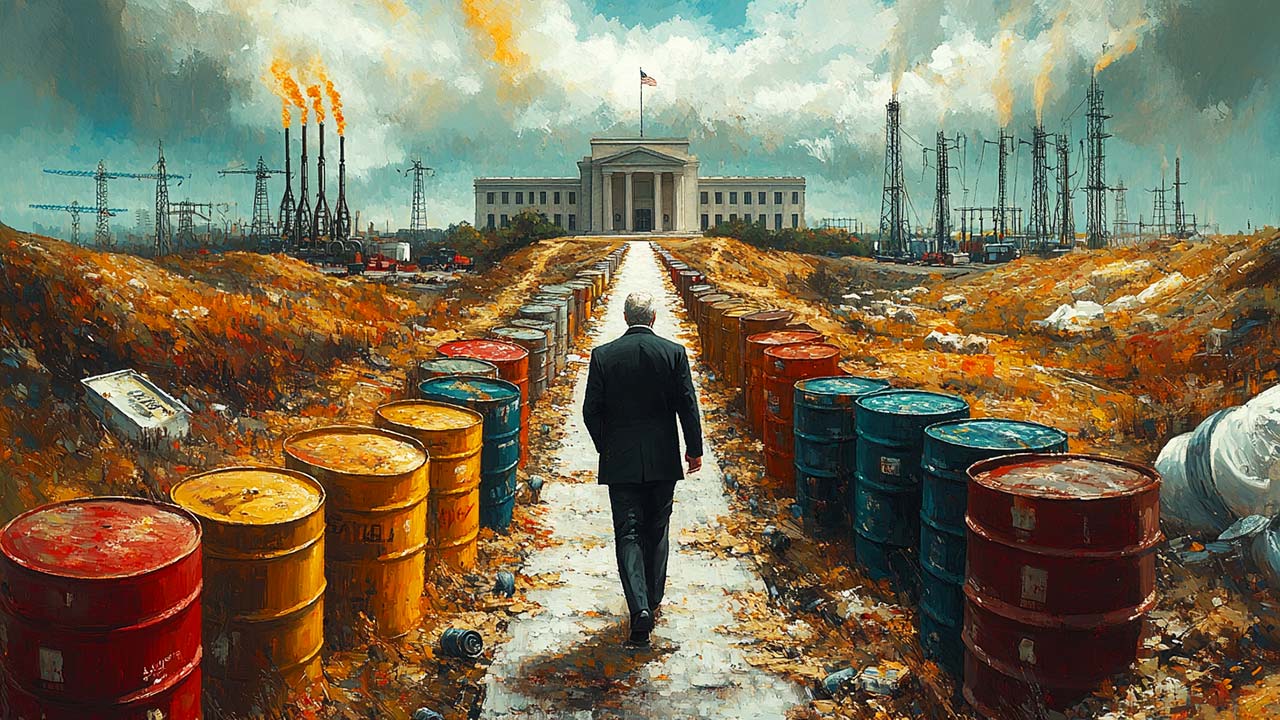
Chicago Fed President Says Some Inflation Shocks Can No Longer Be Ignored
Austan Goolsbee, President and CEO of the Federal Reserve Bank of Chicago, delivered remarks on September 21st at the Official Monetary and Financial Institutions Forum in London that challenged one of the central tenets of modern monetary policy. Goolsbee argued that the post-1970s doctrine of “looking through” supply-driven price shocks needs revision, stating plainly that “there are some supply shocks that central banks should not simply look through, namely, the persistent ones.” He was careful to note his comments reflected his own views and “not necessarily those of the Federal Reserve System or the FOMC.” The remarks come as forecasters have repeatedly pushed back their timeline for when inflation might finally peak.
Goolsbee walked through a string of disruptions that have hit the U.S. economy in recent years, including wars, tariffs, weather events, supply chain breakdowns, and oil shocks. He noted that Covid-era supply disruptions, once expected to resolve within months, dragged on far longer than officials anticipated. On energy, he pointed out that futures markets had priced in a rapid decline in oil prices after conflict broke out in the Gulf, yet “months later, oil is still around $100 a barrel and potentially heading higher.” Tariffs, he added, “have been nothing like the stylized textbook example of a one-time price increase, they’ve instead followed a pattern of repeated escalation.”
The Chicago Fed president was blunt about how badly official forecasts have missed their mark. He said the projected turning point for inflation has slipped repeatedly, from the fourth quarter of 2025, to the first quarter of 2026, then quarter after quarter, and now to “sometime in 2027,” a pattern he called “not a comforting pattern.” This admission lands against a backdrop of wholesale price data and hiring reports this month that have already raised doubts about claims of cooling inflation, especially as labor market data keeps getting revised down.
Beyond supply-side pressures, Goolsbee flagged signs of demand-side overheating that concern him directly, pointing to “elevated inflation in service-sector industries” and worry that “AI data center construction is spilling out of its own lane and raising aggregate output beyond what the economy can absorb.” He called both areas “of concern in the recent data,” a sentiment echoed in reports that consumer confidence slips again. He also acknowledged the difficult position the Fed faces when supply shocks, rather than demand, are driving prices higher: forcing inflation back to target quickly would mean “pushing employment below target and output below potential,” since wages are sticky and do not adjust instantly. He described this as a trade-off that demand-driven inflation simply does not create for the dual mandate, a dynamic explored in when economic stabilizers destabilize the economy.
Goolsbee closed with a stark warning. Without clear evidence that the recent run of supply shocks is fading, he said, “it’s hard to see a credible path back to 2% inflation,” a goal others have insisted on with no excuses, “and harder still to justify continuing to look through them.” He added that “in environments like that, the only way back is the hard way,” conceding that the Fed’s response “won’t be painless.”
Goolsbee’s remarks arrived the same week gold traded for $4,369 per ounce. As policymakers themselves concede that inflation forecasts have repeatedly missed and that painless solutions may not exist, markets appear to be drawing their own conclusions, with some suggesting that inflation never went away in the first place.

Receive SchiffGold’s key news stories in your inbox every week – click here – for a free subscription to his exclusive weekly email updates. Interested in learning how to buy gold and buy silver? Call 1-888-GOLD-160 and speak with a Precious Metals Specialist today!
 Live Chat
 Email:
  Phone: 1-888-465-3160