Peter Schiff: Sovereign Debt Will Topple the Dollar
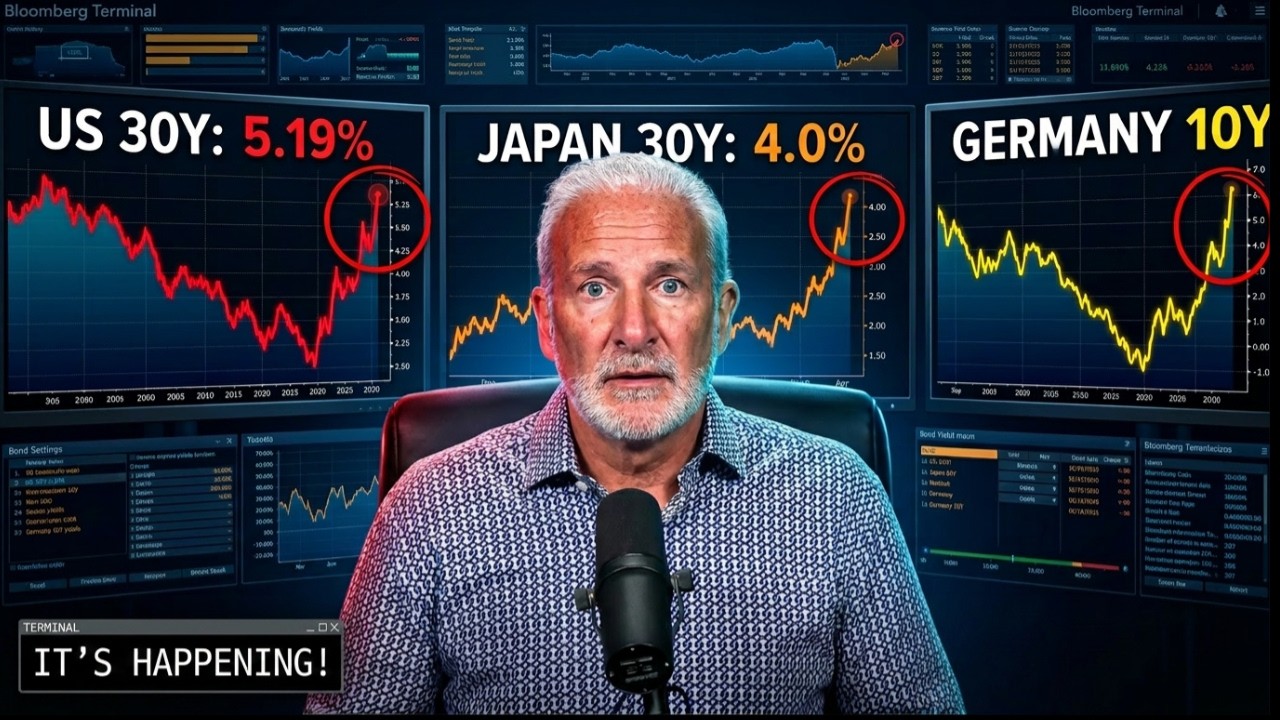
In Tuesday’s episode of The Peter Schiff Show, Peter lays out a stark thesis: the next major crisis won’t be a replay of 2008’s private-credit collapse, but a sovereign-credit reckoning that threatens currencies and bond markets worldwide. He focuses on rising yields, Japan’s fragile fiscal math, and the danger to the dollar’s reserve status, nudging listeners toward sound money as the sensible hedge.

He opens by arguing this is a fundamentally different crisis than the last one, and it is global in scope:
This has substantial, substantial implications. This is so much bigger than the two thousand and eight financial crisis which had to do with private credit, had to do with the ability of subprime borrowers to repay their mortgages. This goes way beyond that; this is about sovereign credit. This is the fiscal chickens finally coming home to roost not just in America but all over the world, and in particular in Japan because I have repeatedly warned on this podcast about the accident waiting to happen with Japanese government bonds.
Reminding listeners why rising sovereign debt makes governments worse credit risks, not better, Peter explains what this implies for interest rates and inflation:
The more debt you have the higher the interest rates you have to pay because you are a worse credit risk. … The real risk that you face when you loan money to a government that has a lot of debt is that instead of raising taxes on the public to honestly pay the debt they just crank up the printing presses and print a bunch of money and say here you go.
He places today’s rise in yields in historical context, arguing that the era of falling rates is over and that bond markets are now in a bear phase:
Look at the peak in nineteen eighty-one where the yield on a ten-year treasury was over fifteen percent, and look at this major, major bull market in bonds, which means bond prices were rising and yields were falling. The bottom of that was in two thousand and twenty; that was during COVID— that’s when the yield on a ten-year treasury was less than one percent. … We are now in a major bear market in bonds, and we’re going to have a huge rise in interest rates.
Peter uses Japan as a case study — a country whose central bank tried to cap yields and failed — and he does the math on what modest average rates would cost the government:
I was screaming about this on this podcast. I remember when the yield on the 10-year Japanese bond got up to a half a percent and the Bank of Japan drew a line in the sand: they’re not going to let the yields go above a half a percent, and I said they were going to go down with that fight.
He points out the policy and market implications when foreign holders start dumping U.S. debt, and why that should be bullish for gold, not for the dollar:
This is not good news that foreigners are losing confidence in our credit worthiness. It’s bad news for the dollar, and it’s not bad news for gold; people should be running into gold as fast as they can. The fact that gold is pulling back in the face of this just shows again that traders don’t understand the significance of what’s going on. … If you’re getting out of bonds what are you gonna get into?
Finally, he explains why the dollar’s reserve status is the linchpin of today’s U.S. economy and why losing it would force the political class into inflationary responses:
We have the reserve currency, not Europe, not Japan. We have been living off the reserve status of the dollar; when we lose that status our entire economy collapses, it is not viable. It completely depends on that dollar status. Without it we can’t run these trillion dollar trade deficits, we can’t run these multi-trillion dollar budget deficits, we can’t have a service sector economy; you pull out that linch pin and everything built on top of it comes crashing down. The only thing that the Fed knows, the only thing the Trump administration is gonna know, is crank up the printing presses, spend money, more government, more inflation, and they’re gonna wipe it out.

 Live Chat
 Email:
  Phone: 1-888-465-3160