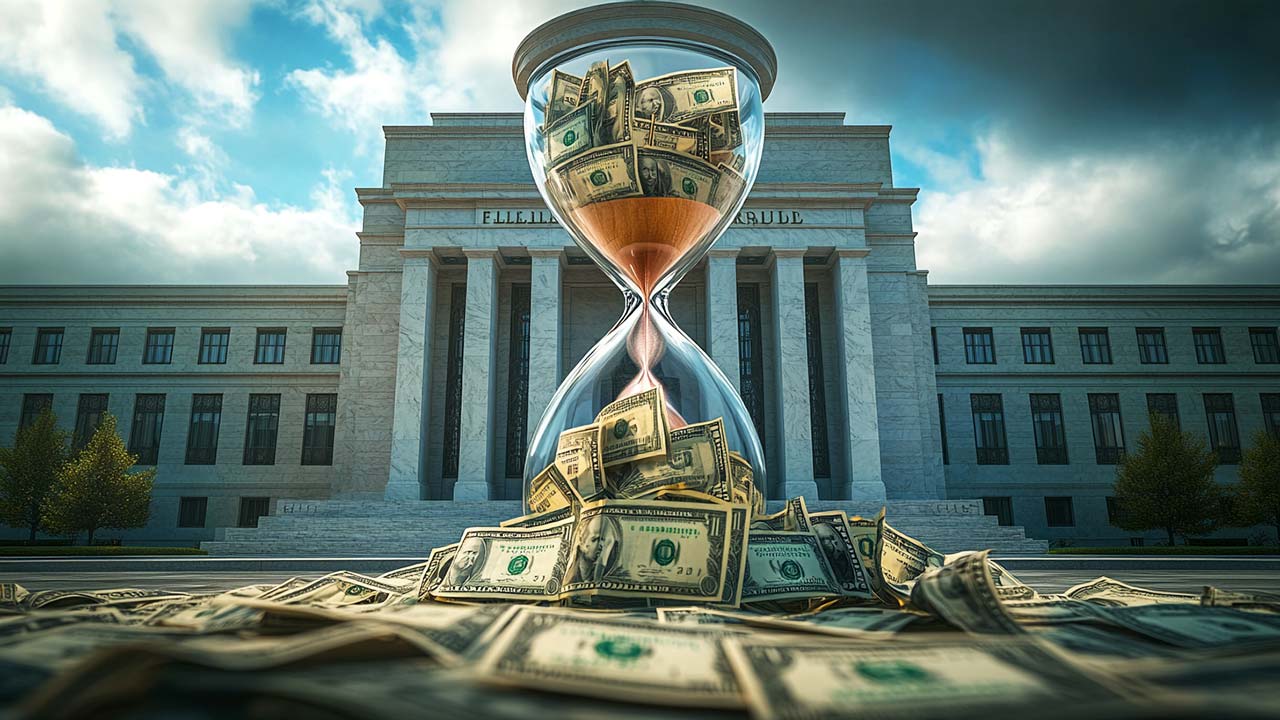
Fed Vice Chair Admits Inflation Too High for Five Years
Federal Reserve Vice Chair Philip Jefferson delivered remarks titled “The U.S. Economy and Monetary Policy” on October 1st at the Darden School of Business in Charlottesville, Virginia, offering the latest in a string of recent admissions from Fed officials that inflation has run hot for years without a clear resolution in sight. Jefferson acknowledged that inflation “has been too high for too long,” with the Personal Consumption Expenditures (PCE) price index up 3.4% over the twelve months through August and now sitting above the Fed’s 2% target for more than five years running. Even so, he characterized risks to growth and employment as “roughly balanced,” a framing that sits uneasily alongside his own admission that inflation risks remain tilted to the upside. Gold, meanwhile, traded around $4,184 on Thursday as investors continued to weigh the gap between official reassurances and the inflation data underlying them.
On growth, Jefferson pointed to GDP (Gross Domestic Product) expansion of 2.4% in the first half of 2026, which he called broadly consistent with the pace of the past two years. The labor market, in his telling, remains near “maximum employment,” with unemployment ticking down to 4.1% in August and the ratio of job openings to unemployed workers climbing back above 1.0 after dipping below that mark last year. This claim stands in tension with reports showing labor market data keeps getting revised down and private hiring grinding to a near-halt. Jefferson attributed the recent pickup in headline inflation primarily to energy prices, including gasoline and diesel, tying renewed strain on global supplies to geopolitical tensions in the Middle East, consistent with recent reports of wholesale inflation jumping as energy costs surge.
Beyond energy, Jefferson identified artificial intelligence (AI) related demand as a source of “unusually strong increases in the cost of producing related goods and services,” pushing core goods prices higher even as nominal wage growth has gradually slowed. Core services prices excluding housing have also been edging up, and housing services, which had been a reliable source of disinflation in recent years, have seen that trend level off in 2026. These are the same dynamics flagged by several of Jefferson’s colleagues in recent weeks, suggesting a broader consensus inside the Fed that AI-related investment is complicating the inflation picture in ways rate policy is not well suited to address, a dynamic also tied to why the economy is splitting in two.
On expectations, Jefferson said short-term inflation expectations from surveys are elevated, though he maintained that most longer-term measures have “remained stable” near 2%. He warned that if actual inflation stays above target, “households and businesses may eventually stop believing that we will return inflation to 2 percent,” a scenario that would risk unanchoring long-term expectations altogether. That warning came alongside his acknowledgment that bond yields across the term structure have risen further since the Federal Open Market Committee (FOMC) raised its target range by a quarter point to 3.75%-4.00% in September, a move he said he supported to help anchor those same expectations, even as other Fed governors concede the next rate move is essentially a coin flip and skeptics argue the Fed’s hike is little more than a bluff.
Jefferson closed by noting that future policy moves will depend on incoming data and the evolving outlook, conceding that officials “will need to come to our own judgment, which may take more time.” For an institution five years into an inflation overshoot, that admission may offer little comfort to households watching prices, and gold, continue to climb.

 Live Chat
 Email:
  Phone: 1-888-465-3160