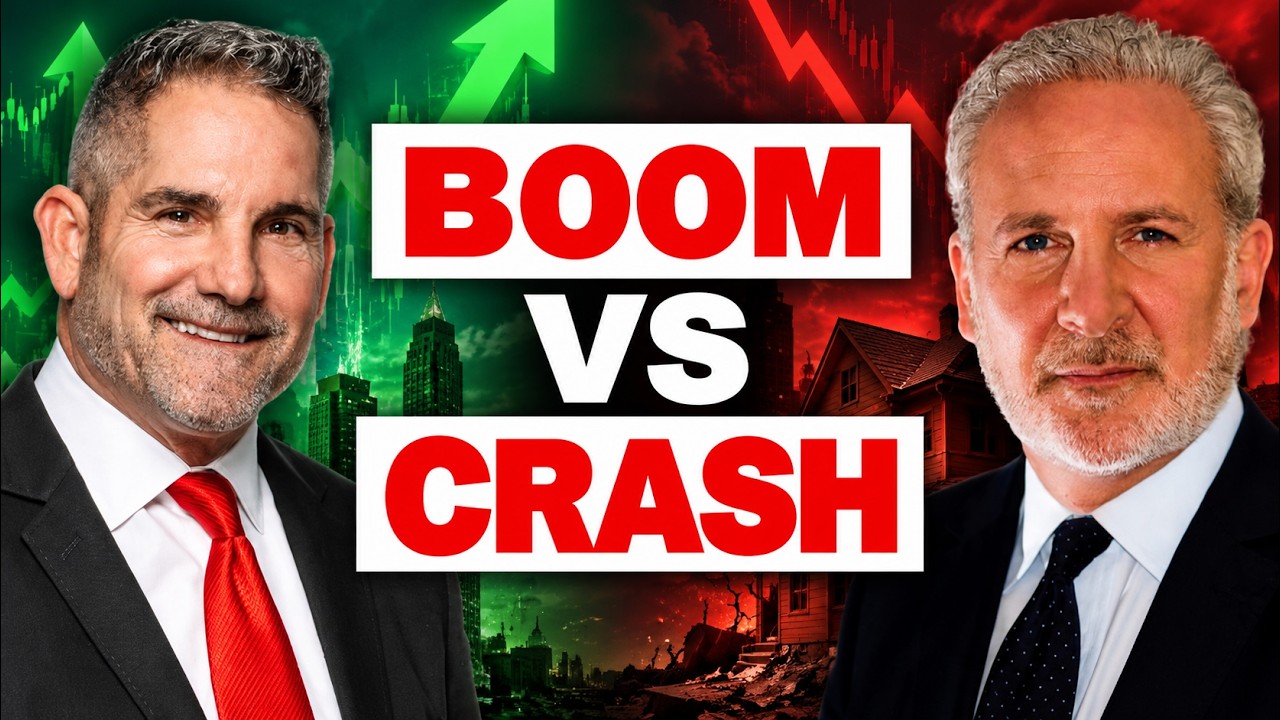
Schiff vs. Cardone: Bitcoin and Real Estate Don’t Mix
Earlier this week, Peter sat down with real estate mogul Grant Cardone and David Lin for a debate that spans the details of REITs (Real Estate Investment Trusts), combining them with Bitcoin investment funds, and the deteriorating state of the US economy. The conversation turns pointed as Peter dismantles Cardone’s claims about REIT cash flow and his push to pair Bitcoin with real estate investing, before pivoting to harder economic data showing American consumers are more pessimistic than they’ve been in over seven decades.
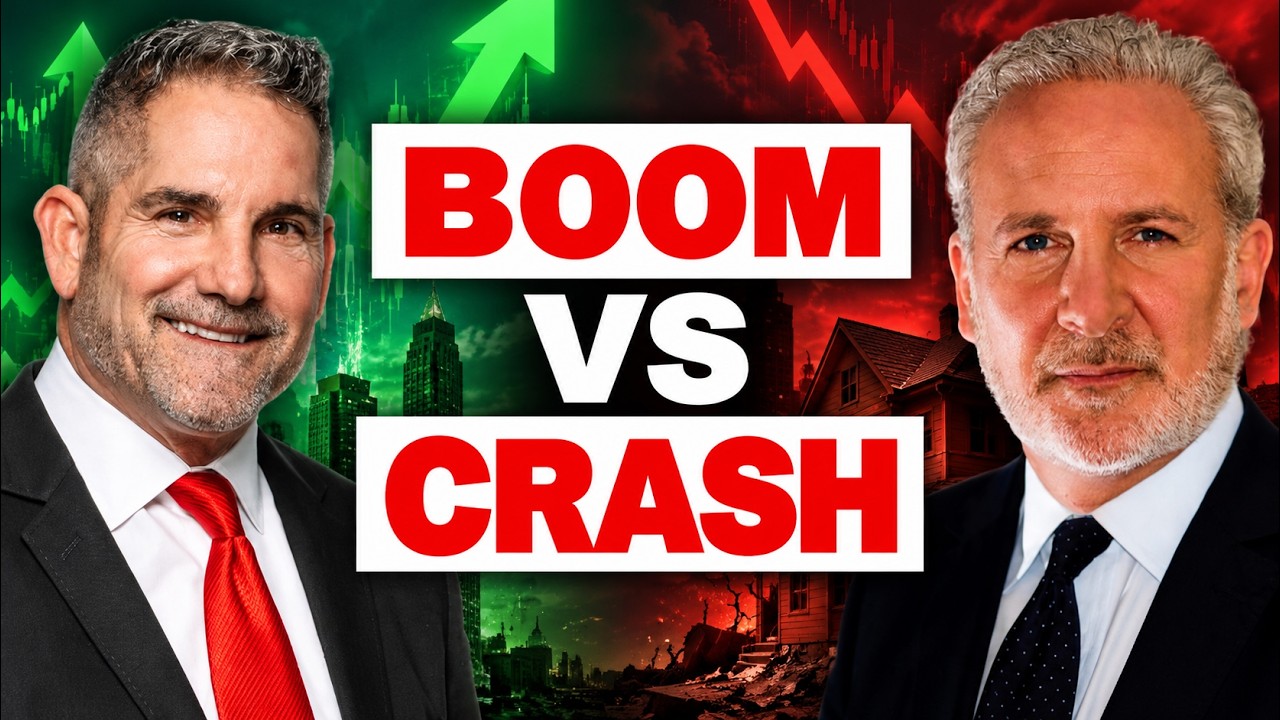

Peter kicks things off by correcting what he sees as a fundamental misunderstanding of how REITs actually work. Cardone had claimed REITs are forced to distribute all their income, leaving nothing for maintenance, a claim Peter says just doesn’t hold up:
I was responding to an actual interview in which you said that the problem was that they had to distribute all of their income. And then therefore they didn’t have any money left over to deal with maintenance or other problems, which is not true, because those are deductible expenses. They subtract all of those costs before they have the dividends that they have to distribute. So they’ve got plenty of cash flow to deal with maintenance. They don’t need Bitcoin to do that.
From there, Peter zeroes in on the actual mechanics of investing in a fund that holds Bitcoin alongside real estate. He questions why any investor who is genuinely bullish on Bitcoin would willingly hand over half their upside to a fund manager instead of just buying it directly:
If I think Bitcoin is going to a million dollars, if I’m really bullish on Bitcoin, why do I want to give you 50 percent on my upside? Why don’t I just take that 15,000, buy my own Bitcoin, pay no management fee, keep 100 percent of the profits, and just put 85,000 into your fund, or instead of investing 15,000 in Bitcoin, I put 7,500 in Bitcoin. I got the same upside as 15,000 with you. I got less than you would do. And then I have 7,500 dollars to do something else with. Why wouldn’t I just do that?
The debate then shifts away from portfolio structure and toward the bigger picture of the American economy. Peter cites a startling data point from the University of Michigan’s long-running consumer survey, one that undercuts any narrative of a thriving economy:
The University of Michigan came out with their consumer confidence and the Current Conditions Index is the lowest in the history of the survey that goes back to 1951. So Americans are more concerned now about their finances than they were in the Korean War, the Vietnam War, you know, multiple recessions, the Great Recession, a financial crisis, the dot com bust, COVID. I mean, all the things that have happened in the last 70 years, people are more worried now.
Peter then explains why the real estate boom many Americans associate with building wealth was actually built on a 40 year tailwind of falling interest rates, not any organic economic strength. He describes the mechanism that made homeowners feel richer year after year:
So what happened during those 40 years is that falling mortgage rates helped cause rising real estate prices, right? They work in opposite. And what happened was American homeowners had this gift that kept on giving, a lifeline where every few years they refinanced their mortgage, pulled out cash, and lowered their future payments at the same time. So it was great. They can pay off their credit card debt. They can remodel their home. They can do whatever they wanted. And they had the wealth effect because they kept getting richer as the real estate prices kept rising.
Naturally, Peter points out that this tailwind has reversed, and he’s skeptical that the Federal Reserve can simply engineer its way out of the resulting pressure on rates. He warns that any attempt to force rates back down carries a serious inflationary cost:
Well, there is no place where they can’t go higher. But what happens is there’s a place where they go so high that everything collapses. But that in and of itself doesn’t reduce the rates. There may be a breaking point where the Fed steps in and says, you know what, we can’t let rates go any higher. And then they crank up the printing presses and they start buying all the debt. But then we end up with runaway or hyper-inflation.
Peter closes by tying the softening consumer mood directly to the fiscal and monetary trajectory of the country. He rejects the notion that the economy is secretly strong, pointing to the political fallout Republicans now face as proof the public isn’t buying the rosy narrative:
If there was more opportunity than ever, if things were as great as you say, then the public would be more optimistic. The Republicans would not get clobbered in the midterms. I mean, the Republicans would be getting credit for the great economy. Instead, they’re getting blamed for the lousy economy because it is not a good economy, and we’ve taken on a lot more debt over the last couple of years, we’ve increased the size of government. Government is spending more. It’s borrowing more. We’re printing more.

Receive SchiffGold’s key news stories in your inbox every week – click here – for a free subscription to his exclusive weekly email updates. Interested in learning how to buy gold and buy silver? Call 1-888-GOLD-160 and speak with a Precious Metals Specialist today!
 Live Chat
 Email:
  Phone: 1-888-465-3160