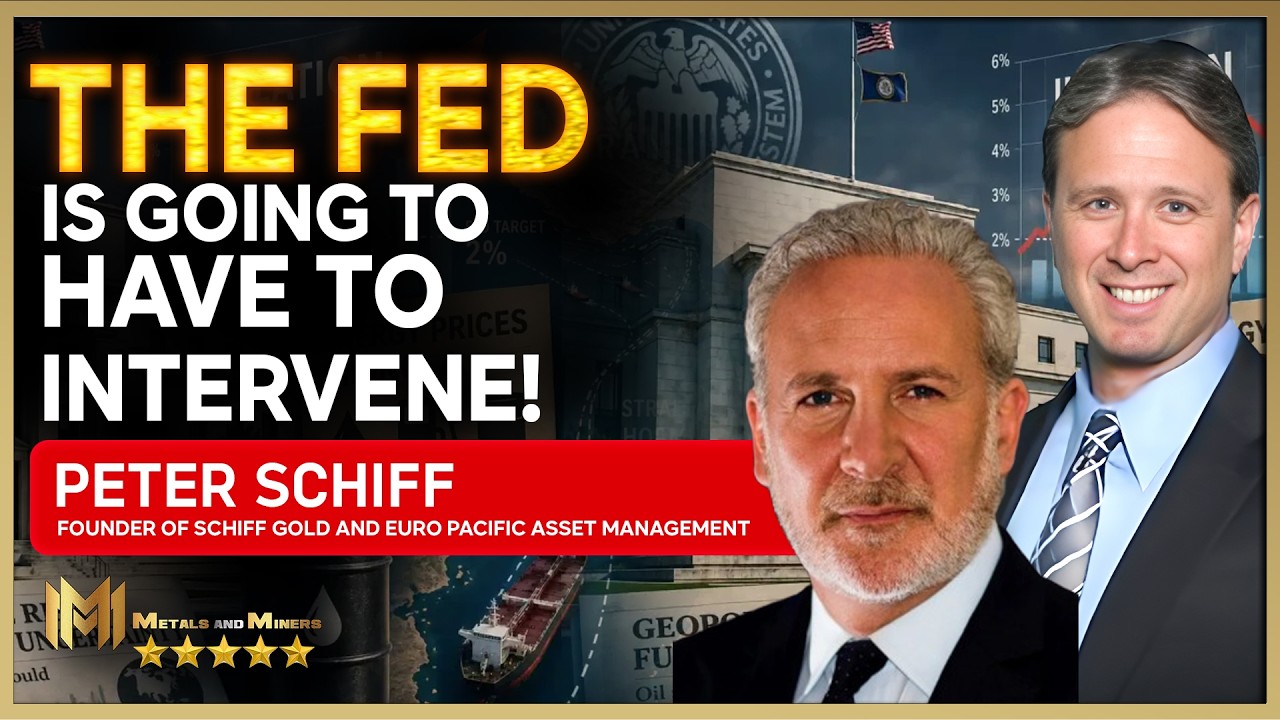
Schiff on Metals and Miners: The Fed Can’t Fix the Yield Problem
Last week, Peter joined Gary on the Metals and Miners podcast to explain why confidence in the US Treasury market is eroding and why the Federal Reserve’s response will only make matters worse. He walks through the mechanics of Fed intervention, the coming pressure on the dollar, and why gold remains the standout asset in an environment of rising rates and rising prices.
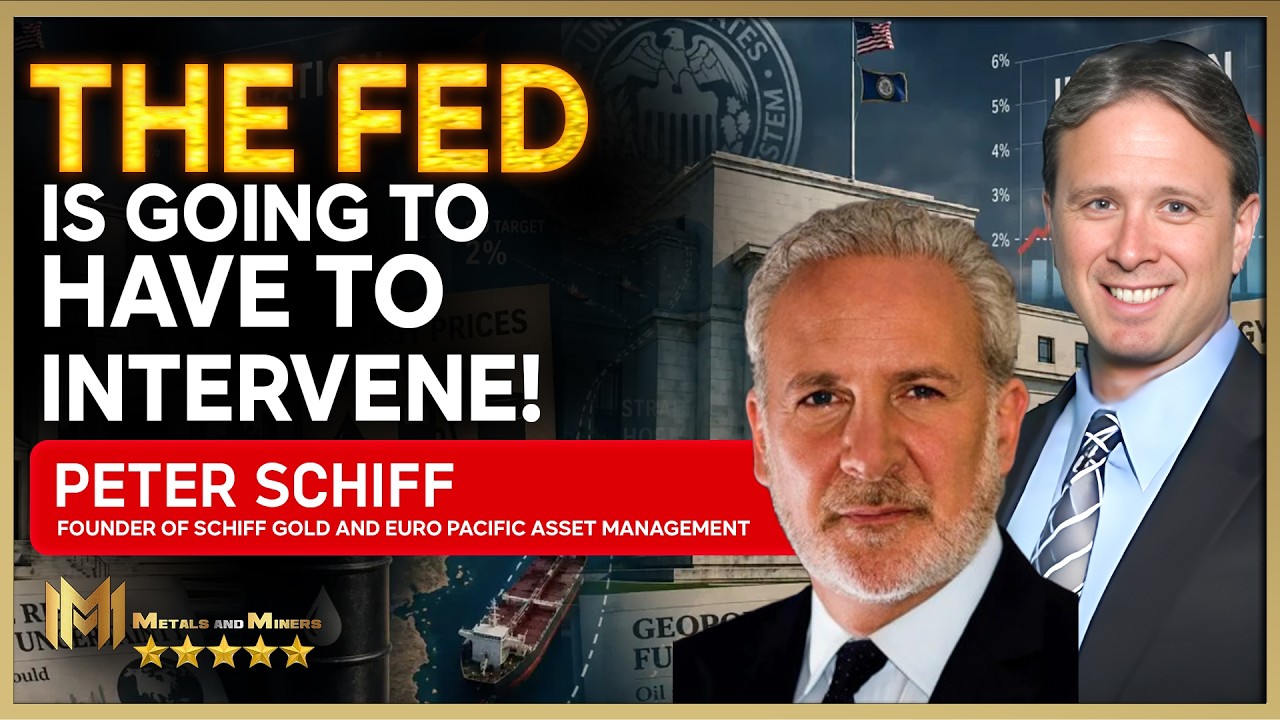

Peter opens by pointing to the political dysfunction driving reckless policy, arguing that loyalty to Donald Trump has replaced sound judgment inside his administration:
So he’s doing everything he can to undermine global confidence in the US Treasury market. Is it intentional? Well, I think that he just needs to support any harebrained idea that Donald Trump has, because Donald Trump can’t take criticism. … You’ve basically gotta talk about how great he is, how brilliant he is, how he’s the best president ever, how this is the greatest economy ever.
From there, Peter turns to the practical question of interest rates. He explains that while the correct move would be to let rates rise naturally, he doesn’t expect Washington to allow that to happen:
They shouldn’t intervene. They should let interest rates go up, but they probably won’t. So if the goal of the government, and I would, I guess, throw the Fed in there, is to keep long-term interest rates from rising, then the Fed is going to have to intervene because the Treasury doesn’t have the firepower to do it. Because the only way the Treasury can buy long bonds is to sell short bonds.
That intervention, Peter warns, comes with a steep cost. Printing money to suppress yields simply shifts the problem into the price level:
But the problem is the way the Fed intervenes is they create more inflation. They expand the money supply. They create new dollars out of thin air, and they use those dollars to buy Treasuries. But now the seller of those Treasuries now has cash, and that cash gets spent. And that drives up prices. And as you have higher inflation, that further undermines the value of the bonds that the Fed is buying.
He then broadens the lens to the currency markets, suggesting that a falling dollar, especially against emerging market currencies, could be the real accelerant for higher yields:
But when the dollar really starts to fall across the board, I think especially in relation to a lot of the emerging market currencies, where I think the dollar can be most vulnerable, that’s going to really accelerate the movement out of treasuries and push yields up even faster.
He connects this currency weakness directly to the everyday cost of living, predicting a return in gas markets to the kind of shortages and government controls that plagued the 1970s:
Because now instead of selling oil, the government is buying oil. At the same time, consumers are buying oil and businesses are buying oil. Look, prices are going much, much higher. And no doubt in my mind, at some point we’re going to have rationing. They’re going to have price controls, which means we’re going to bring back the long lines of the 1970s.
Peter closes by circling back to gold, laying out why the current combination of rising rates and deteriorating bond performance makes for about as bullish a setup as one could imagine for the metal. He notes that the conventional wisdom linking higher rates to lower gold prices simply doesn’t hold up historically:
If you were gonna write a script that was bullish for gold, you couldn’t have written one any better than what is actually happening right now. Yet a lot of people don’t get this. They think, oh, higher rates, that’s bad for gold. It’s not that simple. If you actually understand the dynamics, and again, as you pointed out, we had rising interest rates during the 1970s. That was the best decade we’ve ever had for gold. And it was the worst decade we’ve ever had for bonds.

 Live Chat
 Email:
  Phone: 1-888-465-3160