Peter Schiff: Wishful Thinking Won’t Save This Market
In Sunday’s episode of the Peter Schiff Show, Peter tackles the disconnect between Wall Street optimism and economic reality. He walks through the dangerous complacency around rising bond yields, warns of a historic breakdown in market breadth, and reiterates his long-standing case for gold as the ultimate safe haven. He also touches on the psychology behind inflation-driven hoarding and closes with a candid look at how he manages his own portfolio despite advocating for painful policy medicine, plus a sobering assessment of how little America’s trade deficit troubles are affecting China.

Peter opens by pushing back on the Wall Street narrative that rising interest rates no longer matter for stocks. He argues that this “this time is different” thinking is little more than convenient rationalization:
They keep rationalizing excuses for why this time it’s different and why rising bond yields are not bad for stocks. Well, they’re not competition for stocks and so the stock market can keep rising even if interest rates are high or continue to rise, and people believe that the economy is for some reason immune to the impact of rising interest rates or to the fact that they even think it’s going to slow down the economy a bit. They’re not concerned that it’s going to slow down the stock market, and I think these thoughts are at best just wishful thinking.
From there, Peter shifts to the psychology of inflation itself, explaining how individual hoarding behavior can snowball into something much bigger. What starts as a rational response by a few can quickly become a self-fulfilling prophecy for an entire economy:
But what happens is it’s a self-perpetuating spiral. When just the Peter Schiff podcast listeners do it, it’s no big deal. But when the whole country adopts that mentality that I better buy it now, I better just load up my closets with stuff, the shelves are going to empty out and then the merchants are going to see all of this and they’re going to jack up their prices even faster when they see all of this demand.
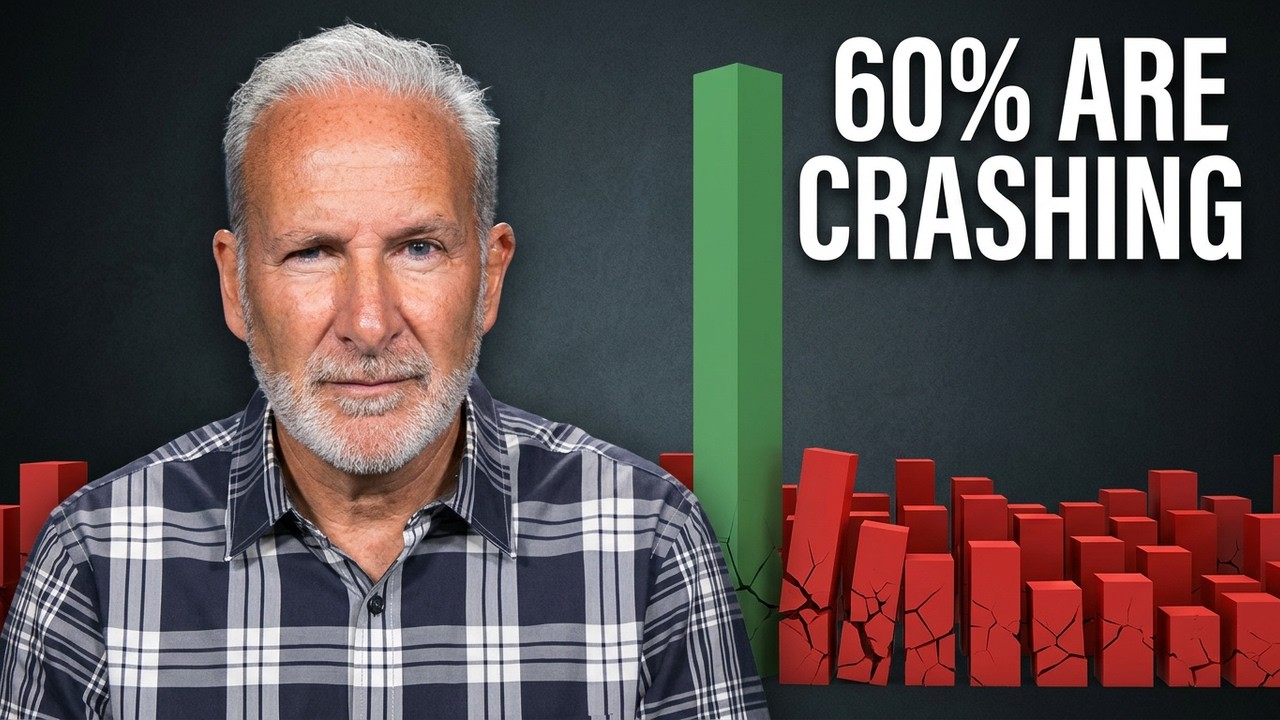
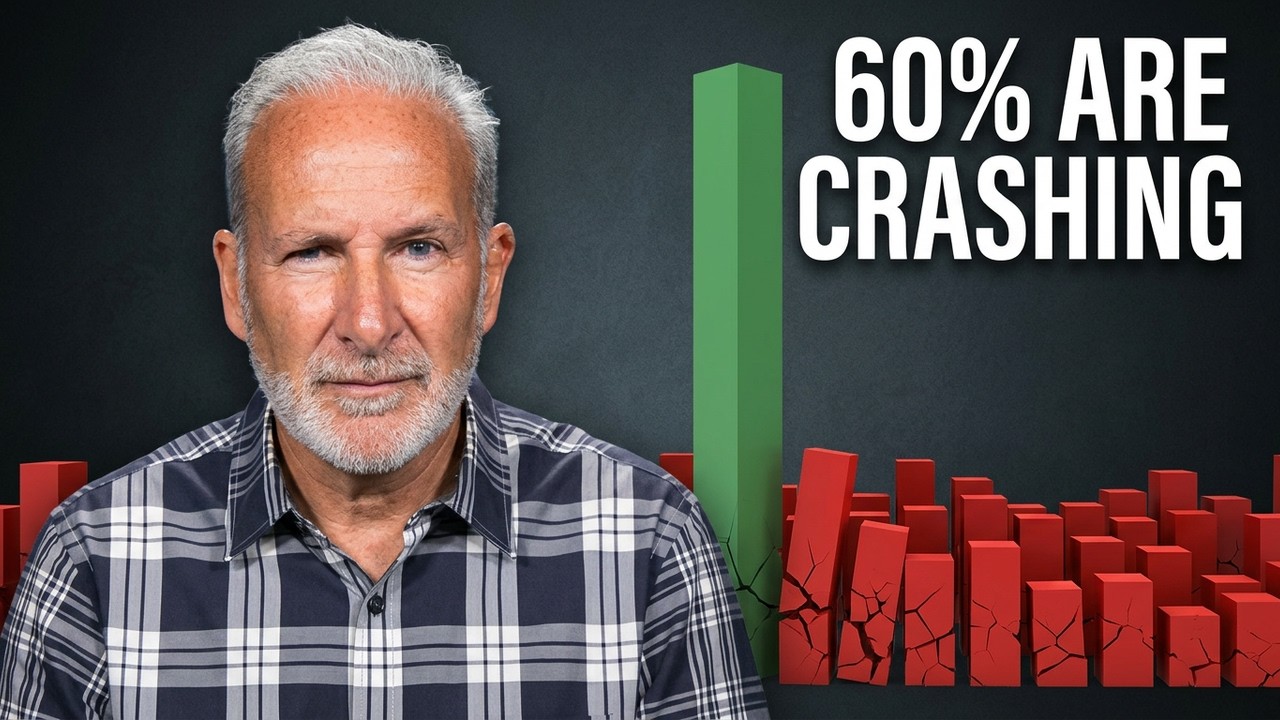
Peter then turns to a technical warning sign that he believes deserves far more attention than it’s getting. He points to a rare historical parallel in market breadth, one that preceded a brutal, decade-long stretch for stocks:
The breadth in the U.S. market has only been this bad twice in all of the last hundred years. The first time was January of 1973. That was really the peak period from the 1960s, nifty 50s stock market bubble. Following that 1973 high, the S&P dropped 48.2 percent, almost 50 percent. And the market didn’t really make a new high until the early 1980s.
Given this backdrop of shaky bonds and a fragile stock market, Peter circles back to his favorite theme: gold as the ultimate insurance policy. He explains why gold, not Treasuries, is the true safe haven when inflation is the real threat:
Gold is how you hedge a weak bond market because gold is an ultimate inflation hedge. Inflation is the destroyer of fixed income. It’s a destroyer of bonds. Gold is your savior in that environment. I’ve always been saying that gold will be the last safe haven standing because Treasuries are not a safe haven if what you’re afraid of is inflation because when it comes to inflation, Treasuries are right in the crosshairs.
Peter then offers a rare bit of personal insight into how he squares his market forecasts with his own investment decisions. Even though he knows policymakers won’t listen to his advice, he still recommends that the Fed hike rates a lot, regardless of the short-term cost to his own holdings:
Now my investment portfolio is based on the fact that I know that they’re going to ignore my advice. I know that no matter what I say, it’s not going to matter. And so I’m still going to speak the truth. I’m still going to recommend that the Fed hike rates a lot, hundreds of basis points, shrink the balance sheet, shrink the money supply, cause stocks to go down, bonds to go down, including the ones that I own, and gold and silver to go down. So I am advocating policies that will be harmful to my portfolio because I know they’re correct.
Finally, Peter pivots to the geopolitical side of the inflation story, highlighting how America’s trade war strategy has done little to actually hurt China. Instead, he argues the U.S. has simply shifted its dependence elsewhere while paying more for the privilege:
China has already shown that it doesn’t need the United States. China’s surplus was a record high last year, and it’s going to beat it this year with a trillion dollar surplus, the mirror image of our trillion dollar deficit. But our trade deficit with China has been going down, but it hasn’t solved our problem because our overall deficit is still enormous because now we’re just buying from other countries and paying higher prices. This stuff we used to buy from China, and China is doing great without us because they’re just selling stuff that they used to sell to Americans.

 Live Chat
 Email:
  Phone: 1-888-465-3160