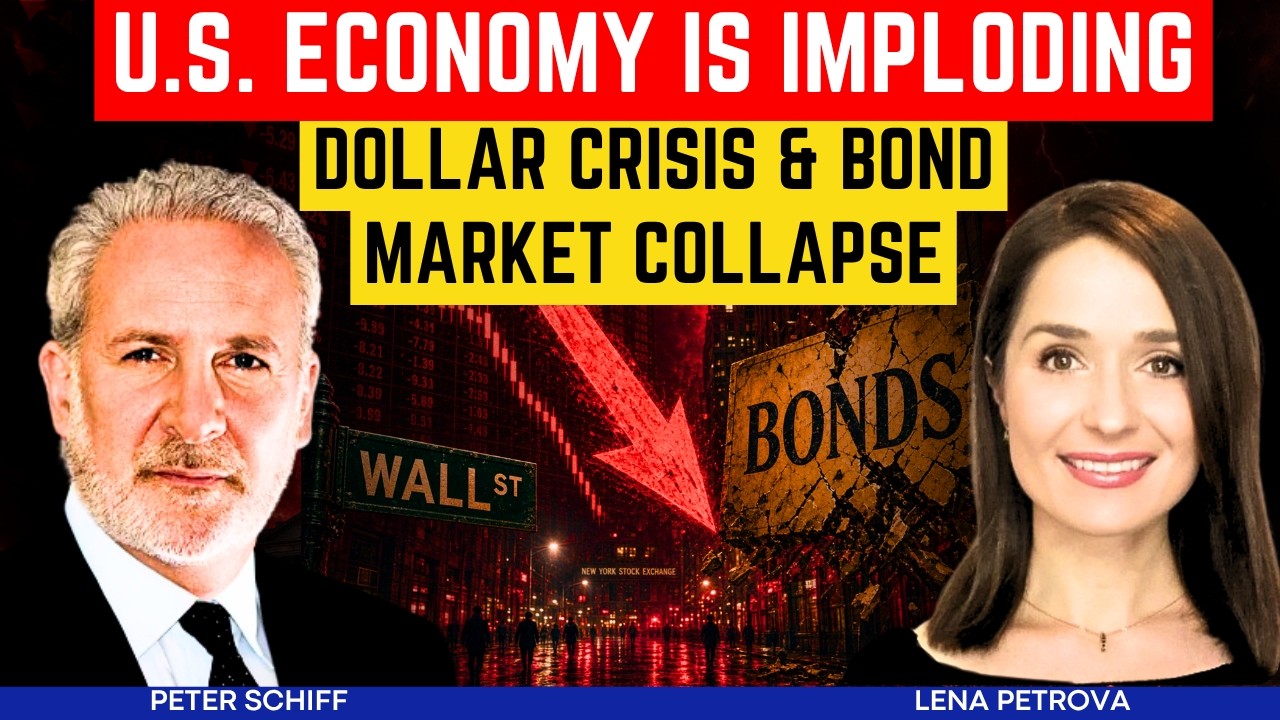
Schiff on World Affairs in Context: America’s Debt Bomb is Ticking
Last week, Peter joined host Lena Petrova on World Affairs in Context to walk through the mounting dangers facing the US economy. He lays out how the national debt, the Federal Reserve’s inflationary tools, and shortsighted political decisions are converging to set up a crisis far worse than anything Americans have experienced in modern times.
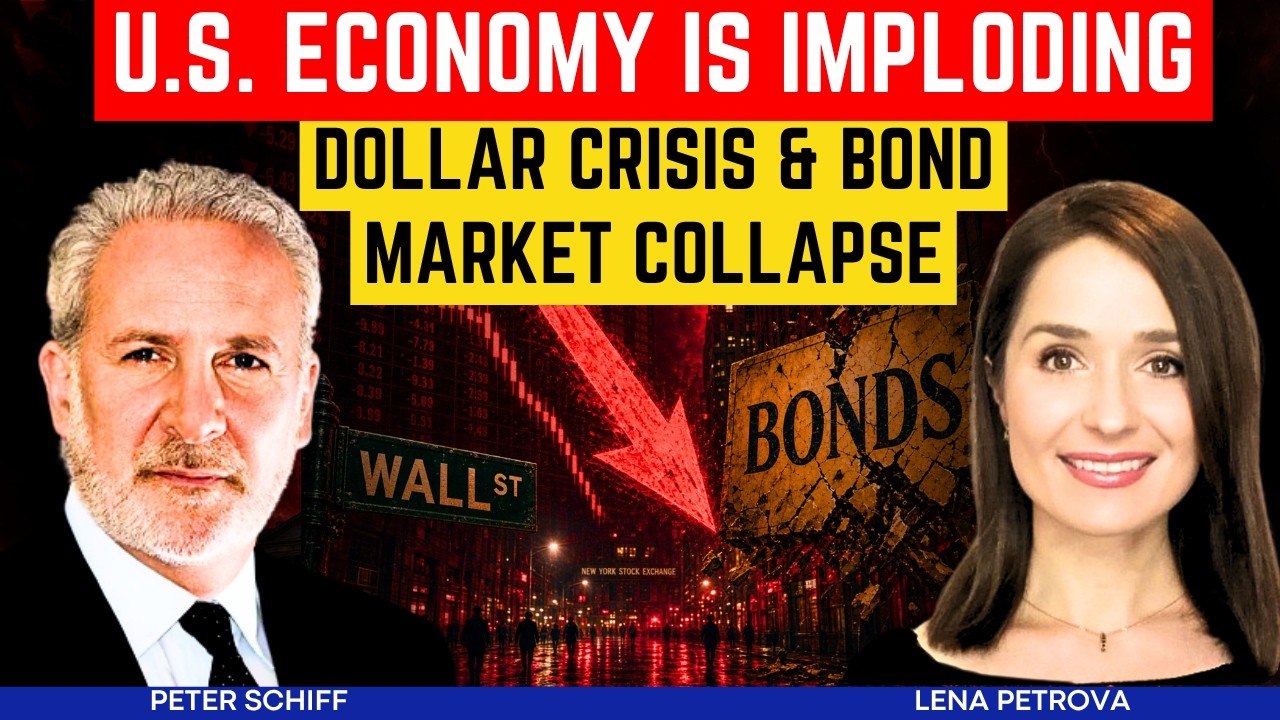

Peter starts with the math on America’s debt burden, showing just how quickly rising interest rates could swallow the federal budget whole:
Just with a $40 trillion debt, if we have to finance that at 5%, that’s $2 trillion. That would not only make interest the biggest expense that the US government has, exceeding what we pay for Social Security, but it would be 35% of our tax revenue. That’s more than one-third of everything the government collects in taxes. Just going to interest on the debt.
That kind of math, Peter warns, doesn’t lead anywhere good. He believes the country is barreling toward an unavoidable reckoning that will dwarf the last major financial crisis:
So sometime between now and then, we’re going to have a day of reckoning. We’re going to have a complete crash in the bond market, in the economy, in the dollar. We’re going to have a sovereign debt. We’re going to have a currency crisis, the likes of which we’ve never experienced in this country. It’s going to make the 2008 financial crisis look like a Sunday School picnic.
Much of that reckoning, Peter explains, traces back to the Federal Reserve’s role as buyer of last resort for government debt. When the Fed steps in to purchase bonds, it does so by creating new money out of thin air, and that has direct consequences for everyday Americans:
The problem is when the Fed is the buyer, it has to create inflation to do it. And so that means that the real value of bonds is going to fall even faster when the Fed is buying. And of course, everybody is going to be impacted by those purchases because they’re going to weaken the value of the dollar. And so consumer prices are going to rise and they’re going to rise substantially.
That inflation squeeze will hit household budgets hard, and Peter points to the retail and shipping giants that depend on consumer spending as the first casualties. As Americans get stretched thinner by rising costs, discretionary spending will be the first thing to go, and that means trouble for the companies that rely on it most:
You look at the biggest employers in America, the four biggest employers are Walmart, Amazon, FedEx, and UPS. And that’s where we’re going to see the biggest job losses right off the bat, because Americans are going to have to cut back on all this spending. They’re not going to have any money left over after paying higher interest rates, higher food costs, higher energy costs, their discretionary income is just going to completely implode.
Peter also turns his attention to how the government manipulates markets to mask economic pain, using the Strategic Petroleum Reserve as a prime example. Rather than letting supply and demand set prices naturally, politicians have repeatedly tapped the reserve for reasons that have little to do with genuine emergencies tied to energy costs:
So we’ve used our strategic reserves really in a non-emergency. The oil, there’s less oil, but there is oil. And so we should have just let prices go up so that we would cut back consumption and just let the market allocate oil to the people who really need it and can pay the higher prices. But what we’ve done is we’ve tapped into these reserves mainly for political reasons because we want to keep the prices lower so we can keep on buying.
Finally, Peter circles back to the Fed’s playbook, arguing that policymakers only really have one tool in their kit no matter what economic problem arises. Quantitative easing, he says, has always just been a fancy label for printing money, and this time around it won’t even produce the illusion of success it once did:
That’s just a one-trick pony and that’s their only trick. That’s what stimulus is. That’s what quantitative easing is. QE was just a euphemism for inflation. You print money and you buy bonds. Unfortunately, when they do it next, it’s not going to work. Not that it ever worked, but it at least created the illusion that it worked.

 Live Chat
 Email:
  Phone: 1-888-465-3160