Peter Schiff: Inflation is a Policy Choice
In Wednesday’s podcast, Peter dismantles the Federal Reserve’s inflation-targeting framework and walks through how recent economic data reveal a much darker picture than the mainstream narrative suggests. He covers everything from the absurdity of the Fed’s “inflation catch-up” policy to disappointing GDP comparisons under Trump, before warning listeners that a historic financial reckoning is on the horizon.


Peter starts by revisiting the Fed’s old justification for letting inflation run above its 2% target, a policy sold to the public as some kind of fairness mechanism:
So we’re going to let inflation run a little hot so you can catch up. Because we don’t want to feel that you got gypped out of all the inflation that you’re entitled to. So we’re going to make sure. It was nonsense. And again, one of the other reasons that I remember was a bogus justification for targeting 2% inflation is the Fed said we want to make sure that we don’t have deflation. If we try to have inflation that’s too low, we could slip into deflation.
From there, Peter pivots to the pandemic-era labor market, where government handouts flipped the traditional incentive structure on its head. He points out that for many Americans, not working paid better than working:
This was for the first time ever, where it was better to lose your job than have your job, because you actually got more money being unemployed than you got working. And for most Americans, that’s a great deal, because they don’t really like their jobs. They’re happy not to go to work, especially if they get a bigger paycheck not working than working.
Turning to more recent data, Peter highlights a troubling spike in producer prices that he believes foreshadows more pain at the register for consumers. He breaks down just how steep the September numbers really were:
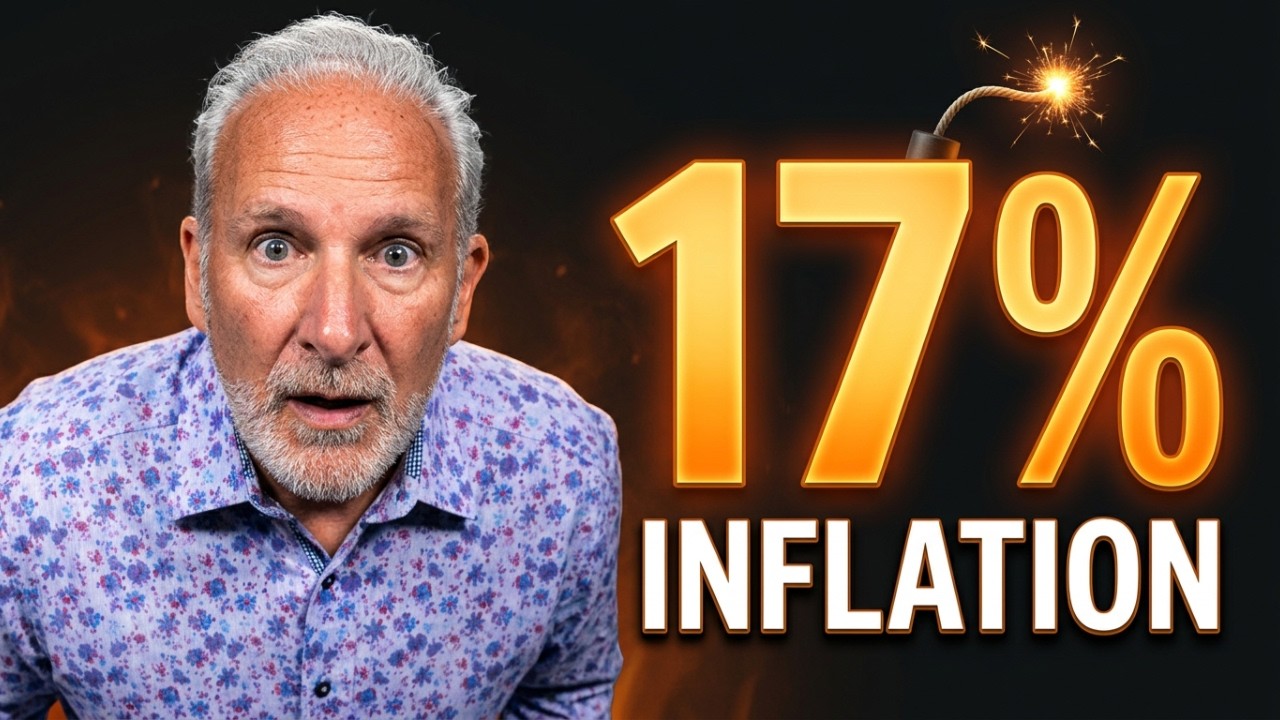
But this September, PPI was up 1.3% in one month. That annualizes out to 17%. That is a huge number. What are the producers going to do with these higher prices? They’re going to pass them on. But even now, year over year, the annualized increase in producer prices is 6.3%. That is a big number.
Peter criticizes the popular assumption that Trump’s economic record automatically outshines Biden’s. Comparing GDP growth across both administrations, he delivers a surprising verdict:
Few people would realize that GDP growth under Trump, his first two years. Now, the second year isn’t over yet, but, you know, we only got one quarter left. But even if it’s a good quarter, it’s not going to matter. Trump’s first two years in office, the economy had slower growth than Biden’s last two years. Think about that. The economy, the way the government measures it, GDP, is weaker under the first two years of the Trump administration than it was during the last two years of Biden.
Shifting to housing, Peter explains how higher interest rates have quietly gutted Americans’ purchasing power, even if home prices haven’t officially collapsed yet. He lays out the math:
So if you can afford to buy a $500,000 house when you can borrow at a 3% mortgage, the same income will only afford a $250,000 house at 9%. So prices are going to have to collapse. And again, I think incomes are already stretched. So most people don’t even have as much money to buy a house as they did, you know, back when mortgage rates were 3%, because food is a lot more expensive.
He closes by tying all these threads together into one sobering warning. He argues that the country is barreling toward a crisis far worse than anything seen in 2008 or 2021, and that now is the time to get your finances in order:
So we are setting ourselves up for a crisis, a financial crisis, a currency crisis, a debt crisis that is much worse than what we had in 2008 and for inflation that’s much higher than we had in 2021. That is why you’ve got to protect yourself. You’ve got to make sure that your financial house is in order. You’ve got to take advantage of the fact that so few investors seem to appreciate exactly what’s going to be happening.

 Live Chat
 Email:
 Phone: 1-888-465-3160