
Why the FIMA Repo Facility Can’t Save Japan (Or the U.S.)
Japan’s long experiment with near-zero rates and relentless deficit spending is hitting its limits, and the consequences are eventually going to hit U.S. markets. The yen’s slide toward levels not seen in decades forced Tokyo into repeated interventions, and for the first time since 1998, Washington joined in to save the U.S. and the world from a collapsing yen (Washington intervened in 2011 after Fukushima, but in the opposite direction).
The Fed just sold euros to help prop up Japan’s currency, but Bessent wants them to go even further with COVID-inspired emergency measures.
Enter the Fed’s Foreign and International Monetary Authorities (FIMA) Repo Facility. This obscure COVID-era “emergency” tool (i.e., bailout mechanism) was invented in March 2020. This tool makes it so that, during a crisis, foreign holders of Treasuries can raise dollars without having to dump large amounts of U.S. government debt in the process.
The Fed and Treasury don’t want Japan selling off their huge U.S. debt holdings to raise the dollars it needs for yen intervention. Bessent wants to prevent countries from dumping Treasuries by any means necessary, including using more robust and little-used measures to kick the can down the road.
U.S. Dollar vs Japanese Yen, 1-Month
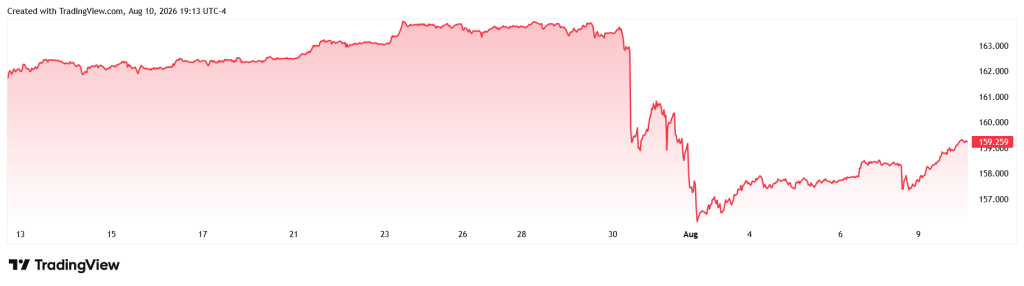
The basic mechanism of the FIMA Repo Facility is this: Japan can put Treasuries up as collateral, borrow dollars from the Fed, and still collect the full coupon. It earns more on the bonds than it pays to borrow the cash, and Japan doesn’t have to dump its Treasuries and cause a cascade.
The foreign central bank selects eligible U.S. Treasury securities already sitting in its New York Fed custody account. It enters a repurchase agreement (repo) with the Fed. This means that it temporarily sells those Treasuries to the Fed’s System Open Market Account (SOMA) while simultaneously agreeing to buy them back later.
The Fed applies a haircut similar to its discount-window collateral rules, so the dollars advanced are slightly less than the market value of the securities. Then it credits the foreign authority’s account with the dollar proceeds. For now, there’s a per-counterparty limit of $60 billion outstanding at any time, but the Fed’s Foreign Currency Subcommittee can change this. Bessent doesn’t just want the U.S. to use FIMA. He also wants to expand its limits and scope.
The FIMA Repo Facility creates liquidity and expands the Fed’s balance sheet, and Japan keeps the interest…like QE, but worse.
Japan can pledge the bonds as collateral, borrow the dollars, sell those dollars to buy yen, and later reverse the repo, keeping the coupons and avoiding a direct sale that would raise US long-term yields.
As long as Japan’s interest rates are low and its currency is stable, traders can keep borrowing yen for almost nothing and putting the money into higher-yielding currencies overseas. That’s the yen carry trade in a nutshell. When the yen falls, those bets get more profitable and more people pile in. When the yen snaps higher, the same bets unwind fast as people sell dollar assets to cover, and the shock hits markets everywhere. U.S. policymakers are trying hard to stop that second version from playing out and preserve the conditions that make the carry trade possible.
Now, cracks in Japan are threatening to pop not only their bubble, but ours as well. Japan’s debt exceeds twice the size of its economy, while the government continues to run annual deficits of roughly 2% of GDP. At the same time, the yen remains weak, partly because Japan’s benchmark interest rate is still only 1%. Rates have barely moved higher, which is a major crisis just waiting to happen.
What Bessent’s appetite for the FIMA Repo Facility portends is a future where the Fed and the Treasury increasingly merge functions and become a sort of pseudosingular hybrid agency, cooperating on levels that upend the alleged “apolitical and independent” nature of the Fed. The more this mission creep of fiscal and monetary authority continues, the more power they have to intervene, tinker, bail out, and print money to kick the can down the road on the disasters their own policies created.
It’s a Keynesian fever dream, and a nightmare for those who want their dollars to hold value.
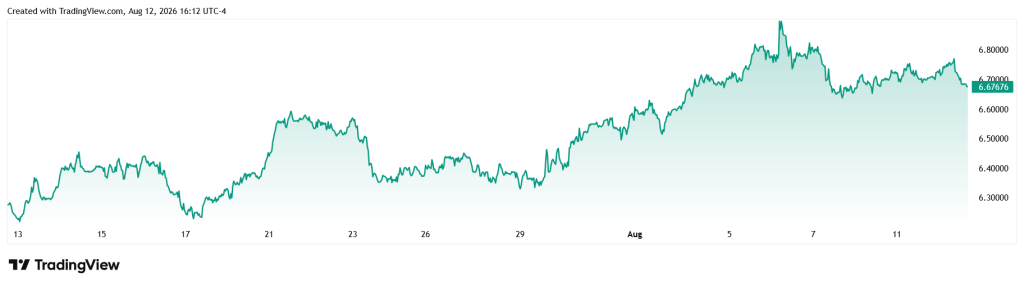
Markets are catching on. Gold ripped higher by more than $170 in a day and was trading near $4,300. Copper hit a fresh all-time record above $6.70 a pound. Average people see their expenses going up. They see on every grocery receipt that inflation talk at the Fed is hollow in the face of a weak labor market, artificially low interest rates, and a federal debt load that keeps growing with absolutely no end in sight.
Copper vs USD, 1-Month
Japan has its own set of bad options. Keynesians say the fix is faster money growth, but more inflation would just eat away at purchasing power even faster and speed up capital flight. What Japan actually needs is spending cuts that stick, rates that reflect real risk, and a willingness to sell some Treasuries so it can buy back its own government bonds. That would cut the exposure to a weaker dollar and help settle the domestic market, but it’s a political non-starter. The pain would be tremendous, but putting it off only makes the eventual pain much worse.
The carry trade is the link. If the rate gap with the U.S. narrows or the yen strengthens enough to force people out of leveraged positions, the unwind can get ugly very quickly. Dollar assets sell off, liquidity dries up in stocks and credit, and U.S. yields can jump right when the government has to refinance a mountain of debt. Bessent and Fed Chair Warsh know this. Investors are already voting with the assets that can’t just be expanded, with everyday Americans seeing their purchasing power get nuked by their would-be saviors in Washington and the New York Fed.
Japan’s bubble is bigger and older than most people want to admit.
When it starts to deflate, the pressure won’t stay localized to Japan, and hard assets like gold are the only clear protection against policies that put temporary market calm and preservation of the status quo above all else.

 Live Chat
 Email:
  Phone: 1-888-465-3160