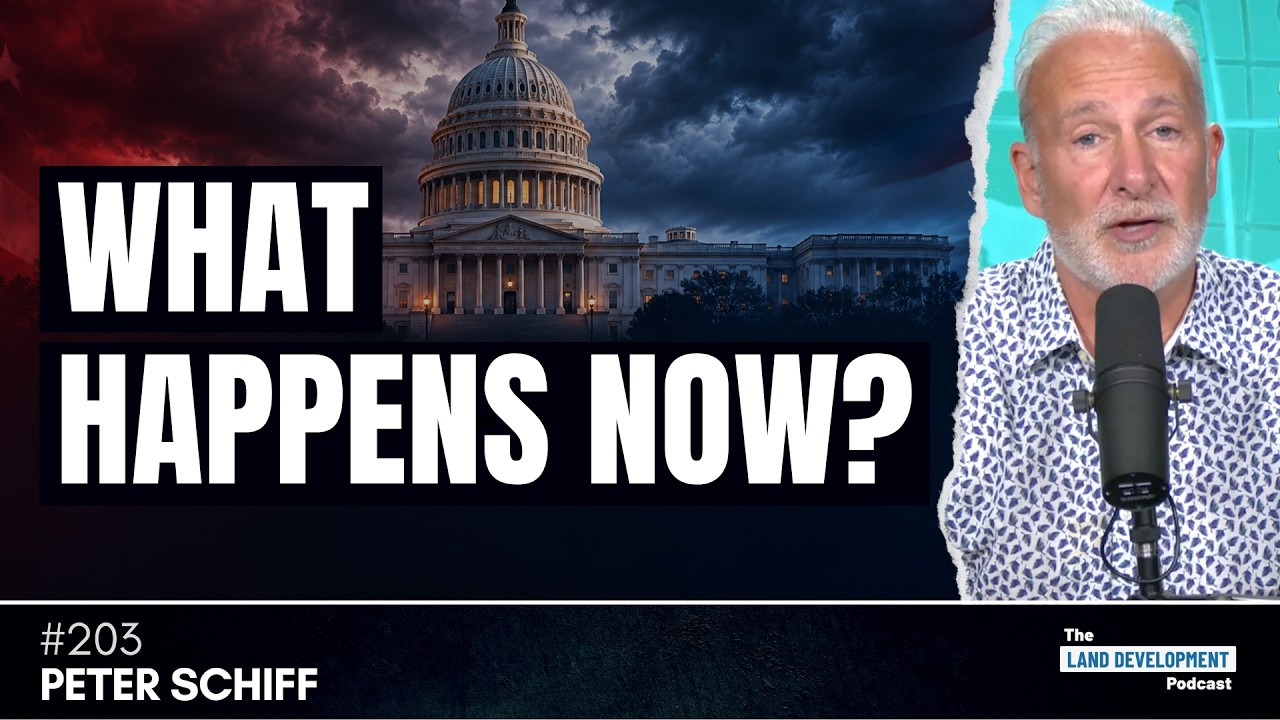
Schiff w/ Glick: The Midterm Warning Signs Were There All Along
Following the midterms, Peter joined Ryan Glick on the Land Development Podcast to unpack the recent election results and what they reveal about the broader economy. He connects rising borrowing costs, the national debt, and the political fallout facing Republicans heading into 2026, explaining why he saw this coming long before election night.
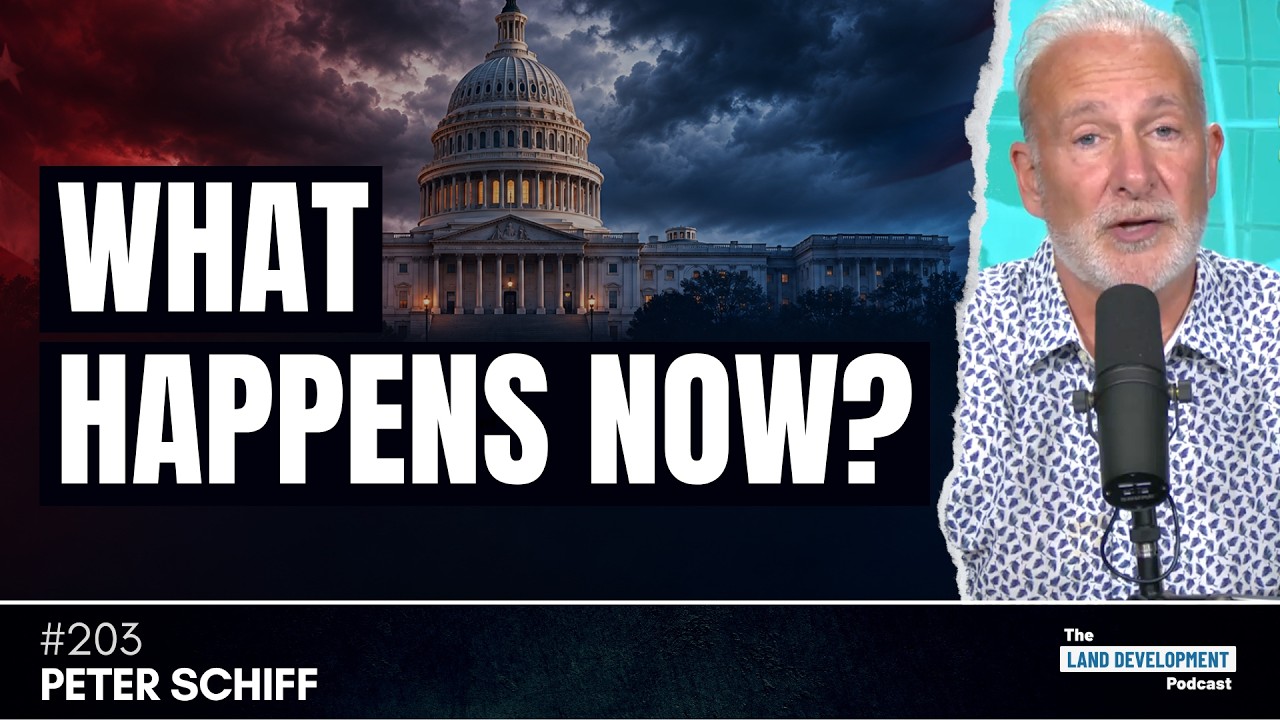

Peter starts by reminding listeners that he called this outcome well before anyone else was willing to say it out loud. He says the warning signs were obvious from the moment Trump took office:
I had been predicting this almost since the beginning, since the election in 2024. I was saying that the Republicans were going to lose the midterms badly because I knew that the problems that Trump inherited from Biden would get worse during his first two years. And that’s exactly what happened. In fact, the biggest issue on voters’ minds was the cost of living.
With the losses now a reality, Peter turns to what this means for Trump’s standing inside his own party. He points out that loyalty to Trump may start to crack as Republicans look at their own political survival:
We’ll see what happens to Trump’s popularity within the Republican Party, because Trump, even though he’s not popular with the electorate in general, within the Republican Party itself, there is still a large group of MAGA loyalists that, you know, really control the party. So a lot of the Republicans are going to be worried about crossing Donald Trump and getting primaried, getting kicked out. But also the Republicans have got to be cognizant of how many of their fellow Republicans lost their seats because of their support of Donald Trump.
From politics, Peter pivots to the bond market, where he sees the same cost of living pressures showing up in a different form. He explains why mortgage rates and Treasury yields are both climbing, and it isn’t a coincidence:
And I think mortgage rates are rising for the same reason, Treasury rate yields are rising. Inflation is becoming a bigger problem. And so borrowers need to compensate lenders for the loss of purchasing power to inflation. And so rates are going to keep rising.
Peter then takes aim at the Federal Reserve, arguing that its tough talk on inflation is mostly theater at this point. He says the central bank is bluffing because it no longer has the tools to actually fight rising prices without breaking something else:
Well, their strategy right now is just to bluff. Right? Rather than admitting that they’re powerless to fight inflation because of the very trap that they’re in, they speak loudly because they have no stick and they hope nobody realizes they have no stick. But the question is, how much longer will markets be fooled by the BS?
Shifting back to the political and market implications of a divided Congress, Peter challenges the idea that gridlock is automatically good for investors. He pokes holes in the inconsistency of Wall Street’s reaction to the midterms compared to how it reacted when Republicans swept into power:
But there’s no way that you can argue that the Democrats controlling Congress is bullish for the economy or the stock market, unless you’re just pinning it all on gridlock and thinking that preventing Trump from doing things or preventing Congress from doing things is going to be good. But the markets were excited to have the Republicans in control. I remember the big rally we got when the Republicans got the White House and Congress, and that was supposed to be good for the market. So how is it also good for the market when they lose Congress?
Peter closes with a sobering look at the federal budget, zeroing in on the interest expense now consuming the nation’s finances. He lays out just how close interest payments are to overtaking Social Security as the single largest government expenditure:
We’re paying 1.4 trillion a year in interest on the national debt. The only government line item in the budget that’s bigger is Social Security at 1.7. And that’s about to run out of money too in a couple of years. But interest on the national debt is going to surpass Social Security next year. I think we’ll hit 2 trillion.

 Live Chat
 Email:
 Phone: 1-888-465-3160