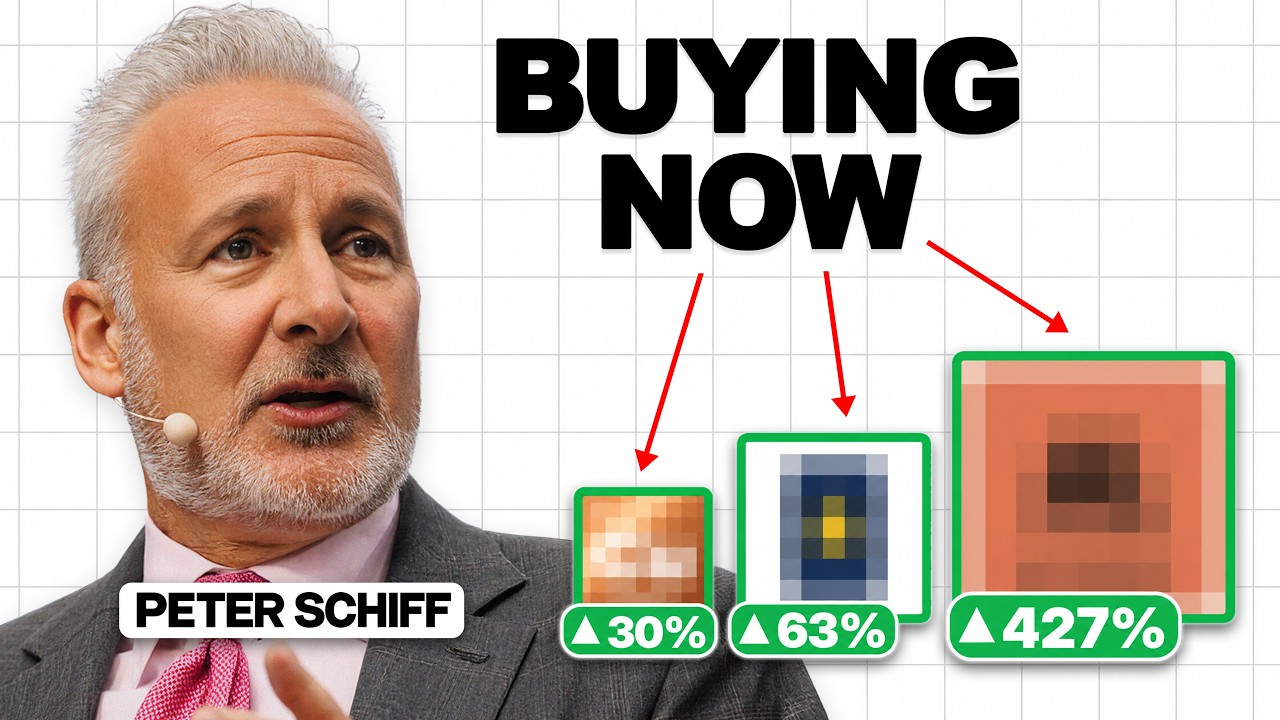
Schiff on Wolf Financial: Inflation Is a Choice Washington Made
Last week, Peter joined Gav on Wolf Financial to break down the economic forces driving America’s fiscal trajectory, from runaway interest payments on the national debt to the quiet insolvency building inside the banking system. He also weighs in on how artificial intelligence may reshape the labor market, why genuine capitalism is a force for lower prices rather than higher ones, and what a Democratic sweep of Congress in the midterms could mean for government spending.
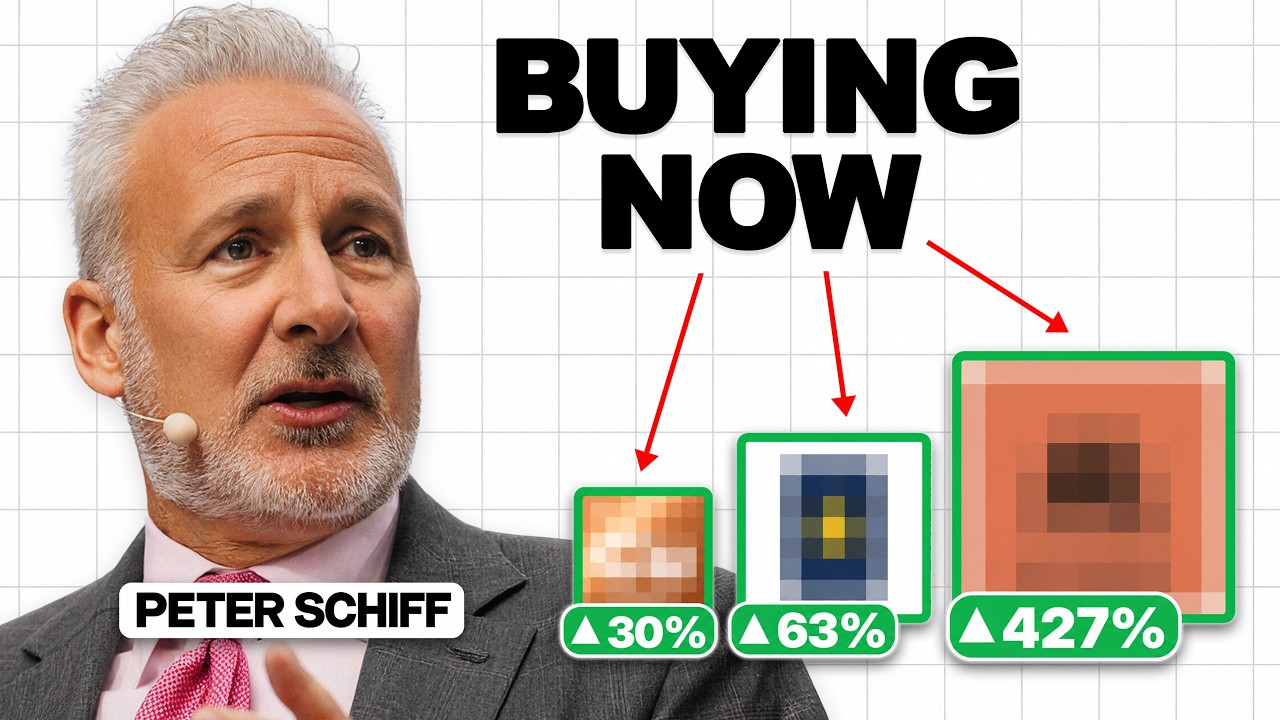

Peter opens by explaining that inflation isn’t some mysterious force of nature, it’s a direct consequence of monetary policy decisions made by the Federal Reserve and the government. He notes that even the current Fed chair has admitted as much:
And inflation is an expansion of the money supply, which would include credit. And money supply and credit are expanded as a result of government policy, government monetary policy. So government creates inflation. In fact, the current Fed chair, Kevin Warsh, recently commented, and he’s repeated that comment, that inflation is a choice that we make.
From there, Peter turns to the federal budget, laying out just how quickly interest payments on the national debt are set to overtake every other major spending category. He warns that this isn’t a one-time spike, but the start of an accelerating trend that leaves less and less room for anything else:
Not only will that be double what we spend on the military, it will exceed what we spend on social security, and it will be the biggest item in the federal budget. And the worst part is it’s gonna keep going up from there. It’s not like it’s gonna stop at 2 trillion. It’ll go to 3 trillion, 4 trillion. So eventually there’s a crisis because we can’t afford to divert or devote so much of our tax revenue simply to paying interest on the debt because it doesn’t leave any money left over or anything else.
That fiscal squeeze, Peter argues, is closely tied to a deeper problem lurking inside the banking system itself. He describes a scenario in which banks simply don’t have the money depositors think they do, forcing the government’s hand:
It means that our banking system is insolvent. It means that if people try to withdraw their deposits, they can’t do it because the banks have lost the money. So the government would have to step up with a massive bailout, but where would the government get that money? Well, they’d have to create it. They’d have to print it, massive inflation. So that’s what’s coming.
Shifting gears, Peter addresses a topic on everyone’s mind lately: artificial intelligence and its impact on jobs. He acknowledges the disruption AI will cause in the labor market, but also leaves room for the possibility that new opportunities could eventually emerge, even as political pressure builds to intervene:
If I am a business, I become more productive by replacing my workers with AI. And so people are going to get laid off. Now, ultimately, more opportunities can be unleashed as a result of freeing up this labor from those jobs. And so you don’t know what new jobs are going to be there, better jobs, higher paying jobs, than AI can do. Now, the problem might be that, well, AI can do most of the jobs. So there’ll be a lot of political pressure on governments to do something about the unemployment.
Peter then pivots to a broader defense of free markets, pushing back against the common conflation of corporate behavior with capitalism itself. He insists that true capitalism is fundamentally a story of abundance and falling prices, while higher costs are almost always the fingerprints of government intervention:
Well, that’s what capitalism does. Capitalism lowers prices. Government raises prices, you know, through regulations or through inflation, but those are not a byproduct of capitalism. Capitalism is all about increasing supply and reducing price. That’s what it does. It makes things better and more abundant.
Finally, Peter looks ahead to the political landscape, predicting that a Democratic takeover of Congress in the midterms will only intensify the spending problem rather than solve it. He suggests that regardless of who’s in charge, the appetite for deficit spending in Washington shows no sign of slowing down:
And a lot of people too, they’re not really factoring in what happens after the Democrats win the midterms and control Congress. I think that the pressure on even larger deficits is going to accelerate. So if you thought the big beautiful bill was bad and it was bad because it really increased deficit spending, I think the bill that the Democrats are gonna pass is going to be even worse. And Trump will sign it. He’s not going to veto it.

 Live Chat
 Email:
 Phone: 1-888-465-3160